Five Doctrinal Principles of Bhagavad Dharma
A Declaration of Faith
We, the followers of the Bhagavad Dharma tradition, believe that:
Shri Krishna is our one and only, eternal, and indestructible Supreme Guru, the Complete Guru.
Human gurus are transient and their views change with time and circumstances; therefore, to maintain the uniformity and purity of the Dharma, there will be no reliance on any human guru. The word of Shri Krishna — the Bhagavad Gita — is considered the direct ‘Complete Guru’ in this tradition, in the absence of Shri Krishna. It is the source of eternal knowledge, the foundation of Dharma, and the guide for the soul.
The codified form of this word of the Supreme Guru, which balances knowledge (Gyan), devotion (Bhakti), and action (Karma), and which is like a self-illuminating light for guidance — will be called the “Purna Guru Granth.”
The only authorized commentary on the ‘Purnagurugranth’ will be the one composed by ‘Brahmabodhi Pratham.’ To safeguard the integrity of the tradition, no other person in this Bhagavad Dharma tradition will have the religious, moral, or official authority to make an independent interpretation, commentary, or exegesis of the Gita in any form. The Purnagurugranth will be revered, studied, and adopted in practice not merely as a book of knowledge but as a living Guru.
The objective of Bhagavad Dharma is self-purification, complete development, adherence to Dharma, stability in knowledge, devotion, and selfless action, and ultimately the attainment of liberation (Moksha) — and its sole medium is the word of Shri Krishna, established in the form of the Purnagurugranth.
The Five Doctrinal Principles of Bhagavad Dharma
There is One God — Nārāyaṇa
What is the concept of God?
Across different religions, God is addressed by various names and forms; however, most theistic traditions agree that the Supreme Reality necessarily possesses certain fundamental attributes: God is imperishable, immortal, and eternal. God is omnipotent. God is omniscient. God is omnipresent. God stands for goodness and justice.
In considering the concept of God, the first question that arises is whether two omnipotent beings can exist simultaneously. The answer is no. If two beings were omnipotent, the power of one would necessarily limit the power of the other. This presents a logical contradiction. Therefore, it follows that an omnipotent supreme reality can only be one.
This leads to the next question: Who is that one omnipotent supreme reality in Hindu Dharma?
Since Bhagavad-Dharma is founded upon the Śrīmad Bhagavad-Gītā, and since the majority of Hindu traditions regard the Gītā as the very word of God and the highest scripture, the primary determination of this question must be made on the basis of the Gītā itself.
According to the Śrīmad Bhagavad-Gītā, the Supreme Lord exists simultaneously in both His nirguṇa–nirākāra (attributeless and formless) aspect, known as Brahman, and His saguṇa–sākāra (personal and manifest) form, namely Śrī Viṣṇu and His incarnations Śrī Rāma and Śrī Kṛṣṇa. This truth is made clear in the following verses:
अवजानन्ति मां मूढा मानुषीं तनुमाश्रितम्। परं भावमजानन्तो मम भूतमहेश्वरम्।। (9.11) — The deluded disregard Me when I assume a human form; they do not know My higher nature as the Supreme Lord of all beings.
अव्यक्तं व्यक्तिमापन्नं मन्यन्ते मामबुद्धयः। परं भावमजानन्तो ममाव्ययमनुत्तमम्।। (7.24) — The ignorant think of Me as having assumed a manifest form from the unmanifest, not knowing My supreme, imperishable nature.
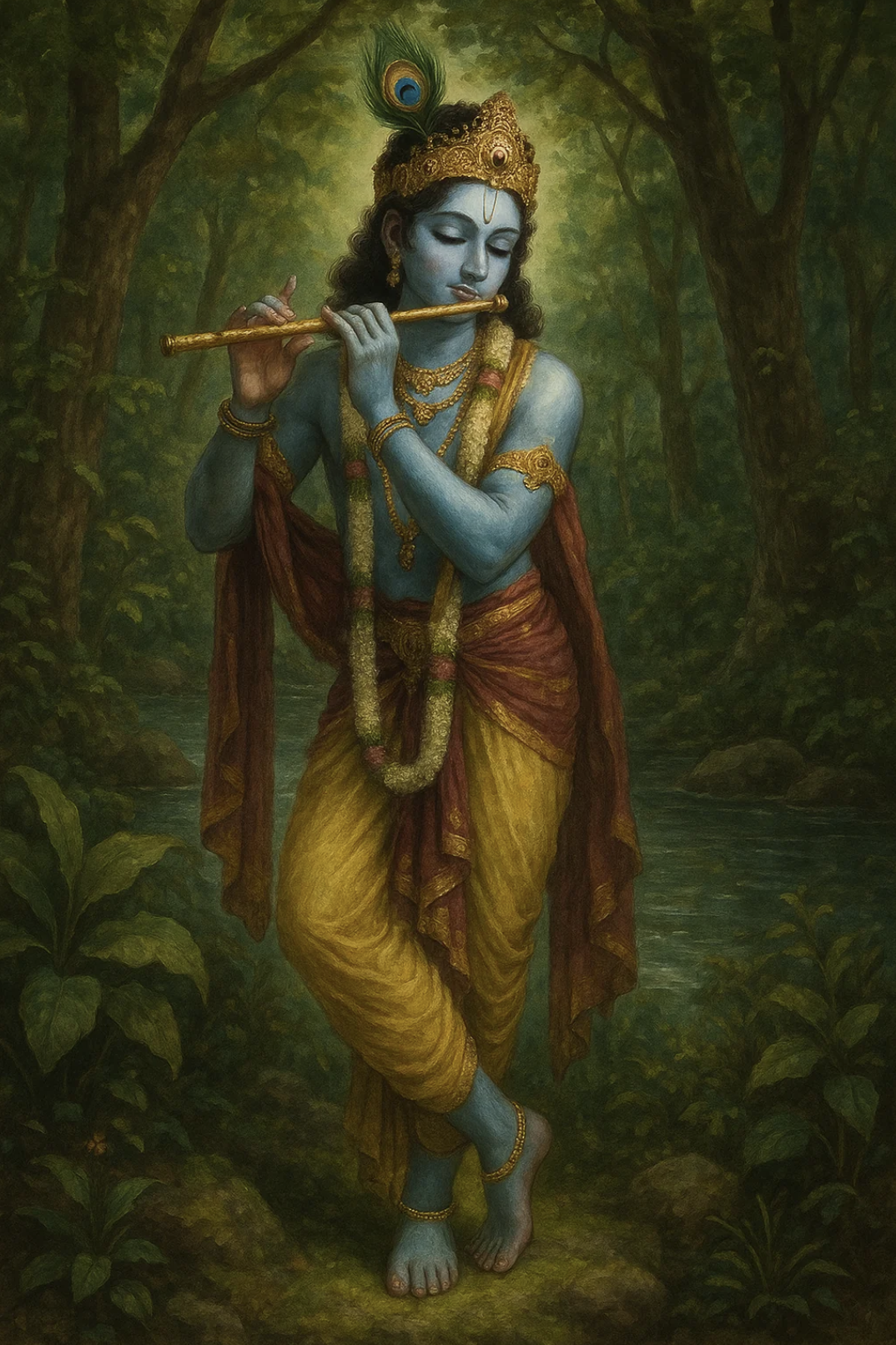
The meaning of these verses is that to regard Śrī Kṛṣṇa merely as a human being is ignorance; in truth, He is Bhūtamaheśvara, the Supreme Lord of all beings.
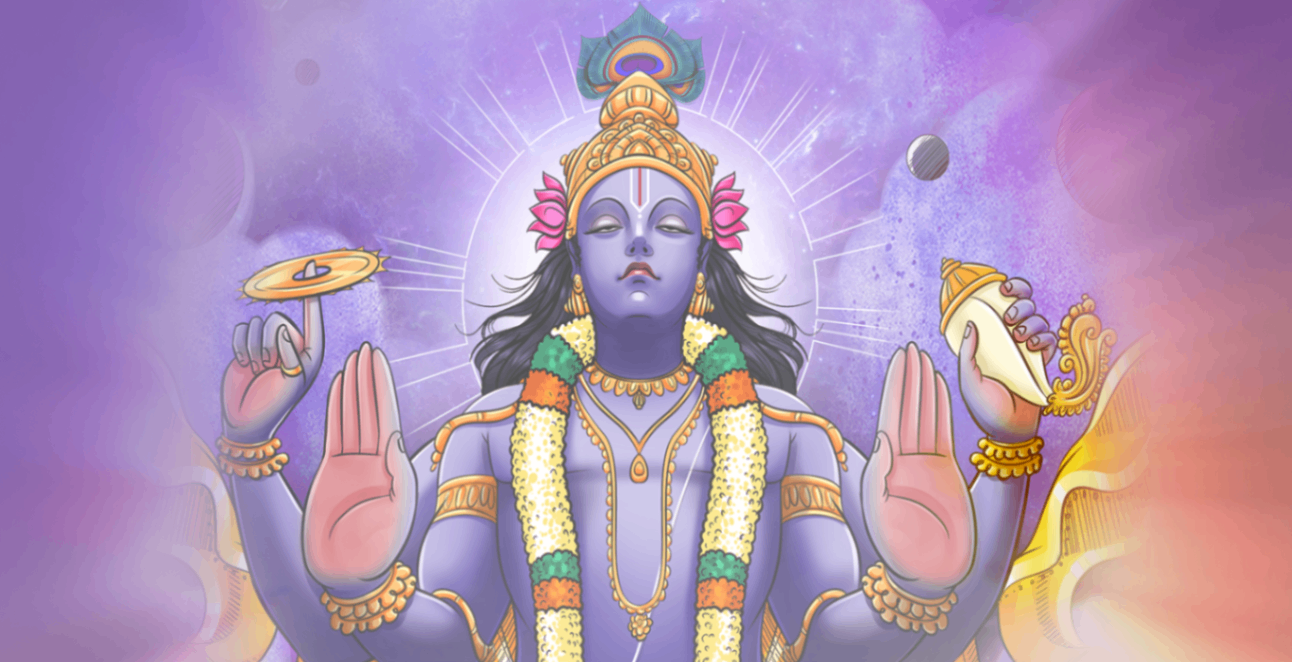
In the Eleventh Chapter of the Gītā, when Lord Śrī Kṛṣṇa reveals His cosmic form to Arjuna, He manifests in the four-armed form of Viṣṇu—demonstrating that He is an incarnation of Śrī Viṣṇu, who sustains the entire universe through but a portion of His being. This same Śrī Viṣṇu is also worshipped by the name Nārāyaṇa.
Thus, according to the Gītā, nirguṇa Brahman, Śrī Viṣṇu, and Śrī Rāma–Śrī Kṛṣṇa are not separate entities but are mutually non-different expressions of the same Supreme Truth.
This concept may appear somewhat similar to the Christian doctrine of the Trinity—Father (God), Son (Jesus), and Holy Spirit—yet it remains fundamentally distinct.
In the Gītā, God manifests in three modes: Nirguṇa, impersonal Brahman; Saguṇa, personal Śrī Viṣṇu; and Human incarnation, Śrī Kṛṣṇa.
The Gītā also affirms the doctrine of divine incarnation:
यदा यदा हि धर्मस्य ग्लानिर्भवति भारत। अभ्युत्थानमधर्मस्य तदात्मानं सृजाम्यहम्।। (4.7) — Whenever there is a decline of Dharma and a rise of Adharma, O Bharata, I manifest Myself.
This means that God does not incarnate only as Śrī Kṛṣṇa, but may appear in other forms as well. For this reason, Bhagavad-Dharma also recognizes Śrī Rāma as an incarnation of Śrī Viṣṇu.
However, among all known incarnations, Bhagavad-Dharma grants recognition only to Śrī Rāma and Śrī Kṛṣṇa as human incarnations worthy of direct worship.
The question of whom to recognize as God has long been a subject of inquiry and debate within Hindu Dharma, leading many devotees to remain in uncertainty throughout their lives.
In the Vedas, Indra was regarded as the chief deity and accorded the highest status. In later periods, with the composition of the Purāṇas, devotional traditions centered around Śrī Viṣṇu, Śiva, and Śakti developed. Some devotees perceived God in Viṣṇu, others in Śiva, and others in Śakti.
However, according to the Śrīmad Bhagavad-Gītā, all deities are encompassed within the cosmic form of Śrī Viṣṇu and exist as His partial manifestations.
Among the Purāṇas, only a few—such as the Śiva Purāṇa—explicitly portray Śiva as the Supreme Lord. The majority of Purāṇas, however, accord the highest position to Śrī Viṣṇu. Repeatedly, it is depicted that when the gods or creation face a crisis, both Brahmā and Śiva approach Śrī Viṣṇu for resolution.
Although the Śiva Purāṇa states that Brahmā and Viṣṇu emerged from the two arms of Śiva, it also narrates that Śiva anointed Viṣṇu as the leader of the universe and declared that Viṣṇu could never be defeated by Śiva under any circumstances. Thus, even the Śiva Purāṇa accords supreme status to Śrī Viṣṇu (Śiva Mahāpurāṇa, Rudra Saṁhitā, Satī-khaṇḍa, Chapter 25 – Gītā Press).
Certain Purāṇic narratives raise questions regarding the decisions of Lord Śiva. For example, Śiva severed the head of his son Gaṇeśa because he did not recognize him as his own son, which raises questions about omniscience—an essential attribute of God. Similarly, before granting a boon to Bhasmāsura, Śiva did not foresee that the boon would be used against himself. Such episodes suggest that a being lacking omniscience cannot be the Supreme God.
According to the Bhāgavata Purāṇa, Śiva expressed a desire to behold the Mohinī form of Lord Viṣṇu. When Viṣṇu revealed the Mohinī form created by His own māyā, Śiva became immediately infatuated and lost self-restraint, demonstrating that even Śiva remains under the influence of Viṣṇu’s māyā (Bhāgavata Purāṇa, Skandha 8, Chapter 12).
The nature of God is to stand unwaveringly for Dharma and justice. Yet the Purāṇas repeatedly show that Lord Śiva, driven by devotion alone, sometimes sides with demons, even when they are unrighteous. Brahmā and Śiva are portrayed as granting boons without considering their consequences for creation. Numerous such examples appear in the Purāṇas, including Śiva’s favor toward demons such as Rāvaṇa and Bāṇāsura.
When a battle occurred between Śrī Kṛṣṇa and Bāṇāsura, Śiva stood on the side of Bāṇāsura due to a boon he had granted. Ultimately, however, Śiva had to accept defeat at the hands of Śrī Kṛṣṇa and withdraw. This episode is also found in the Śiva Purāṇa (Śiva Mahāpurāṇa, Rudra Saṁhitā, Yuddha-khaṇḍa, Chapter 54 – Gītā Press).
In contrast, Śrī Viṣṇu—whose incarnation is Śrī Kṛṣṇa—declares in the Gītā that He incarnates specifically for the protection of Dharma whenever it declines. This claim is corroborated throughout the Purāṇic narratives as well.
For this reason, demonic beings seek to please Brahmā or Śiva rather than Śrī Viṣṇu, knowing that Viṣṇu never supports unrighteous causes.
As for Ādiśakti, it must be recognized that power cannot exist independently of the possessor of power. While power and the powerful may be conceptually distinguished, in reality they are inseparable. Therefore, debate over superiority between Śakti and Śaktimān is ultimately illogical and meaningless.
If, with discernment and reverence, we adopt omnipotence, omniscience, and unwavering commitment to Dharma and justice as criteria for identifying the Supreme Lord, then on all these measures Lord Śrī Viṣṇu alone appears most appropriate and acceptable as God. Other deities deserve reverential respect, but in terms of divinity they appear more as partial or delegated powers rather than the complete Supreme Being.
Therefore, the first and unequivocal declaration of Bhagavad-Dharma is that God is one alone—Śrī Nārāyaṇa. All other deities are created, sustained, and appointed by Him to perform various roles within the cosmic order. According to the Śrīmad Bhagavad-Gītā, worship in the highest sense should be directed only to the Supreme Lord. Other deities should be honored with reverence, but from the standpoint of divinity, Śrī Nārāyaṇa alone is the complete Brahman and the true object of worship.