Conversations of Wisdom
Q&A with Brahm Bodhi
Real questions asked by seekers — answered with timeless insights drawn from the Bhagavad Gita and the lived experience of Sriyut Brahm Bodhi.
114 questions

Why did Sri Krishna not directly address some of Arjuna’s serious concerns (Gita 1.38–44) about the destruction of war?
A seeker asks why, in the first chapter of the Gita (verses 1.38–44), Bhagavan Sri Krishna gives no separate reply to Arjuna’s grave apprehensions about the ruin of families and the fate of war-widows — and whether the carnage might have been avoided had the Pandavas simply retired to the forest. Brahm Bodhi explains Krishna’s refined method: rather than rebutting each inference like a court, he lifts Arjuna’s vision from “I and my family” to svadharma, selfless action and, finally, lokasangraha — the welfare of all.
Read answer
How can the conscious and subconscious mind be disciplined and made an instrument of self-welfare and the welfare of all?
A seeker asks Brahm Bodhi to explain the conscious and subconscious mind, so that human society may cultivate right action and keep the Earth clean and beautiful. Brahm Bodhi maps the mind at three levels — conscious, subconscious and unconscious — and shows, through the Gita’s teaching of abhyasa and vairagya, how the conscious mind becomes the laboratory in which deep samskaras are purified, so that inner transformation flowers outward as the welfare of family, society and nature.
Read answer
The journey towards Moksha: is liberation attained through solitary sadhana, or while living amidst family and society? (Part 1)
A retired doctor, drawn to God and temple service since childhood, asks Brahm Bodhi what his lifelong austerities, japa and meditation have attained — and whether one should serve society or seek solitude for knowledge and devotion. Brahm Bodhi lays the groundwork: no sadhana is wasted, yet the journey to moksha, like a long voyage, is best completed with the right means in this very lifetime.
Read answer
Spiritual Technology and Psychological Engineering for God-realization: what is “Sadhana-Pravesh”? (Part 2)
Returning to Khera Ji’s question, Brahm Bodhi announces a new gateway — “Sadhana-Pravesh” — on the Bhagavad Dharma website (www.gitadharma.org): a structured, six-month series of practices in “Spiritual Technology” and “Psychological Engineering.” Just as a good crop needs prepared soil, the mind must be cultivated before the seed of a mantra can flower; Sadhana-Pravesh is designed to prepare that inner soil and greatly accelerate the journey toward God-realization.
Read answer
What are “Spiritual Technology” and “Psychological Engineering,” and how do they accelerate spiritual progress? (Part 1)
A devotee, Vimal Kumar Khera, asks Brahm Bodhi to explain the tools of “Psychological Engineering” used in Bhagavad Dharma. Brahm Bodhi lays the foundation — showing how the mind, intellect and the “I-sense” form the cage of Maya, and how systematic psychological methods, joined with sadhana, can tunnel through the mountain of the mind toward the Self.
Read answer Video
VideoWhat is the Bhagavad Gita, and why does it still matter today?
Listen to Manpreet, a third-grade student at our Gita Global Gurukul in Himachal. In this simple video, Manpreet Krishna explains what the Bhagavad Gita truly is — the divine wisdom Bhagavan Sri Krishna gave to Arjuna — and how it still guides our lives toward duty, patience, courage, discernment and balance.
Read answer Video
VideoHow can one overcome stage fear and speak with confidence?
Stage fear does not mean a person is incapable of great things — even Jawaharlal Nehru, Swami Vivekananda and Mahatma Gandhi felt nervous when they first faced an audience. Brahm Bodhi explains how, with knowledge, preparation, practice and repeated opportunities to speak, anyone can gradually overcome stage fright: begin with a small audience, practise regularly, and move to larger gatherings.
Read answer
Is it possible to live according to the ideals of the Gita in the present age?
A seeker, Sanchit Swaroop, having grasped the Gita’s call to act with equanimity, to perform one’s svadharma without attachment to results, and to keep the welfare of all in mind, asks whether such a life is possible today — and whether Brahm Bodhi knows an enlightened person living this way whose company he might seek. Brahm Bodhi answers that it is certainly possible, that such realized souls do live quietly among us, and that the true aim is not merely to find such a person but to become one.
Read answer Video
VideoWhat is the difference between dharma and spirituality?
Dharma and spirituality are often spoken of together, yet they are not the same. Brahm Bodhi draws the distinction with a simple illustration — the honest businessman who is dharmic by day and a seeker by night — and shows how the Gita, the Ramcharitmanas and the Bhagavata each teach both. Dharma asks how one should live in the world; spirituality asks who one truly is. Yet the plant of spirituality can grow only in the soil of dharma.
Read answer
What is Mokṣa, and how can one accelerate progress toward liberation?
Having read the Purāṇas, a seeker begins to suspect that mokṣa is not a spiritual destination at all, but merely a permanent “state of mind” to be cultivated in this life — and asks whether there is an effective method to keep that state stable. Brahm Bodhi gently corrects the misunderstanding: mokṣa is indeed liberation from birth, death and rebirth, a transcendental state and a destination, while the required state of mind is only the means. He also points to a “spiritual technology” that can speed a sincere seeker’s progress.
Read answer
How does one go within, realize the true nature of the Self, and attain eternal bliss? (Part 1)
A seeker asks what it truly means to “go within” and experience the Self. Before turning to the practice, Brahm Bodhi first clears away a common assumption — that every scripture dismisses the world as unreal — and, through the analogy of a film cast upon a screen, shows how the world is real in our experience yet wholly dependent on Brahman.
Read answerHow does one go within, realize the true nature of the Self, and attain eternal bliss? (Part 2)
Continuing the discussion, Brahm Bodhi shows that realizing the identity of the Self with Brahman is not the only road to everlasting bliss. Drawing on the Bhagavata Purana and the Gita, he explains the Path of Devotion (Bhakti Yoga): the devotee, longing for Bhagavan Narayana — the Saguna Brahman — reaches Vaikuntha and eternal bliss through love and surrender, the very same Supreme Goal attained through the path of knowledge.
Read answerHow does one go within, realize the true nature of the Self, and attain eternal bliss? (Part 3)
Can everlasting peace and bliss be attained without direct realization of the Self — and if so, how? Brahm Bodhi shows that the path of devotion offers such a way: resting on faith, love and complete surrender rather than philosophical inquiry, the devotee seeks the Saguna Brahman, Bhagavan Narayana, and through His grace attains Vaikuntha and unmixed, everlasting bliss.
Read answerHow does one go within, realize the true nature of the Self, and attain eternal bliss? (Part 4)
Can liberation and eternal, infinite bliss be attained even without Self-realization? Brahm Bodhi shows how the two paths finally meet: the knower is granted supreme devotion at liberation’s gateway, and the devotee is granted illuminating knowledge — yet only on the path of knowledge is direct Self-realization indispensable, while the devotee attains saguna moksha in Vaikuntha without it.
Read answerHow does one go within, realize the true nature of the Self, and attain eternal bliss? (Part 5)
In his concluding words, Brahm Bodhi affirms that Self-realization is not the only road to God, liberation, or eternal bliss: the Gita honours both the Path of Knowledge and the Path of Devotion. Complementary rather than contradictory, they converge upon one Supreme Goal — the destination is one, the routes are different.
Read answer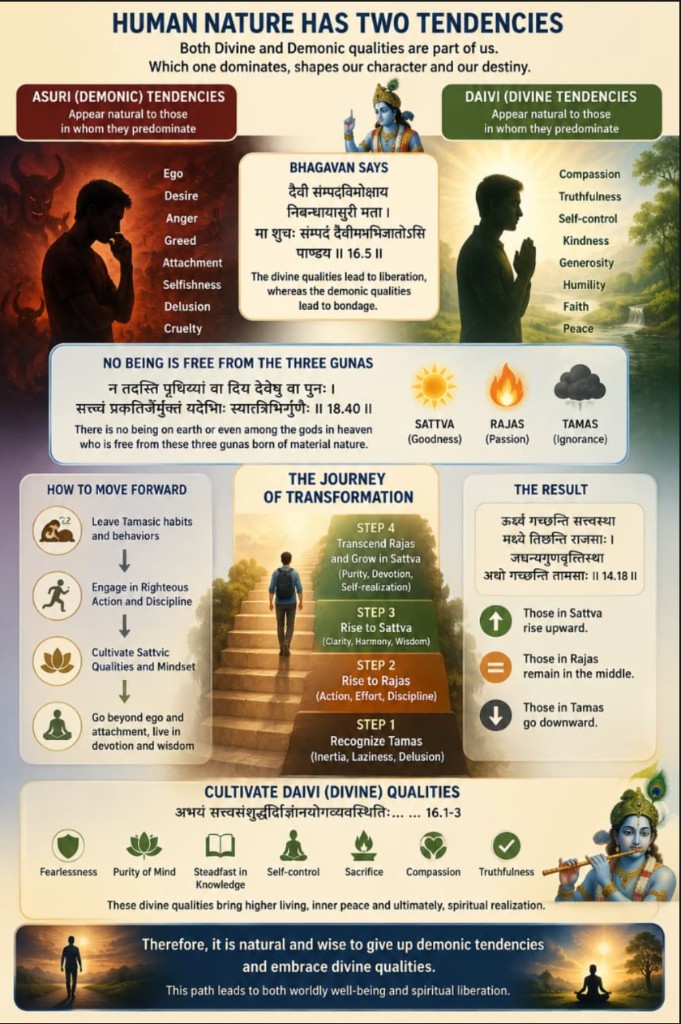
What naturally is the human disposition — divine or demonic?
A seeker once asked: if desire, self-interest, and attachment seem natural to human beings, why should we struggle to cultivate qualities that appear contrary to our instincts? The Gita's answer is that both divine and demonic tendencies exist within every person — and a life of progress lies in gradually rising from tamas to rajas to sattva, and then beyond.
Read answer
Can chanting (japa) destroy sorrow? Why do bad people appear happy while good people suffer?
It is not true that people who engage in immoral actions are necessarily happier. Upon closer observation, there is a vast difference between temporary success and genuine happiness — and the Gita points the way to lasting freedom from sorrow.
Read answer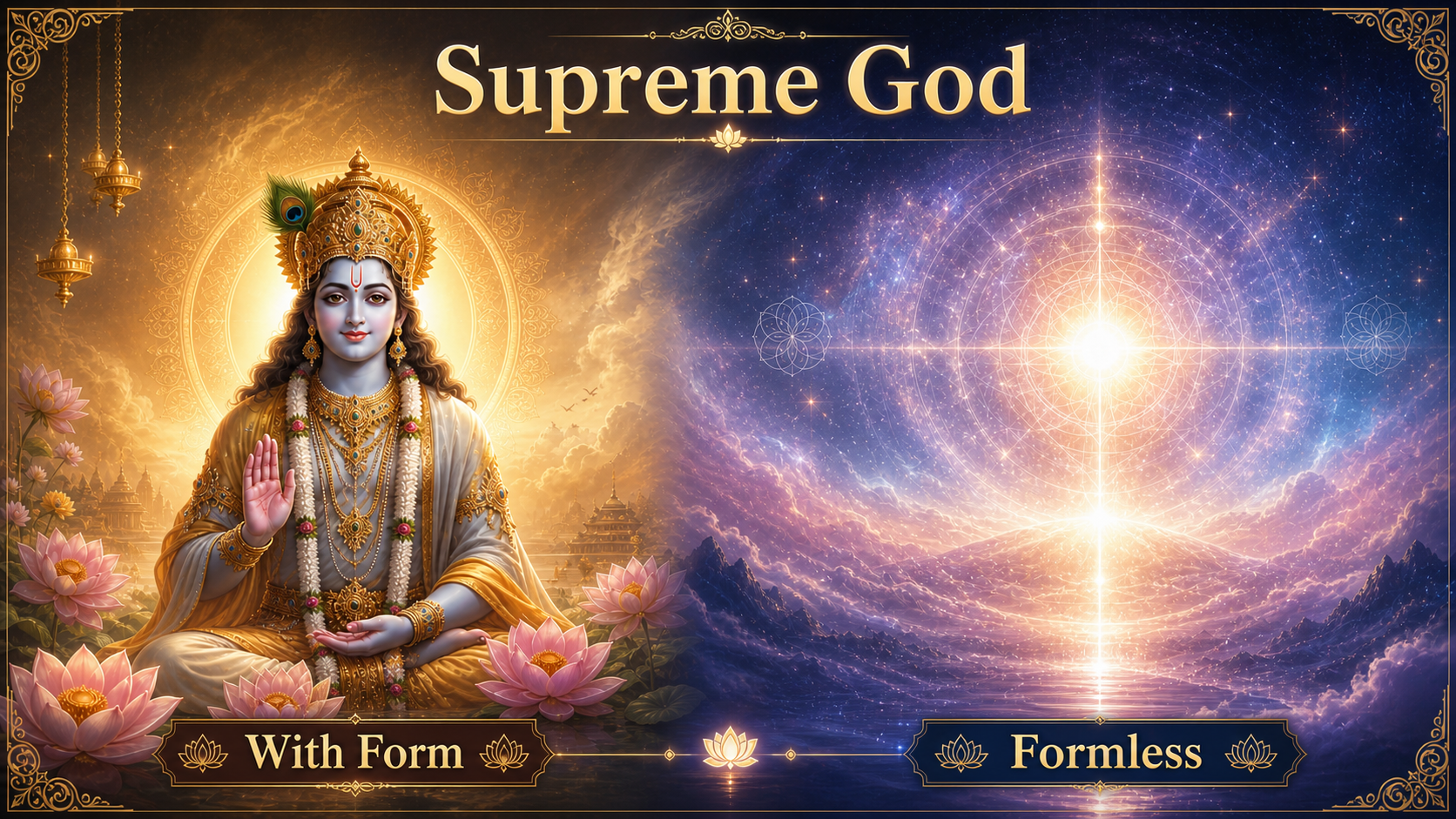
Is the Supreme God with form (sākāra), or formless (nirākāra), or both, or beyond both?
The Supreme Reality is originally formless, unmanifest, and beyond the three qualities of material nature. Yet when He creates the universe, He reveals Himself in a personal, manifest form — and at times even descends in human form to protect dharma. These are not two different Gods, but two aspects of the same Supreme Being.
Read answer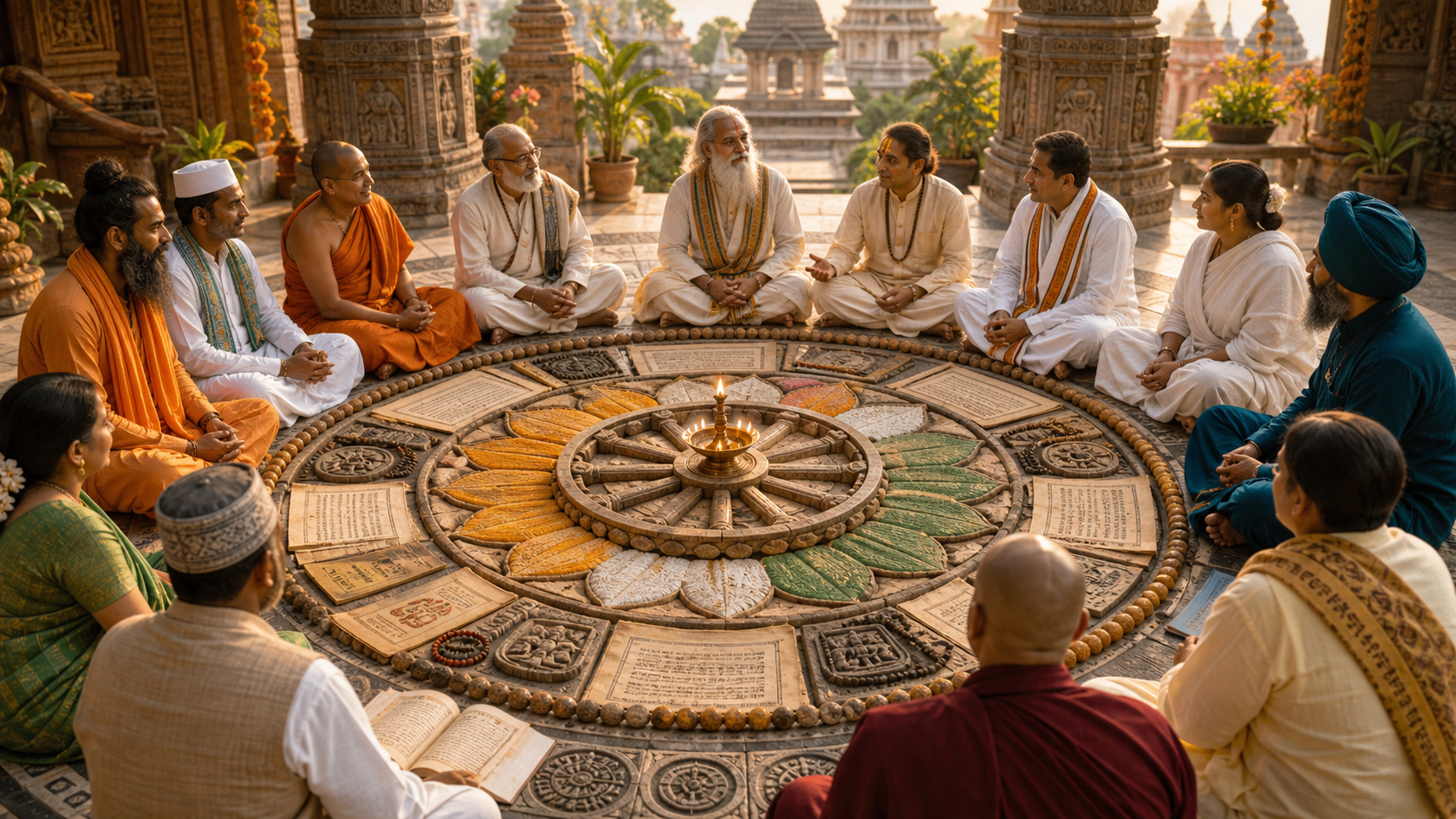
Can a Uniform Ritual Code be developed for all Indic faiths, and how can Sanatan Dharma cultivate real civilizational unity?
Bringing all Indic faiths onto one platform is a noble idea, but a Uniform Ritual Code for all of them — including Sikhs, Buddhists, Jains, and the many streams of Sanatan Dharma — may not presently be practical. A more attainable beginning is to agree upon shared guiding scriptures, with the Bhagavad Gita and the Vedas as a natural civilizational centre of gravity.
Read answer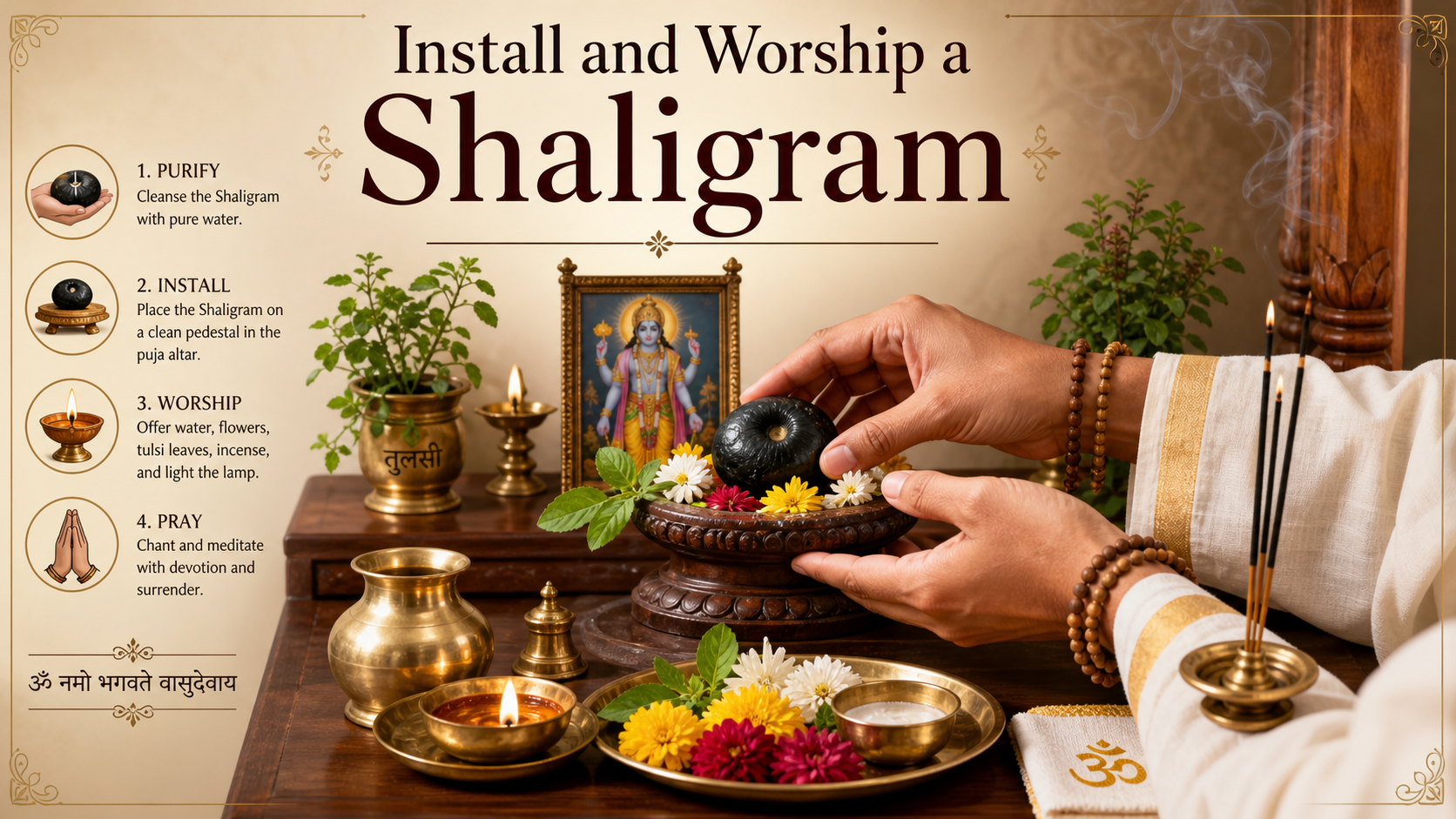
How should one respectfully install and worship a Shaligram?
In many Vaishnava traditions, the Shaligram is regarded as self-manifested (svayambhu) and eternally worshipful — so a formal prana-pratishtha is not considered essential. What matters most are devotion, purity, and regular worship. Here is a simple, sattvic method.
Read answer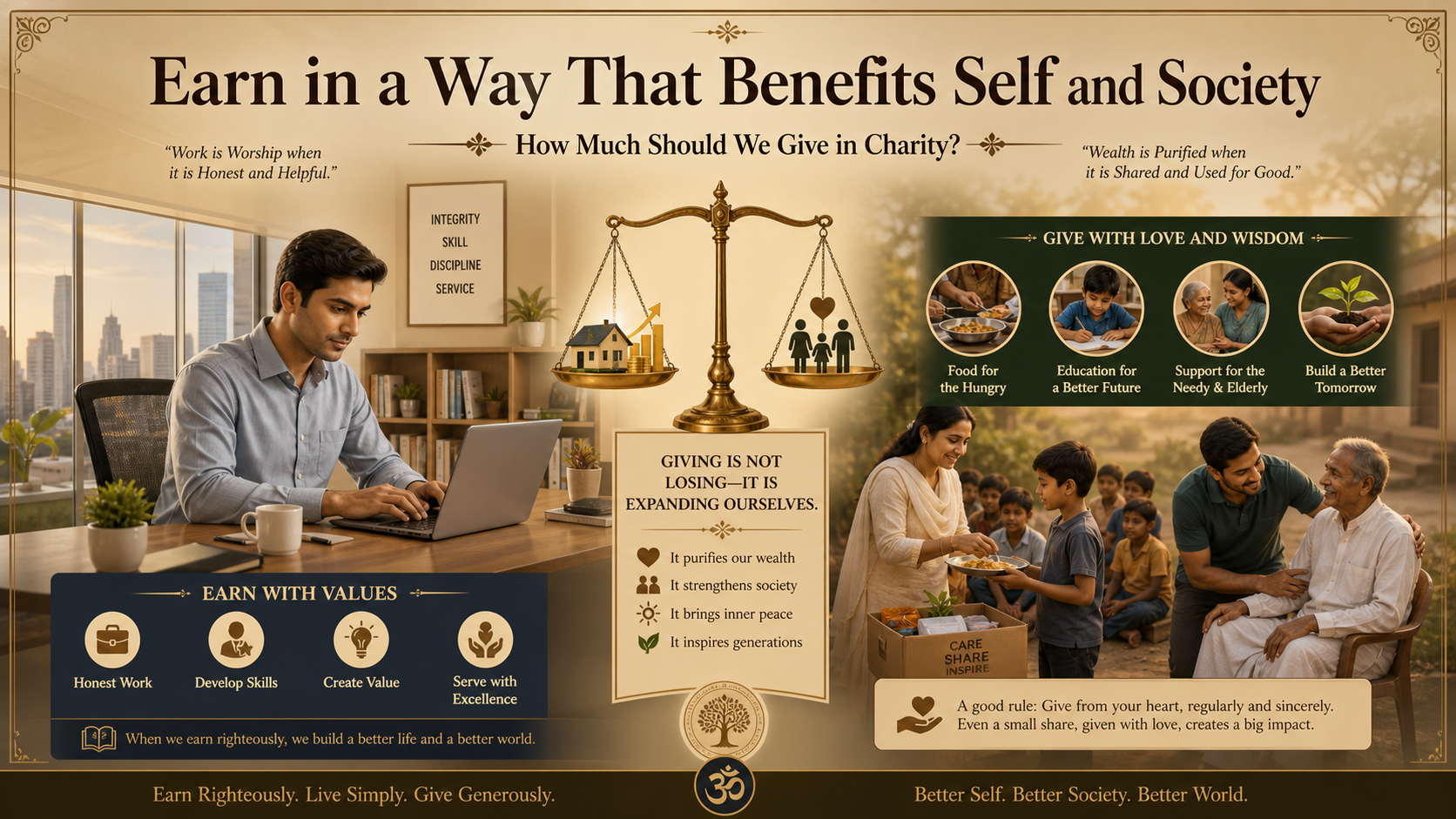
How should we use our earnings in a way that benefits both ourselves and society — and how much should we give in charity?
Earning is necessary for sustaining life, but donating a portion of that wealth is equally important. Charity is not only to help others — it purifies one's own mind and heart, and is essential for the inner purity the Gita describes. While Sanatan Dharma prescribes no fixed percentage, cultivating the habit of giving at least ten percent of one's income is highly desirable.
Read answer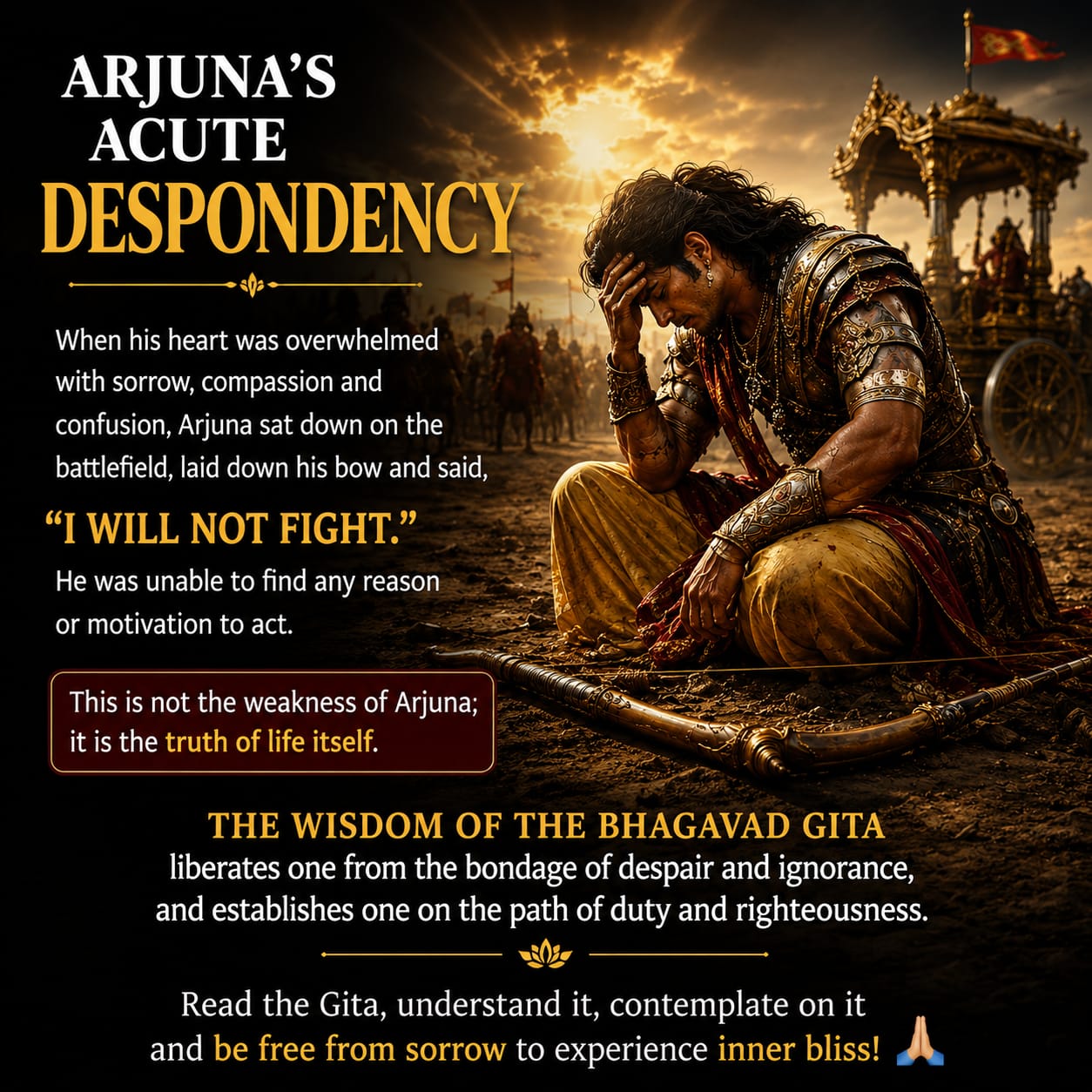
How to overcome acute despondency — just as Arjuna did on the battlefield?
Just as Arjuna's despondency made him cast aside his bow, we too sometimes become overwhelmed by deep sorrow. The Gita's wisdom builds an armor of detachment, equanimity, and knowledge that protects the mind from despair.
Read answer Video
VideoMiracle or mind power — what did BrahmBodhi personally witness?
Do miracles really happen, or are they stories we choose to believe? In this video, BrahmBodhi shares a real-life experience where thoughts were known even before they were spoken — an event that logic struggles to explain.
Read answer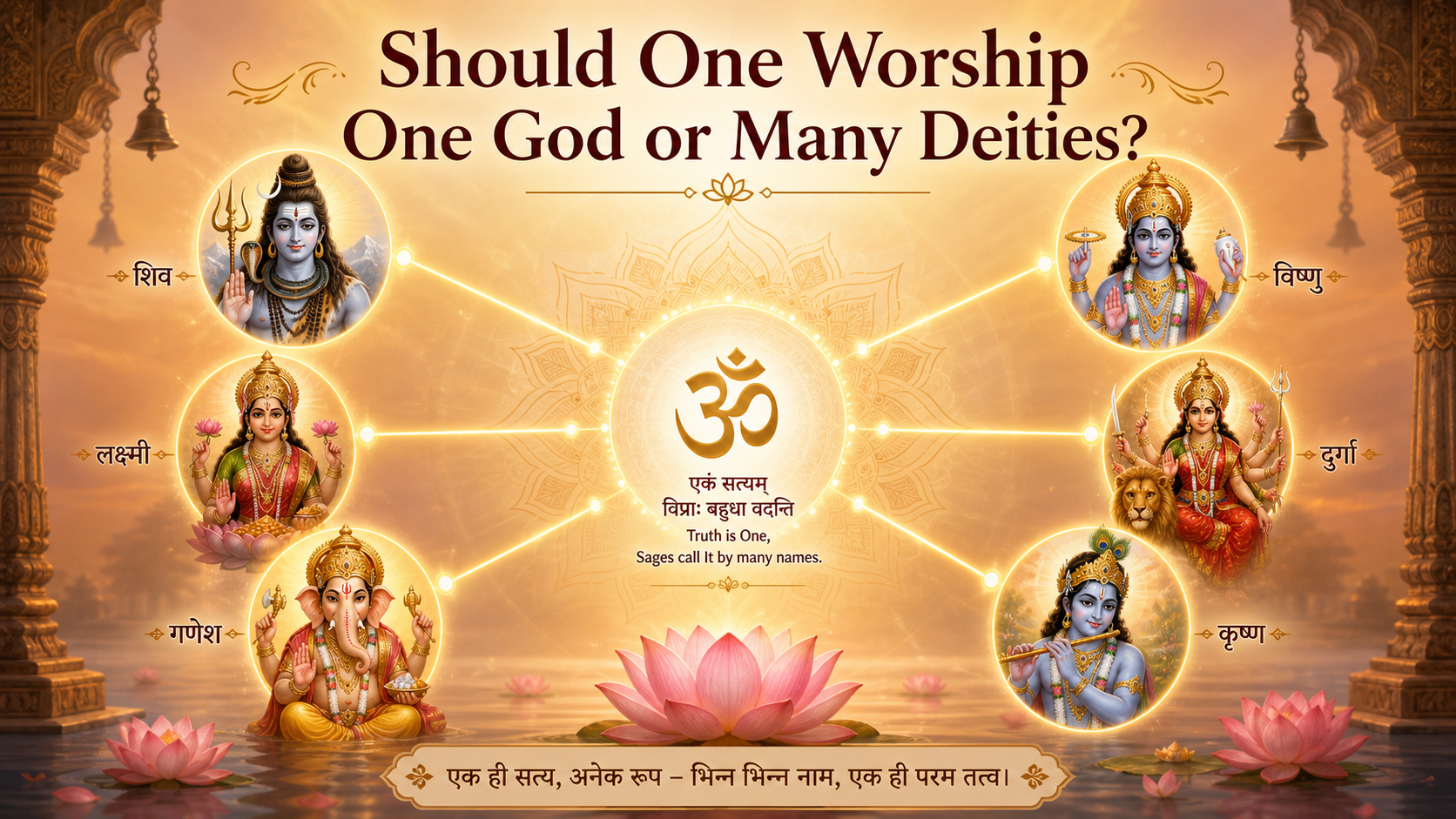
Should one worship One God or many deities?
According to the Gita, God is One alone. Deities grant temporary results, but exclusive devotion to the Supreme Lord is the path to moksha. Respect all deities, but make the Supreme your final refuge.
Read answer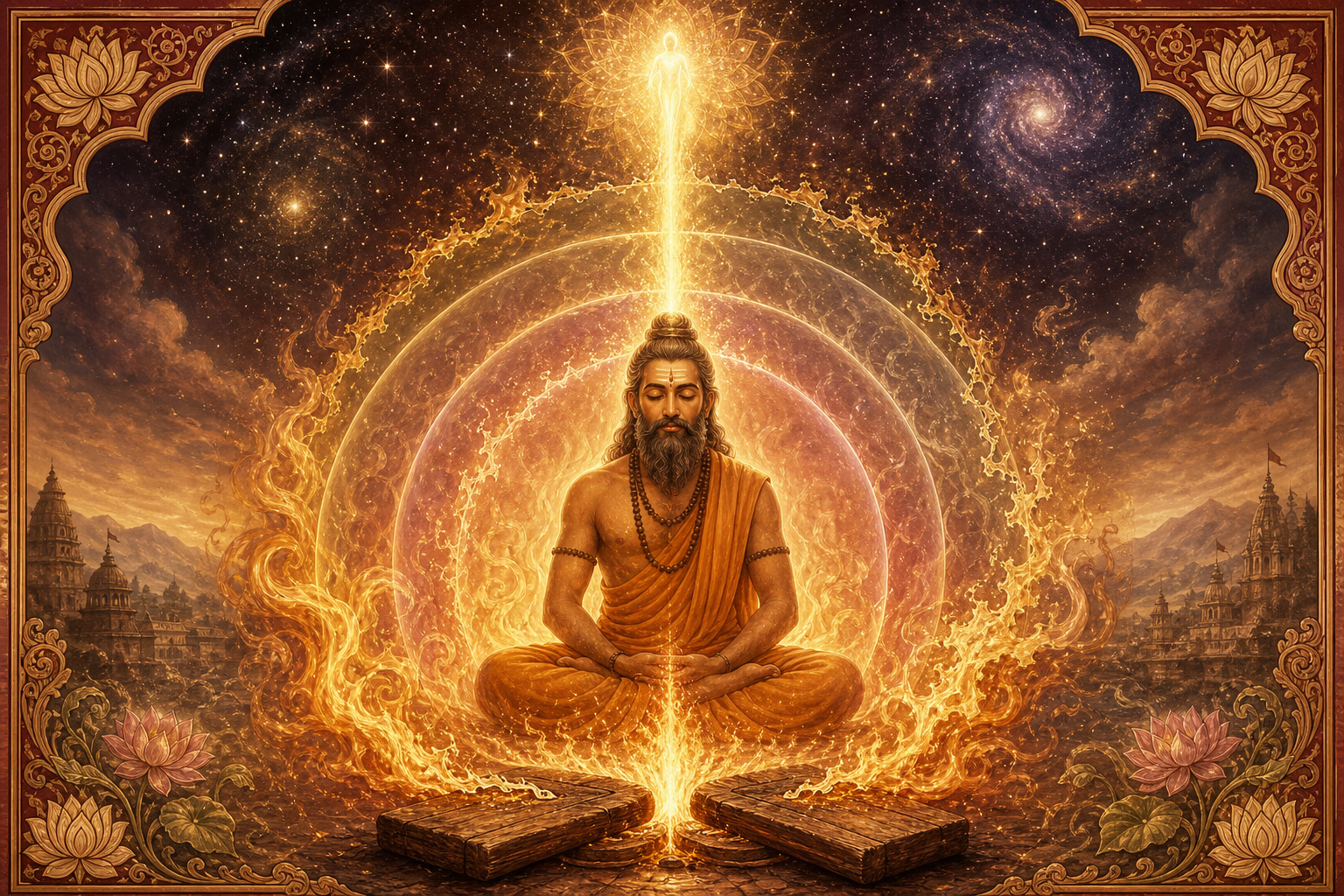
For moksha or liberation, how can the subtle body — the mind, intellect, and ego — be destroyed?
The mind, intellect, and ego are themselves elements of Prakriti, and the means to dissolve them are also found within Prakriti. Just as fire produced by the friction of two pieces of wood ultimately consumes the very wood that gave it birth, the fire of knowledge and devotion arising within the mind and intellect eventually burns away the entire subtle body — and the soul abides in its own pure, eternal nature.
Read answer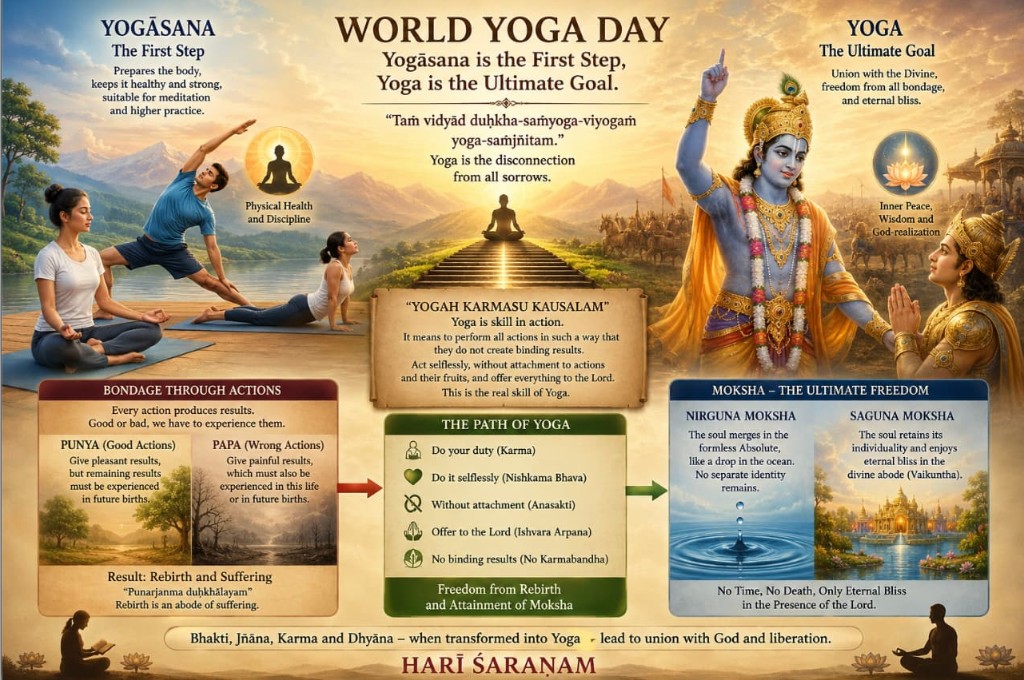
World Yoga Day: A day of Yoga, or merely a day of Yogāsanas?
On International Yoga Day, the world performs āsanas — but is that truly Yoga? BrahmBodhi explains that yogāsana is only the first step described by Patanjali; the real Yoga, as Lord Krishna teaches in the Bhagavad Gita, is the art of acting without producing binding karma, so that one is freed from rebirth and attains liberation.
Read answer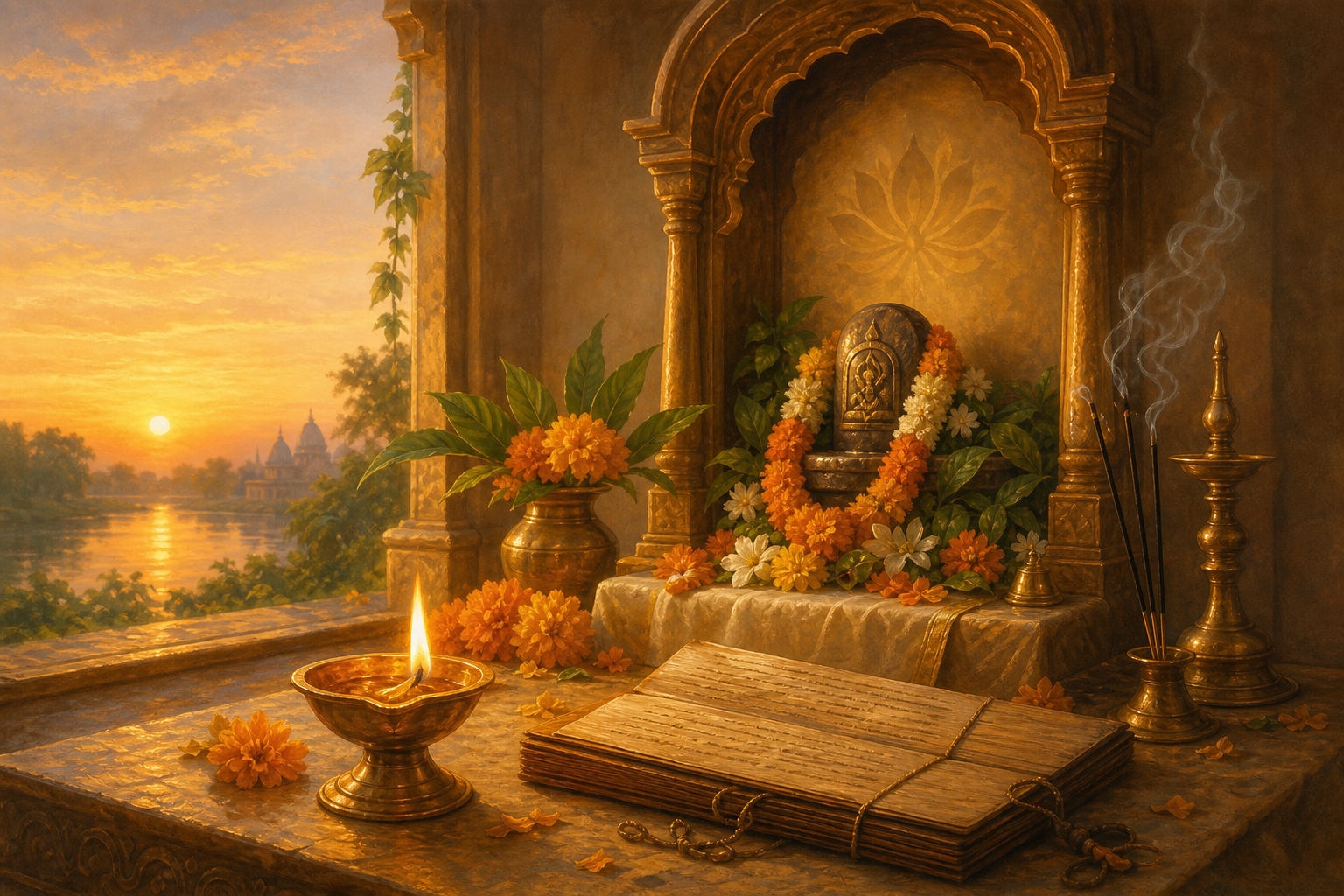
On which days should a Bhagavad Dharmi get a haircut, and what is the best time for worship?
A Bhagavad Dharmi is not a devotee of any particular deity but a devotee of the Supreme Lord Himself. Therefore, he need not worry about auspicious hou
Read answer
Does the soul take birth and die? If the soul is eternal, what does 'liberation' mean?
Your question is of great significance. Truth has many layers, and spiritual truth is deeply mysterious. The same truth is seen and described diffe
Read answer
What happens to the soul after death? Is heaven and hell on earth itself?
When we say that heaven and hell are on earth itself, what we are really saying is that one can experience heavenly happiness on earth and one can also ex
Read answer
Can one chant God's name without initiation from a Guru?
A student has both options available. He may either enroll in a school and pursue his studies there, or he may acquire knowledge through self-study with
Read answer
Is it right to do things for others' happiness even when it brings no joy to oneself?
The primary purpose of life is to attain happiness. If one can attain divine happiness, that is even better! When a person is eating and an extremely hu
Read answer
God keeps testing me with hardships — how should I cope?
Although this question was asked by a devotee regarding his personal problem, my answer is addressed to all the devotees present in this group, not jus
Read answer
What qualities should a Bhagavad Dharmi have to receive Diksha (initiation)?
The purpose of giving Diksha (initiation) in Bhagavad Dharma is to make the life of the initiate free from suffering, and to guide the soul after death
Read answer
What is Bhav Samshuddhi and Sattva Samshuddhi, and how to achieve them?
If grime has accumulated on a mirror, if dust has gathered on it, you cannot see your own face in it — or at least not clearly. In the same way, when im
Read answer
How does one attain God-realization (Bhagavat Prapti)?
God-realization occurs in many ways; there are multiple paths to it. Primarily, there are two kinds of approaches. The Bhagavad Gita states that some
Read answer
How to perform duty without attachment? What if we help someone and they betray us?
It is a matter of great joy that at such a young age, these matters are attracting your attention. This is evidence of growing introspection — in Engli
Read answer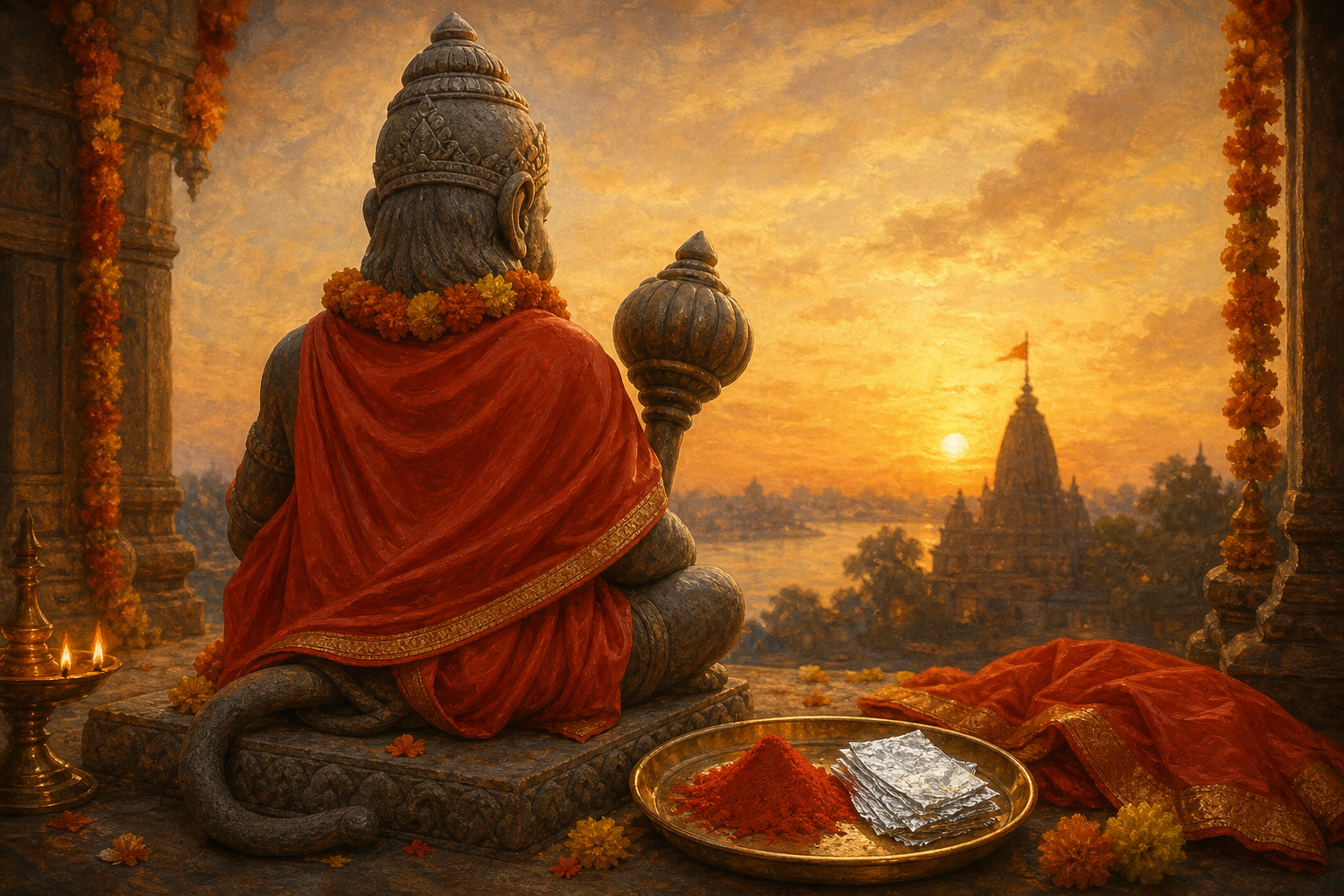
Should silver foil or sindoor be used when offering chola to Hanuman?
Silver foil (vark) is mostly associated with non-vegetarian sources. Buffalo intestines and similar materials are used in its preparation. Vegetarian si
Read answer
Can the Gayatri Mantra be chanted by everyone, or is it restricted to Brahmins?
The question of what method of sadhana one should follow must be determined from ancient and authoritative scriptures alone. That alone is safe. There
Read answer
I have absolutely no interest in God or worship — what should I do?
You do have an inclination toward God. It is clear from your very question that you are not an atheist and that you wish to move toward God. You have alr
Read answer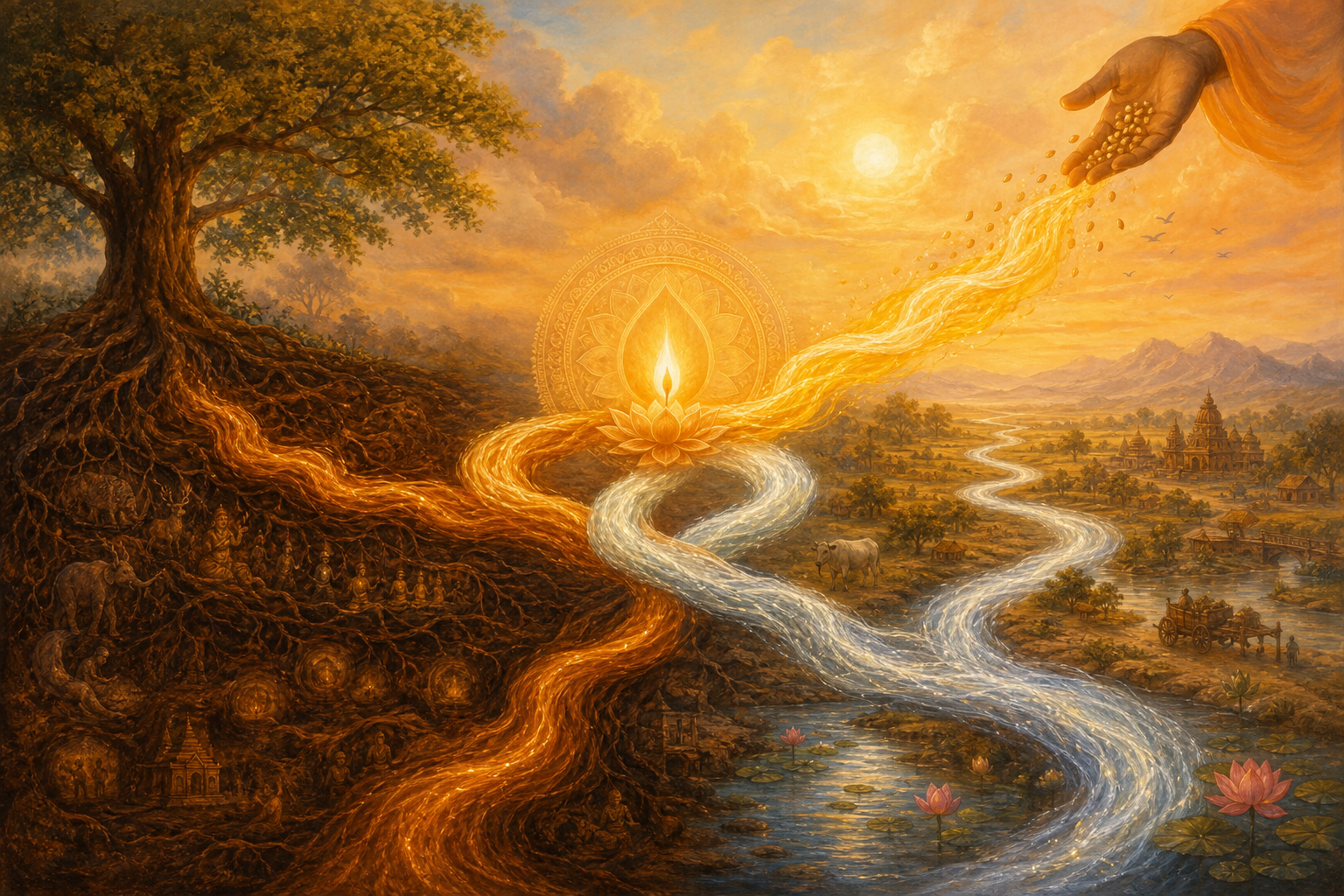
What is Prarabdha, Sanchit, and Kriyaman Karma? How do they affect our lives?
Sanchita Karma and Prarabdha Karma are parts of the doctrine of Karma itself. The doctrine of Karma states that whatever actions we perform, good or bad
Read answer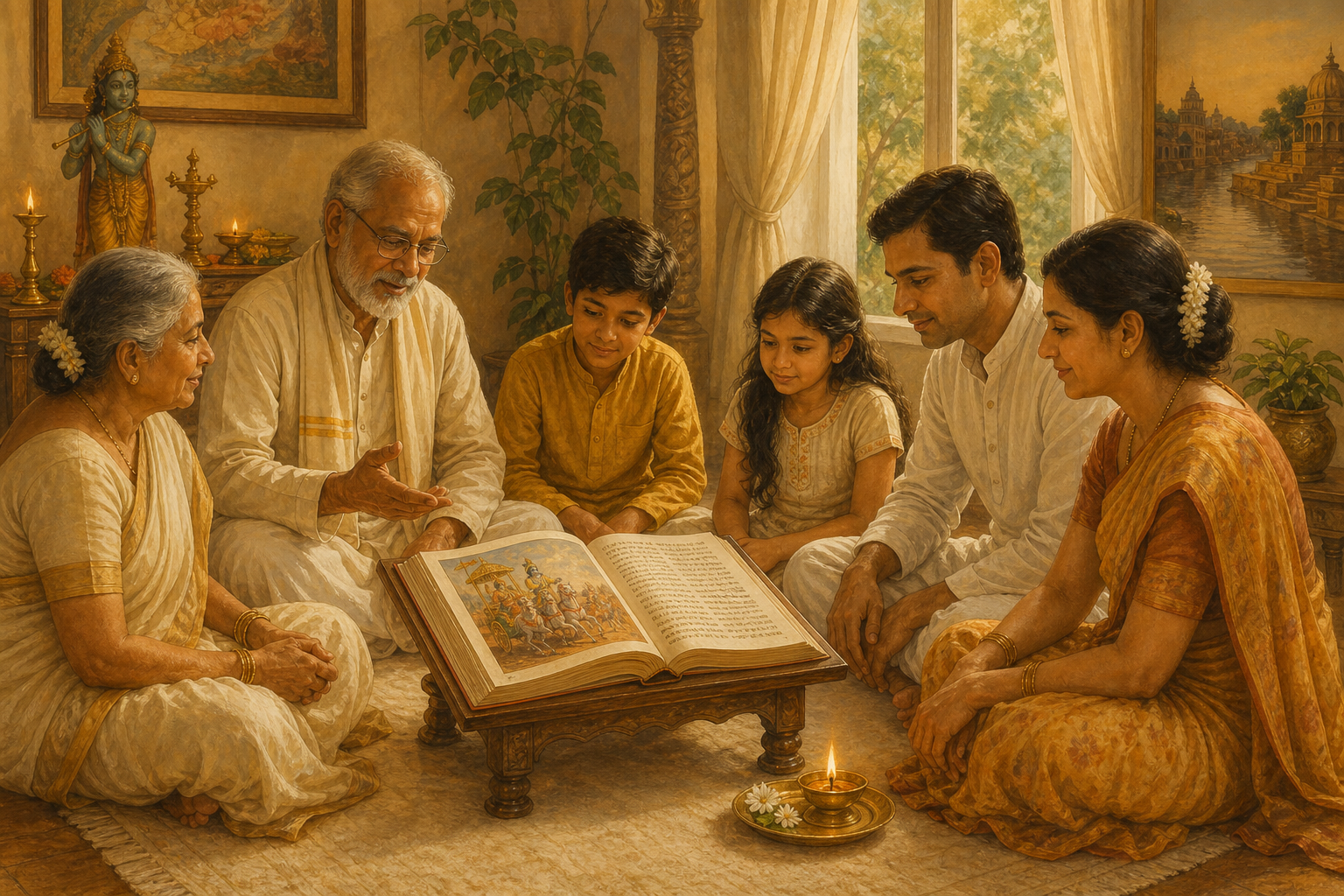
Our family reads the Gita together every Saturday — is there a specific method?
First of all, heartfelt blessings and good wishes to you and your brothers and sisters for conducting regular satsanga. The glory of satsanga is truly w
Read answer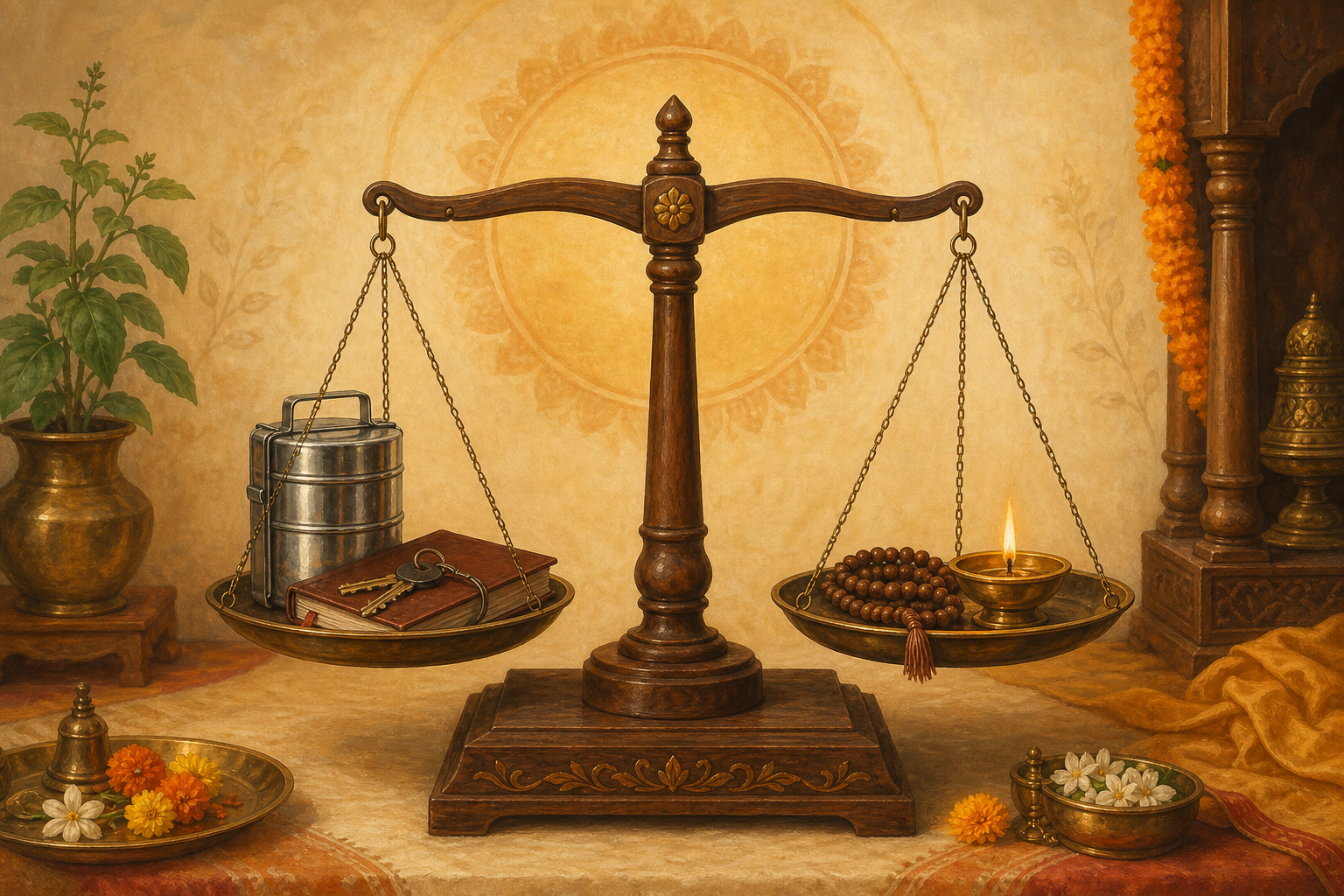
How to balance spirituality with household responsibilities?
Embedded in your very first sentence is an independent question -- how does one carve out even half an hour or an hour for the worship of God amid hous
Read answer
How to pursue spirituality alongside family duties and a job?
You have asked about Manasa Puja, or mental worship. Just as mental japa is considered superior to vocal japa and even whispered (upamshu) japa, so too
Read answer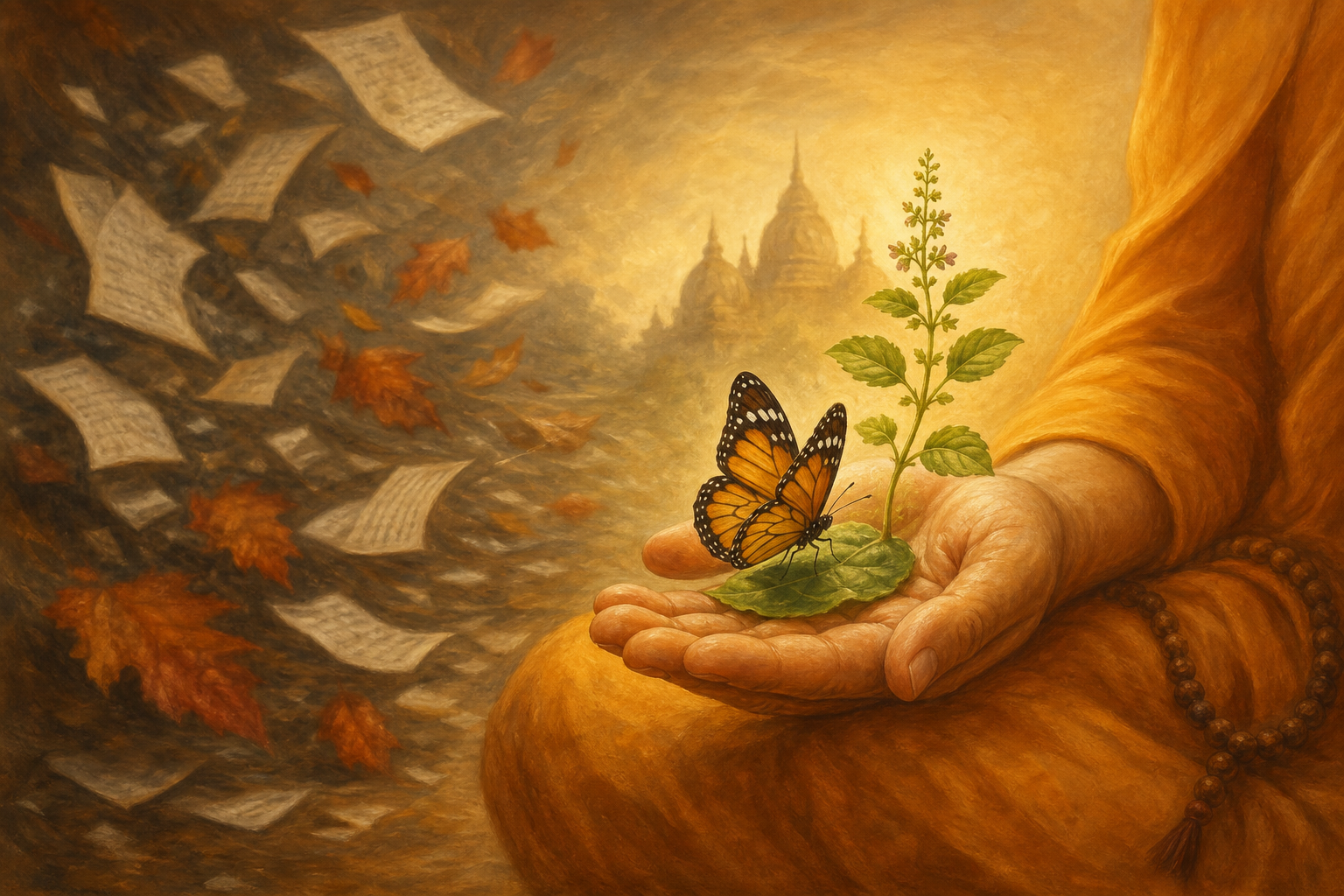
How to focus the mind on God's remembrance and mantra chanting?
I have previously written at length on how to engage the mind in the remembrance of God. This time I am presenting the same subject in a somewhat diffe
Read answer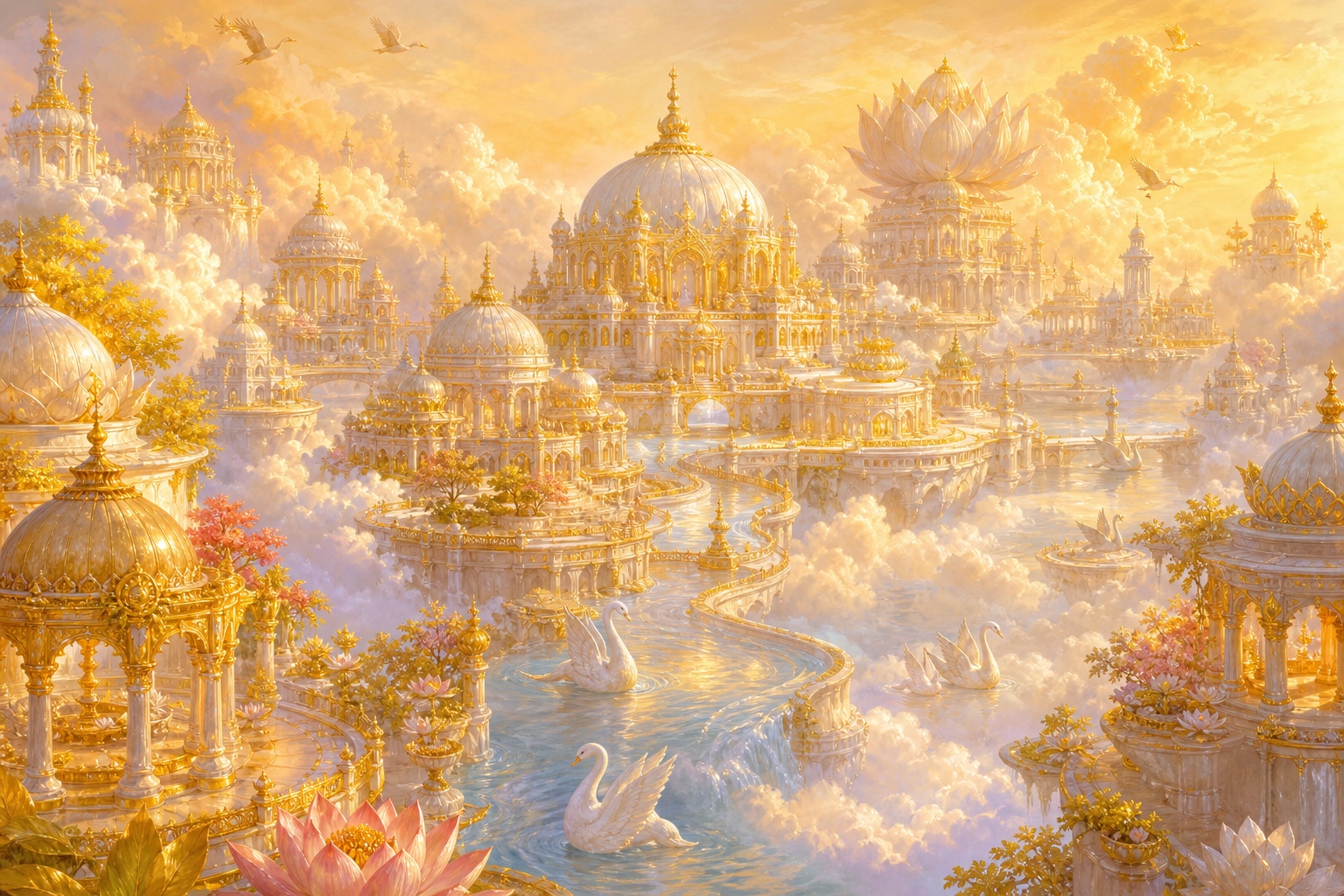
Please describe Vaikuntha — what is the Lord's supreme abode like?
The Bhagavata Purana presents the following depiction of Vaikuntha. I shall explain later how this can be transformed into a Vaikuntha meditation. (In
Read answer
What is the purpose of gems and celestial beauties in Vaikuntha?
There are two types of Moksha: Saguna Moksha and Nirguna Moksha. In both, liberation from birth, death, and all suffering is attained. Saguna Moksha is
Read answer
How to balance professional career with Bhagavad Dharma practice?
Nama, mantra japa, bhajana, kirtana, etc. are also means of spiritual practice, but they are not the sole means. In a previous post, I had clarified th
Read answer
I am a devotee of Mahadev but feel drawn to Krishna — what should I do?
Bhakti is of two types: one is polytheistic bhakti, i.e., devotion to multiple deities simultaneously. But in the Gita, the Lord's recommendation is di
Read answer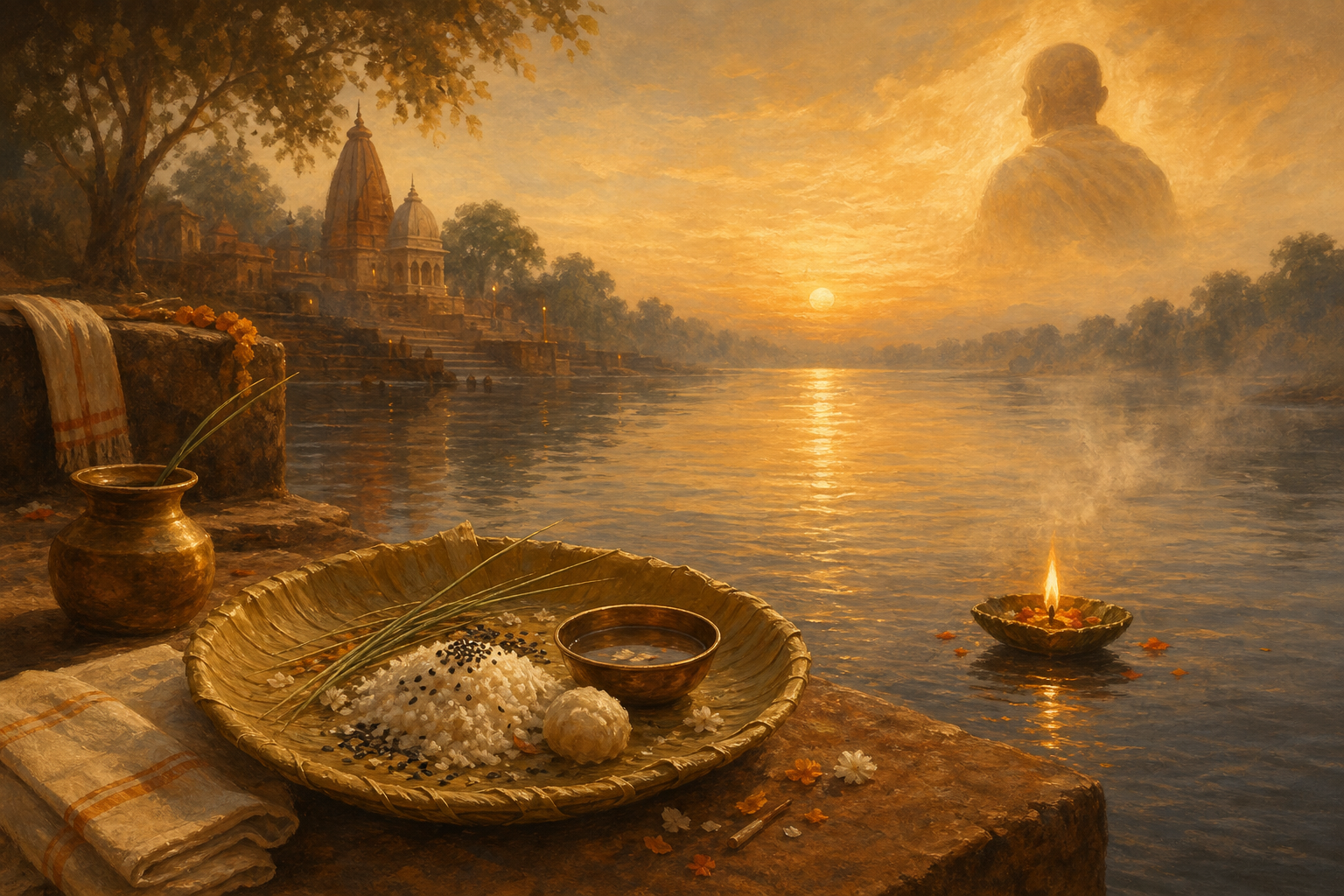
My father passed away untimely — what rituals should be performed?
This is a deeply sorrowful incident. The son on whose account this tragedy occurred — if indeed he was at fault in this matter, causing the father to ab
Read answer
What is the purpose of human life and how to walk the spiritual path?
First of all, let us understand that the Lord has prescribed three types of actions that are obligatory for everyone because they purify a person. Withou
Read answer
Can a soul choose its next birth? What determines where it goes?
When the atma (soul) leaves its gross body (sthula sharira), the subtle body (sukshma sharira) exits along with it, enveloping the soul. The subtle bod
Read answer
My mind is constantly consumed by lust — how to overcome this?
Atman, I have noted your problem. You are not alone in suffering from this problem — in the present age, a large number of people are afflicted by this
Read answer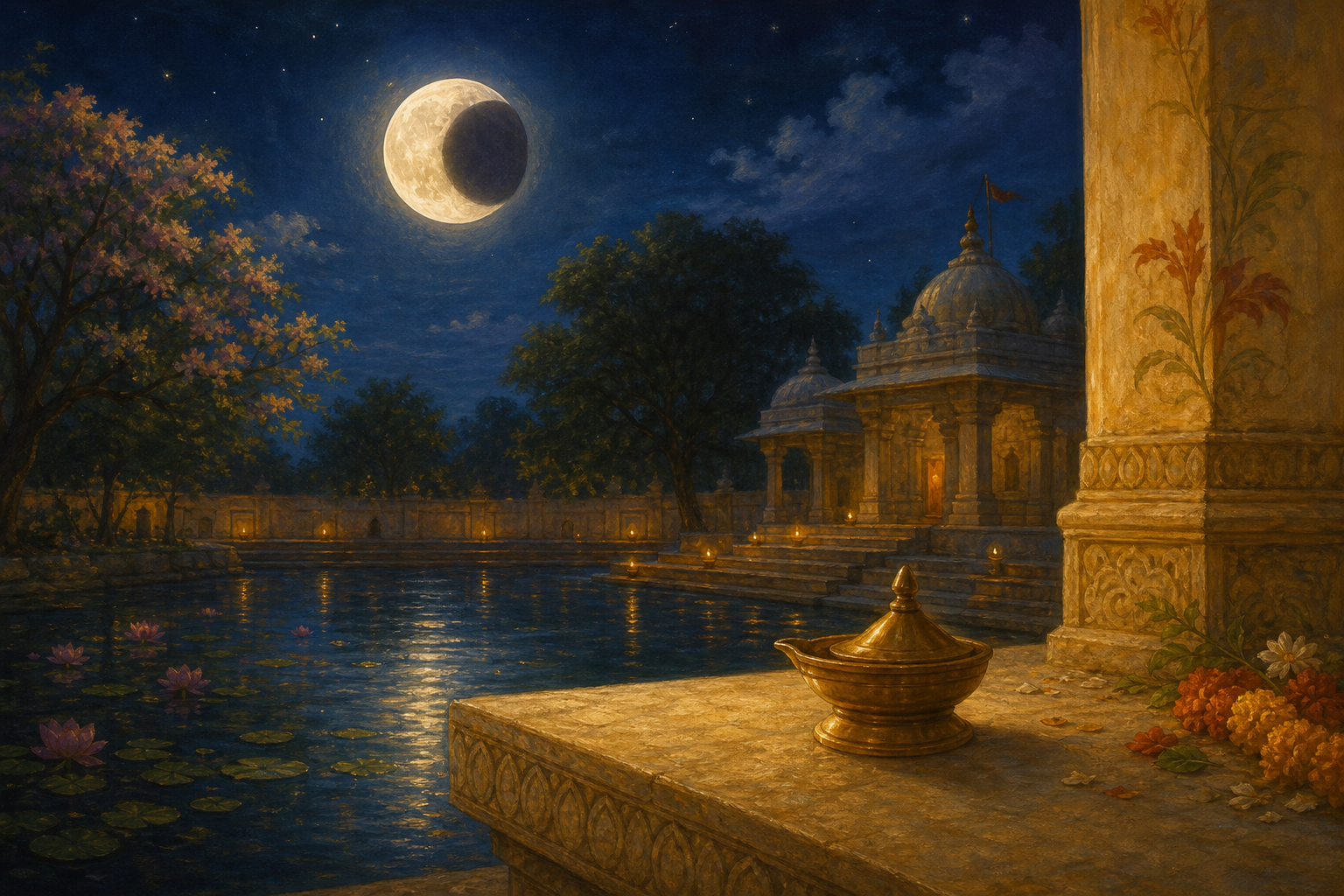
Are there specific rules for worship during a lunar eclipse?
Do nothing special. Abandon fear and apprehension. We must always take the Lord's Name. Continue doing so today as well, just as before. Such apprehen
Read answer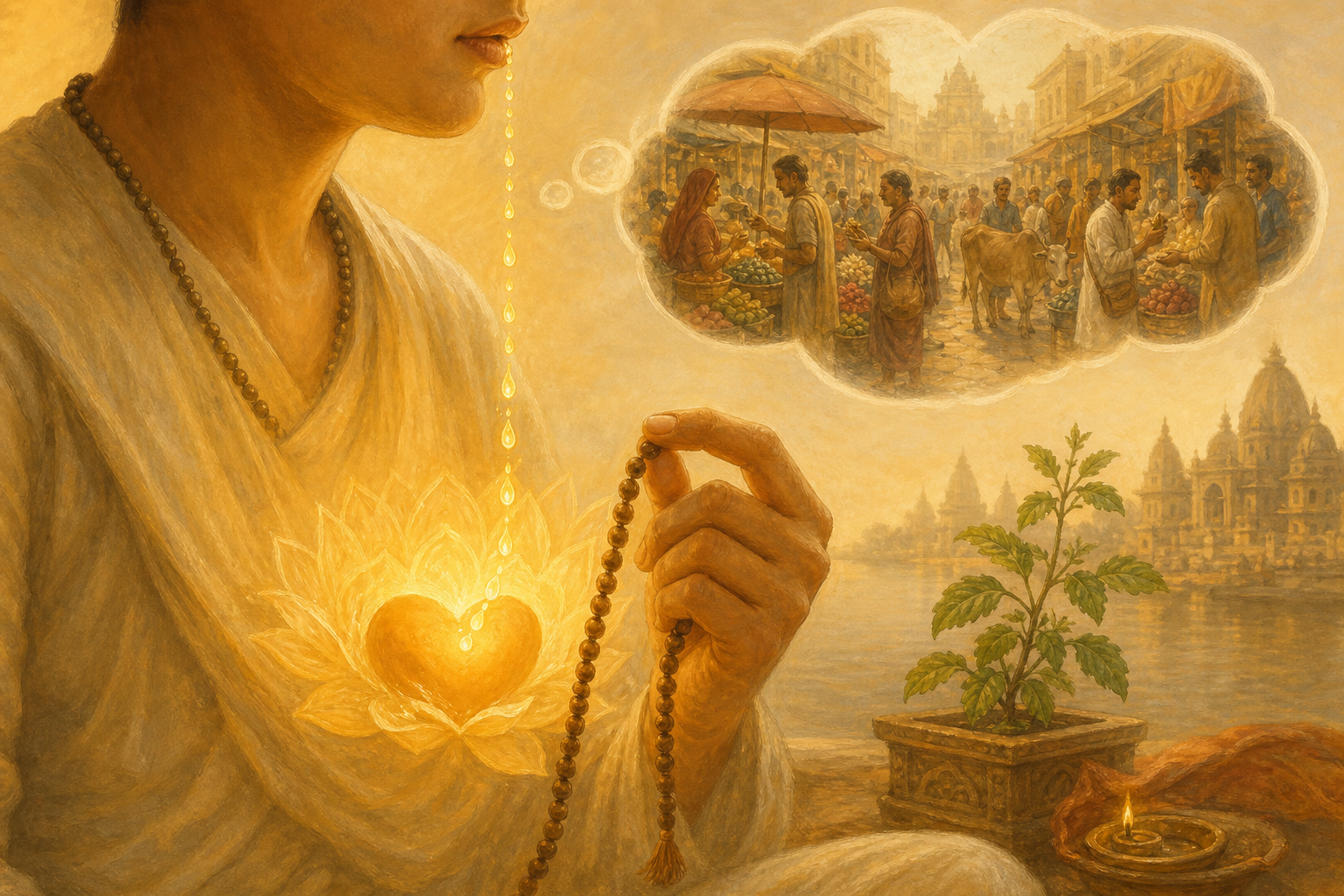
I chant but my mind wanders elsewhere — is such chanting effective?
Household Life and Spiritual Practice: The Householder's Responsibilities and Nama Japa. In the grihastha-ashrama (householder stage), there are numero
Read answer
If both Maya and the soul come from Brahman, how are they different?
From Brahma-Jijnasa to the Journey of Moksha. You have raised a very profound question! When the inquiry into Brahman (Brahma-jijnasa) arises in one's
Read answer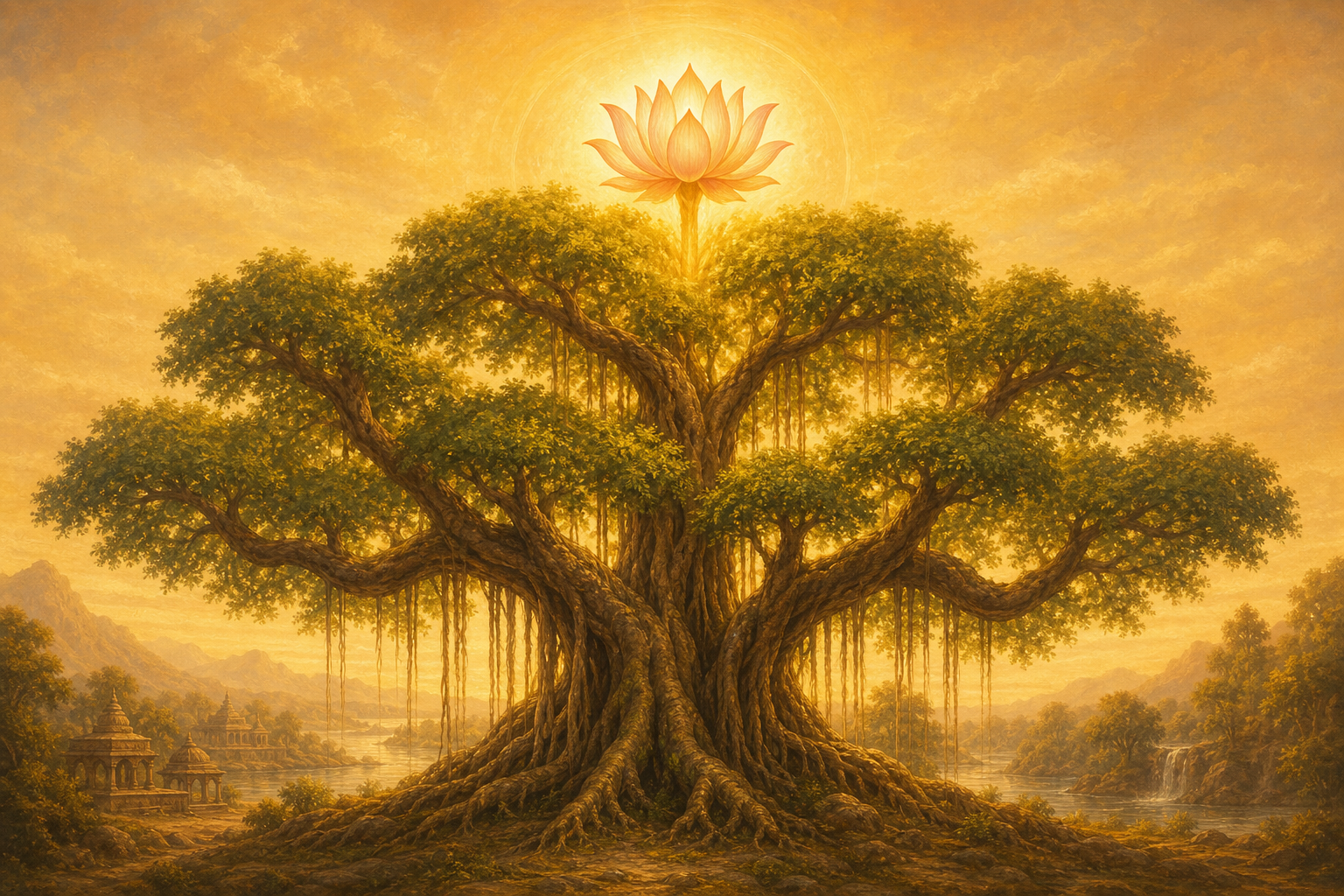
What is the difference between Veda and Vedanta?
The Rig Veda, Sama Veda, Yajur Veda, and Atharva Veda — these are the four Vedas. They are also called Samhitas. They are filled with mantras. Most o
Read answer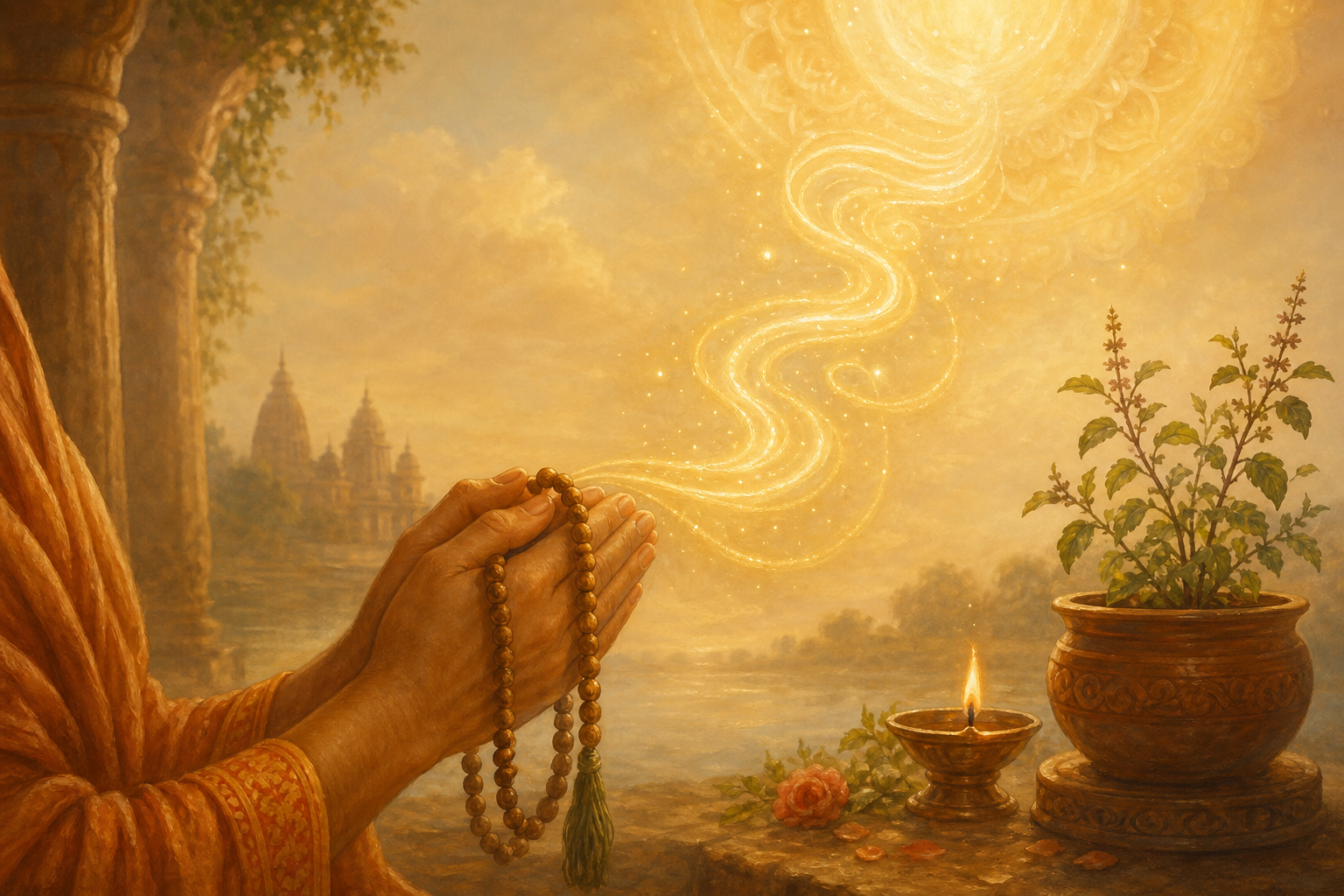
How do we know if God accepts and is pleased with our chanting?
Chanting of the Divine Name (Nama Japa) can be undertaken with two purposes. The first is simply for one's own spiritual growth, for self-purif
Read answer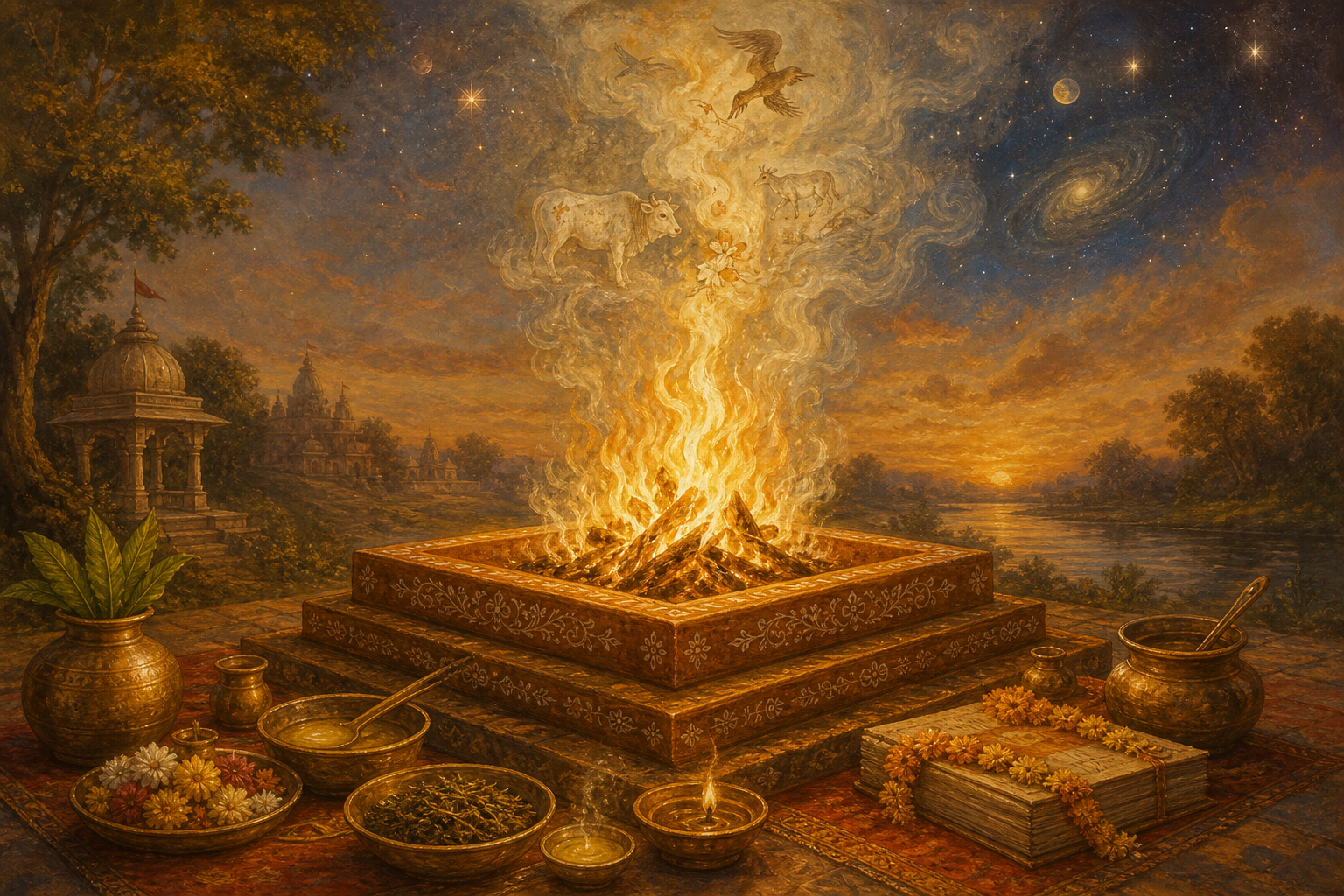
Why is Yajna important in human life according to the Gita?
The word Yajna means worship or adoration. However, its specific traditional meaning is to worship or propitiate the Devas by offering oblations
Read answer
The Gita seems to be the foundation for resolving all spiritual queries — is this so?
You have spoken the truth. In reality, such individuals do not need to go to the forest and take formal sannyasa; rather, they need to become sann
Read answer
How should a Bhagavad Dharmi assess their own spiritual progress?
We find that although Hindu Dharma has also been called 'Varna-Ashrama-Dharma,' in practice it is largely only the Varna-Dharma that has been fol
Read answer
What is the difference between Upanishads and Vedanta?
The primary difference between Vedanta and Neo-Vedanta lies in their historical and ideological development. Vedanta is an ancient tradition. As
Read answer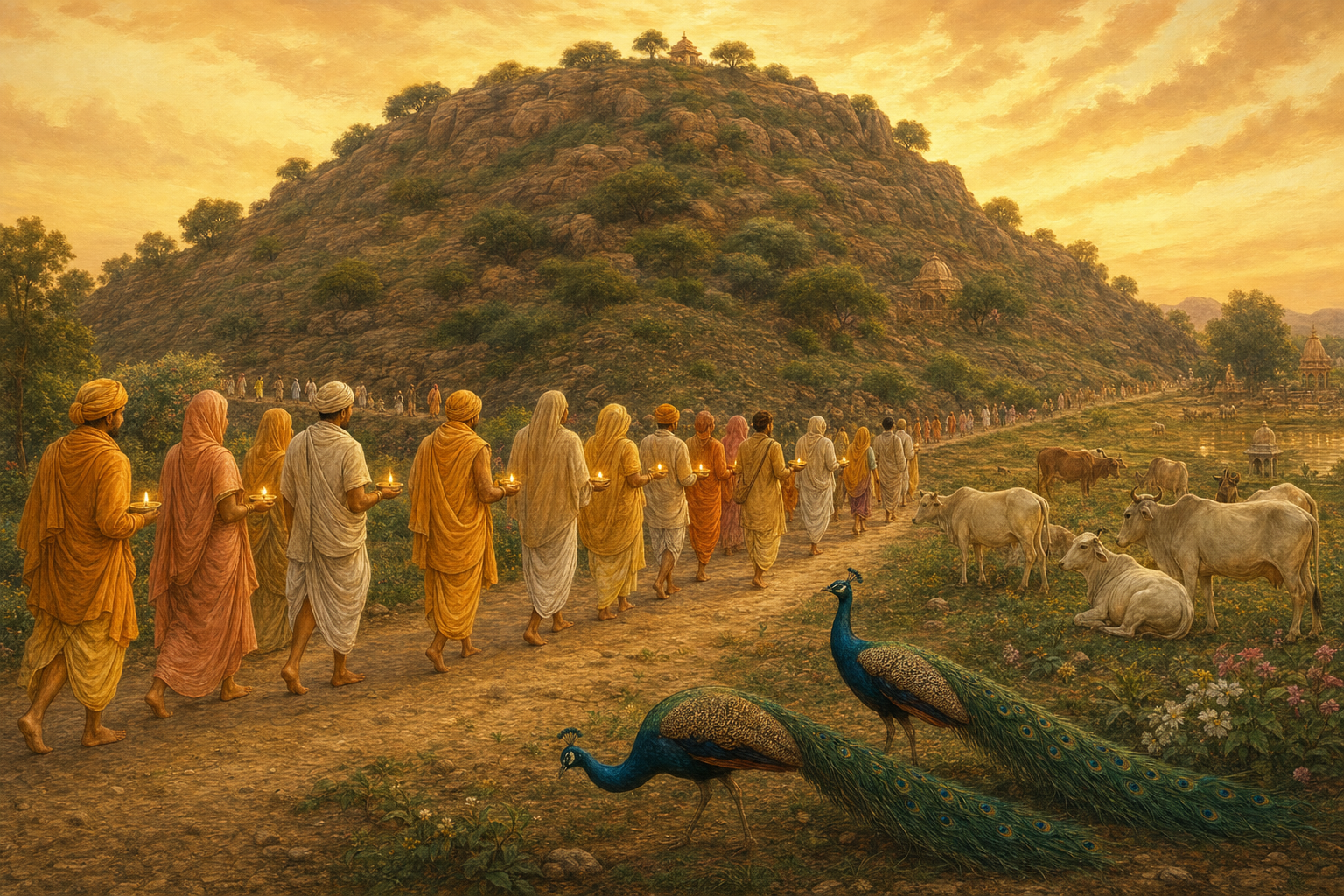
What are the rules for doing Govardhan Parikrama in Vrindavan?
This is a definite sign of your spiritual progress. The Bhagavad Gita speaks clearly on this matter, stating that worship must be marked by compl
Read answer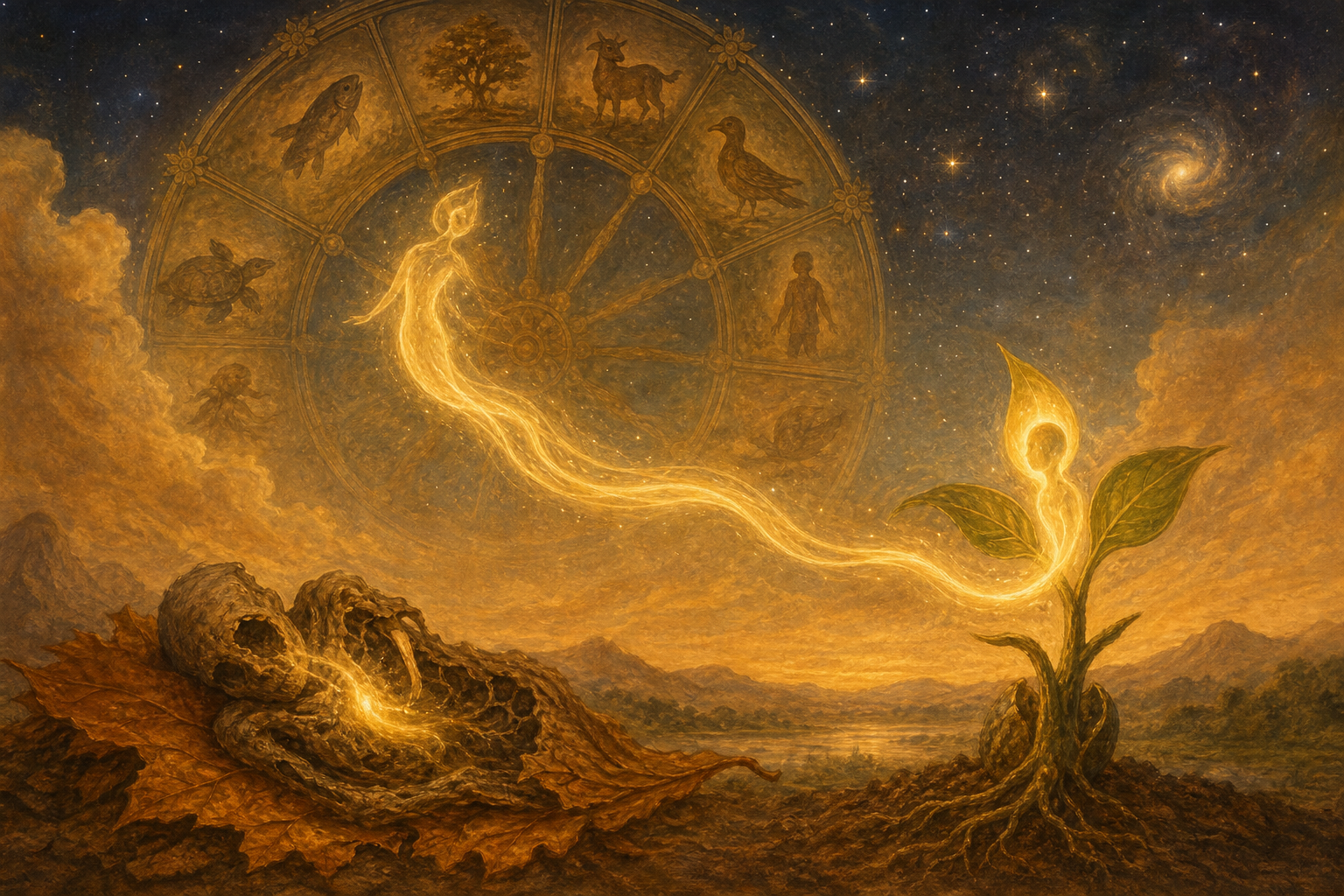
Belief in rebirth seems difficult without direct proof — how to develop faith?
In the scriptures of Dharma and spirituality, there are many things that cannot be physically verified. Some things are also stated whose experie
Read answer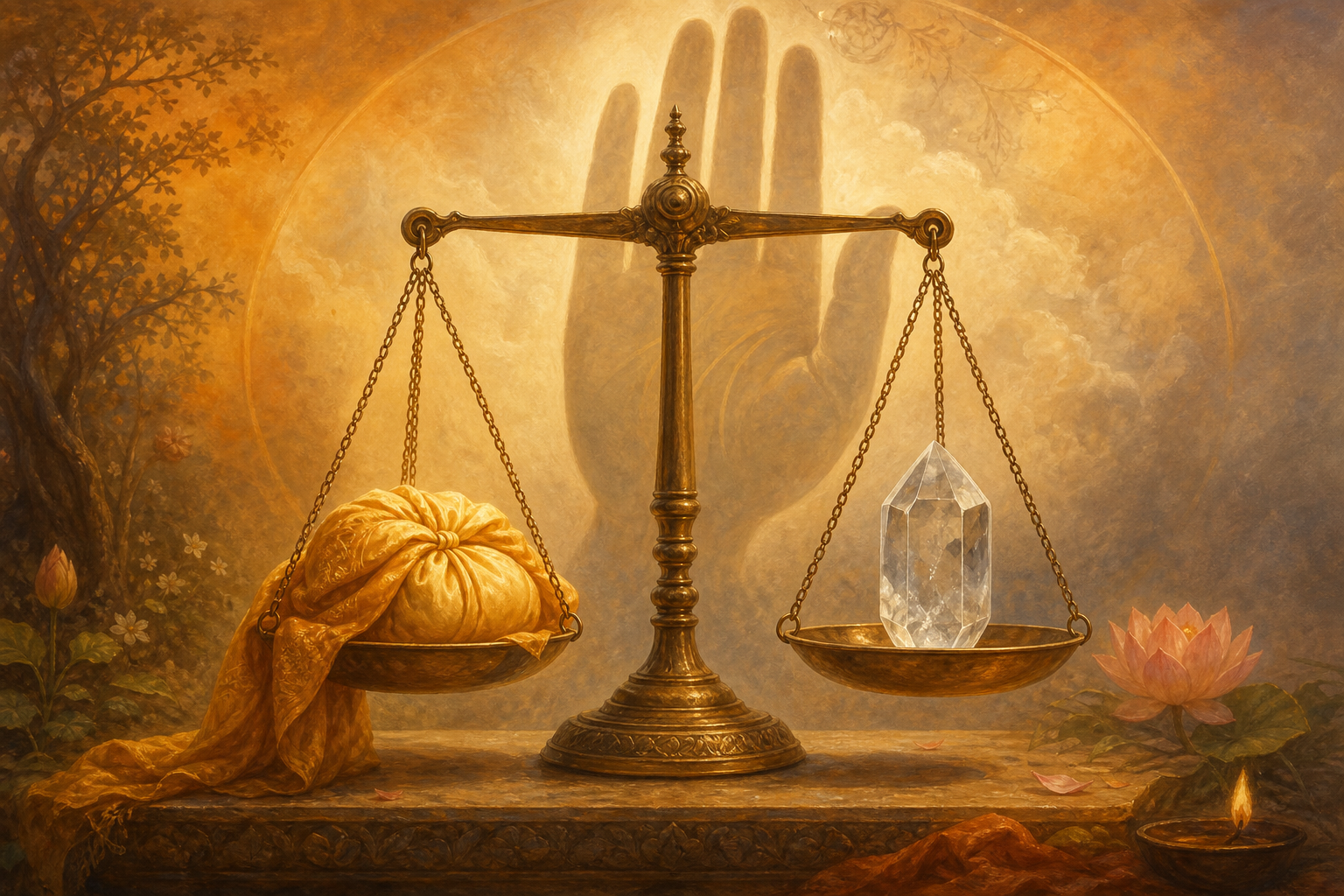
Is it acceptable to lie for the welfare of others?
There is a very ancient tradition in Sanatan Dharma of speaking the truth and honoring truth, and truth has been given a place among the highest
Read answer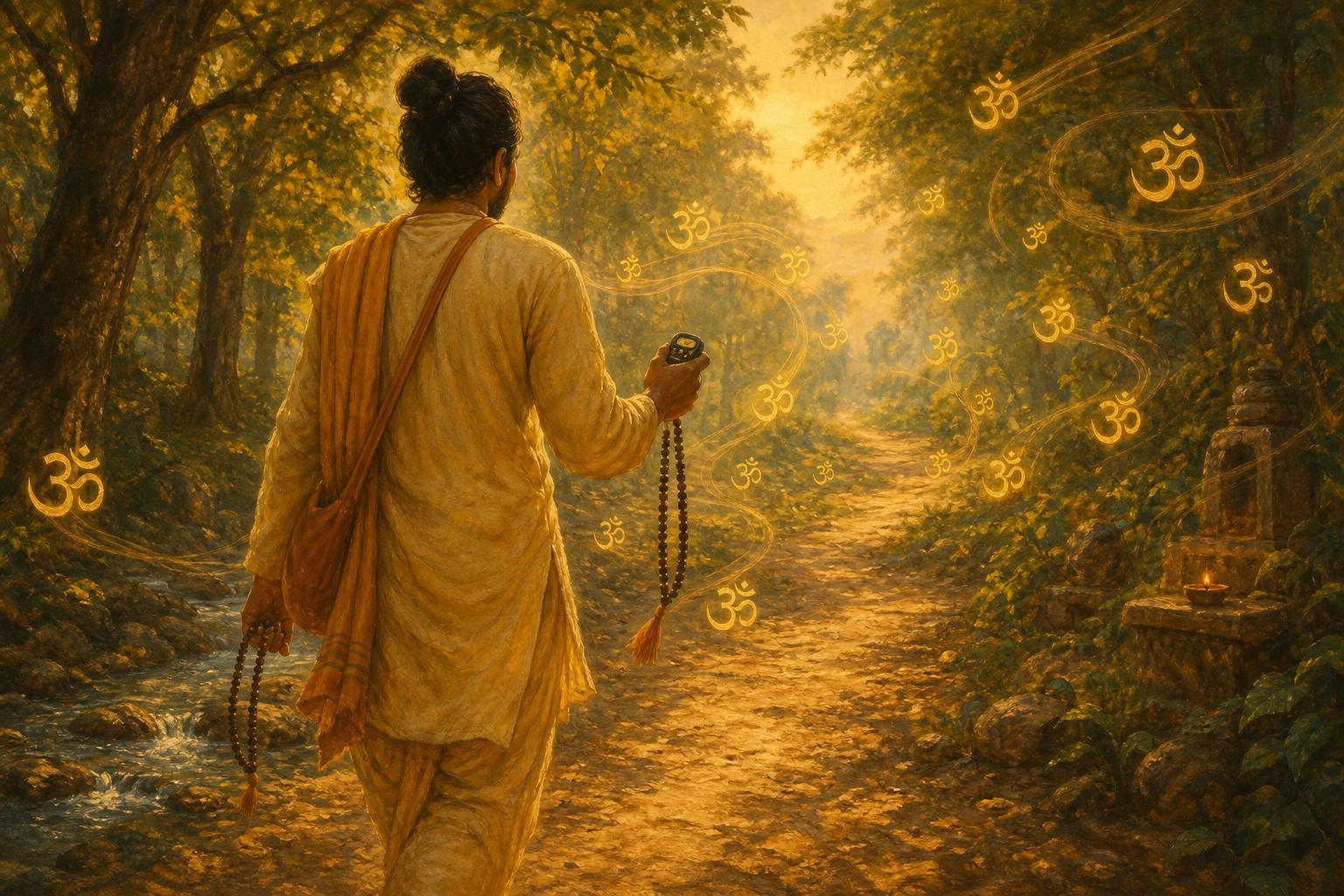
Is chanting while walking, working, or using a counter valid?
Spirituality is a serious subject — an exceedingly serious subject. In truth, life itself is a very serious matter; yet very few people comprehen
Read answer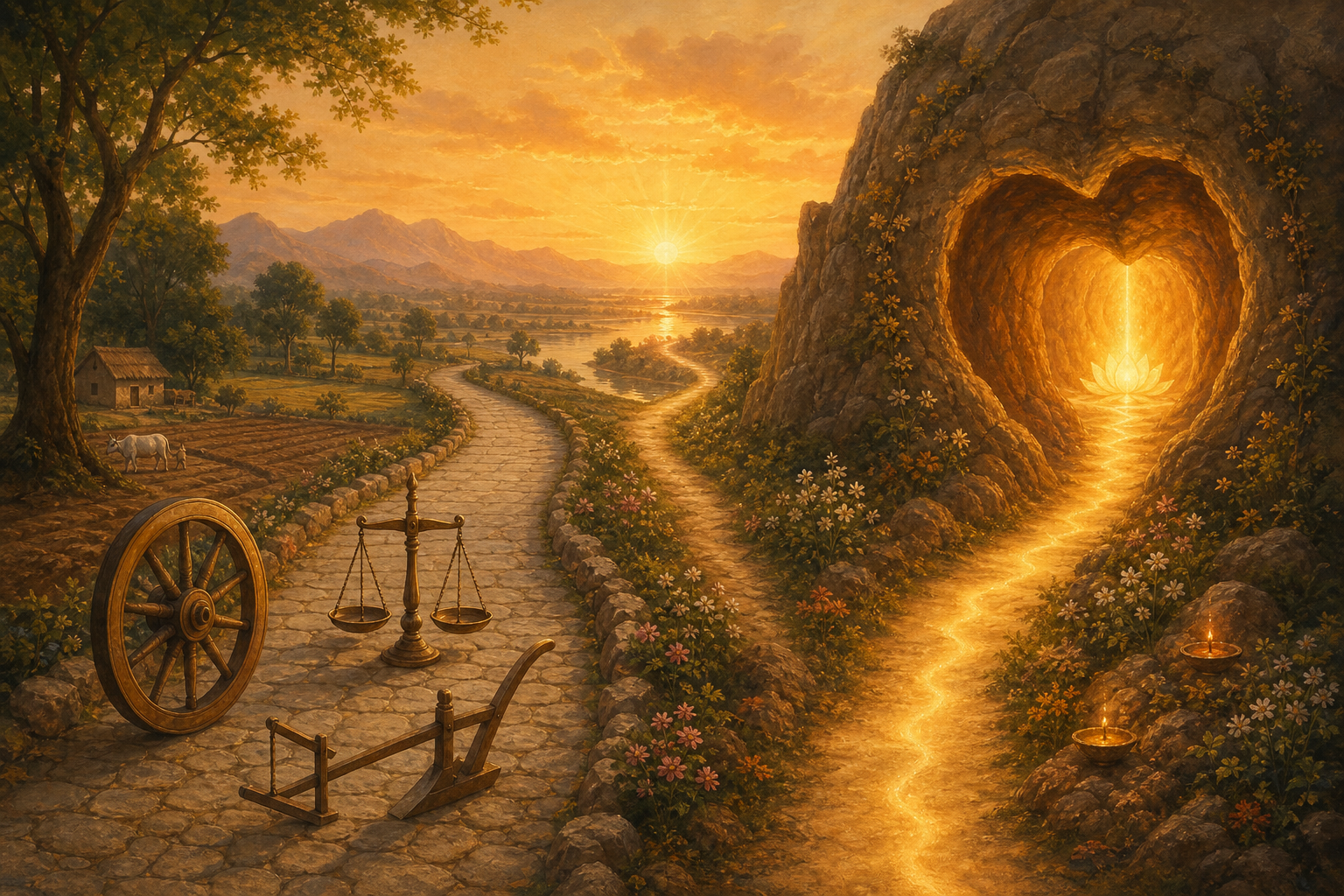
What is the difference between Dharma and Adhyatma (spirituality)?
People often ask what the difference between Dharma and Adhyatma (spirituality) is. We can understand this through the analogy of an orange. An
Read answer
Why has Hindu society declined and what role does religious leadership play?
The compassion found in the scriptures of Hindu Dharma is rare indeed. Then why is it that this compassion is not visible in the conduct of Hindus? Go
Read answer
Which path to choose — Jnana Yoga, Karma Yoga, or Bhakti Yoga?
The Lord has divided all spiritual paths in the Bhagavad Gita into two principal categories — the path of Pravritti (the householder's 'Yoga' path, the
Read answer
A follow-up question on the path of devotion and spiritual practice
As far as I know, your complete bio-data had not arrived on that number. Either it was received but those people did not present it before me, or perh
Read answer
What are the different types of God-realization (Ishvar Darshan)?
(Five Stages of Divine Realization) A seeker walking the path of spiritual practice experiences many kinds of spiritual realizations. Among them, one
Read answer
A discussion on Bhakti Yoga — the path of loving devotion
When Arjuna asked, the Lord discussed in the twelfth chapter of the Gita the distinction between the worship of the Nirguna-Nirakara God (Brahman) an
Read answer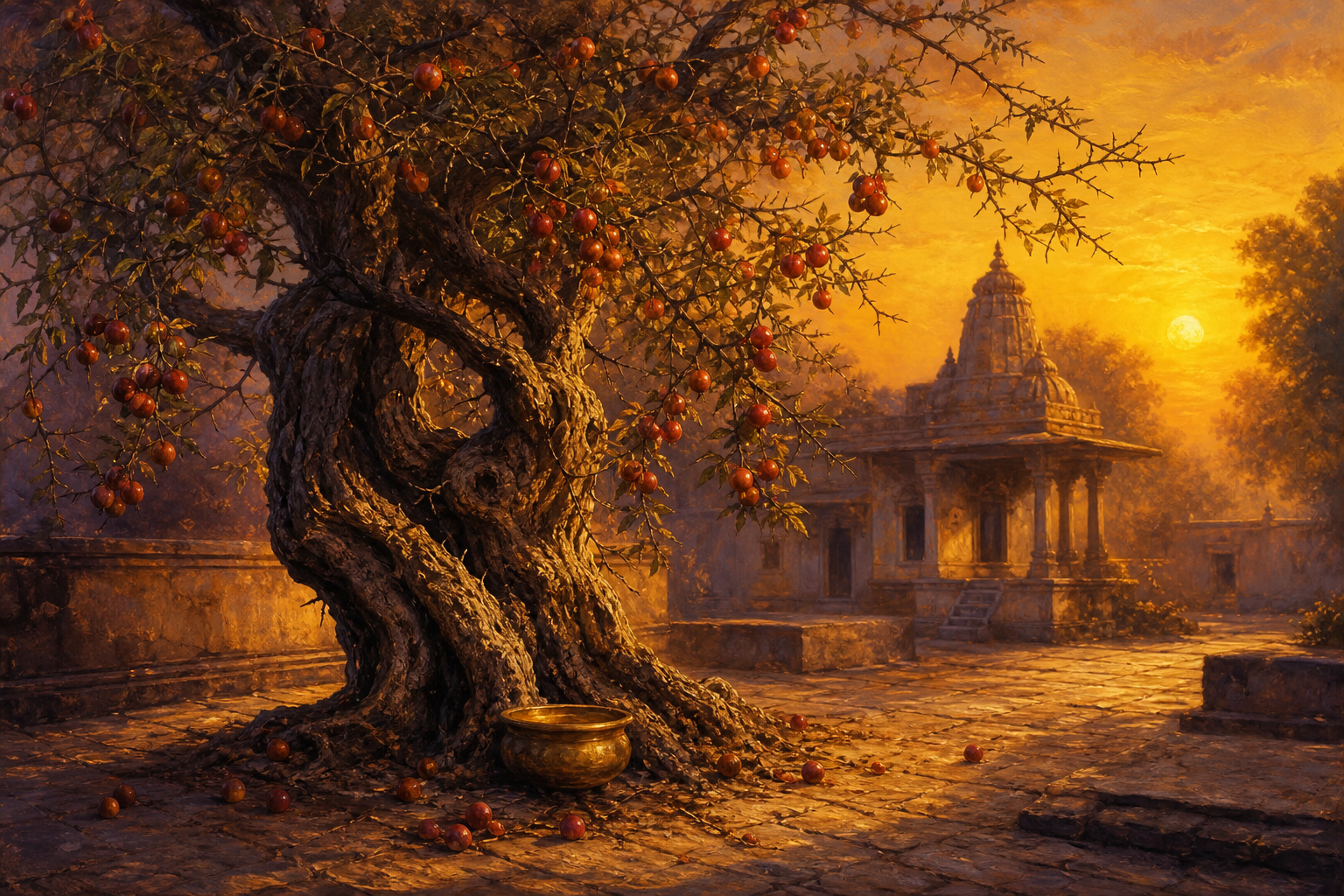
Can one cut a thorny tree even if it bears fruit and causes harm?
Every tree is a manifestation of life. It is a living being. The ber (jujube) tree, moreover, is a fruit-bearing tree. What serious harm it could poss
Read answer
What essential values build a strong human character?
Building Human Character Dear devotee, You had asked two questions — the first being: what are the essential elements for building a strong human c
Read answer
What kind of charity should a Bhagavad Dharmi give and how to serve society?
Charity (dana) is an exceedingly serious subject, and why one should give, what to give, how to give, and to whom to give — all these are important as
Read answer
Can Bhakti or present actions change Prarabdha (destiny)?
To understand the correct answer to this question, we must first understand the structure of the universe and the laws governing its operation. The Lo
Read answer
A doubt about the relationship between Atman and the body
In the 56th verse of the 18th chapter and in several subsequent verses, the Lord is speaking in the 'first person singular' — in the 'I' voice. There
Read answer
How to practice self-control and inner discipline in today's world?
Gita: Self-Control or Self-Mortification? When the Gita speaks of self-control (atma-samyam), it does not refer to any harsh penance, punishment,
Read answer
How does modern management theory align with Gita's wisdom?
Modern management theory holds that clear goal-setting and well-planned execution are essential for the success of any project. At first glance, it ma
Read answer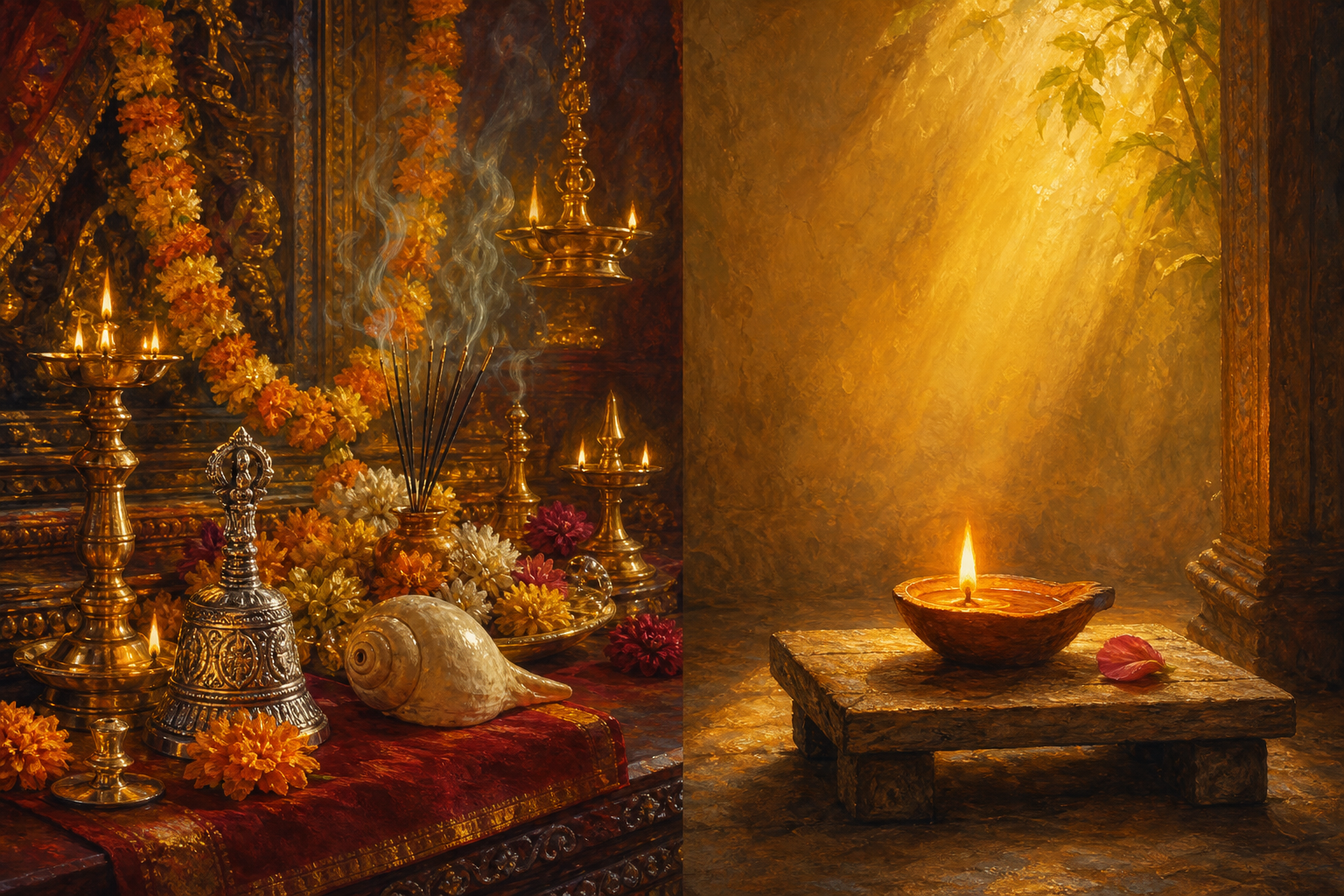
Are incense, lamps, and rituals necessary for worshipping God?
Worship of the Lord is performed in many ways, and people worship for many reasons. Once these reasons are understood, the question of whether incense
Read answer
Should one criticize others or excel oneself to prove supremacy?
No message in the Shrimad Bhagavad Gita suggests that the purpose of any of our actions should be to prove ourselves 'the best.' However, certain sp
Read answer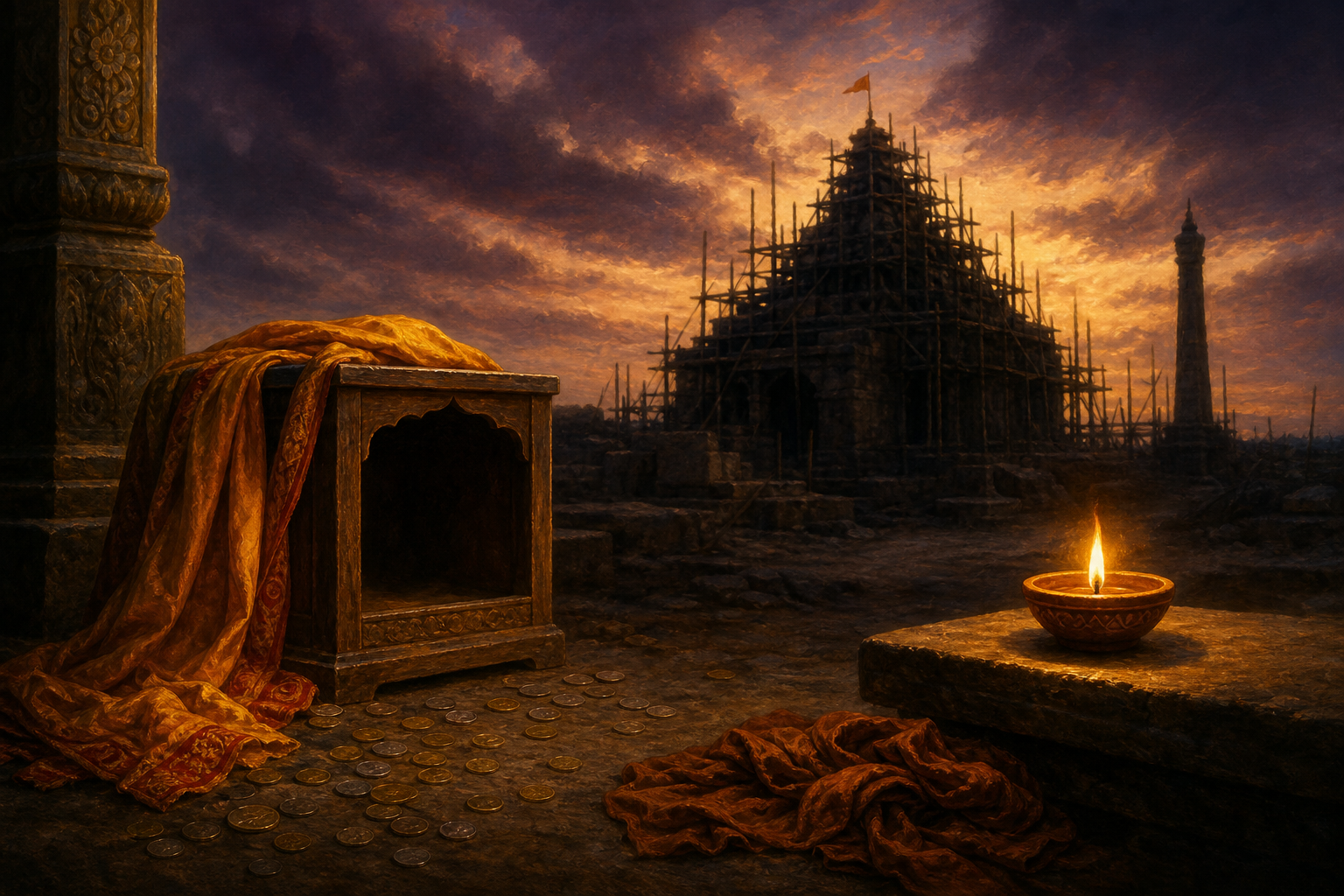
How to deal with fake sadhus who collect money in the name of temple construction?
According to the Shrimad Bhagavad Gita, giving charity is not an optional social activity but a compulsory sacred duty. Charity purifies the inner co
Read answer
What does the Gita teach about meditation on World Meditation Day?
Meditation Day: Right Perspective and Right Choice Today is Meditation Day. It is certainly a matter of joy that, on India's initiative, the United N
Read answer
Explain all the yogas — Karma, Bhakti, Jnana, Japa, and their relationships
All Yogas: Paths to Moksha All the yogas mentioned here are paths to moksha (liberation). Moksha means complete freedom from the cycle of birth and d
Read answer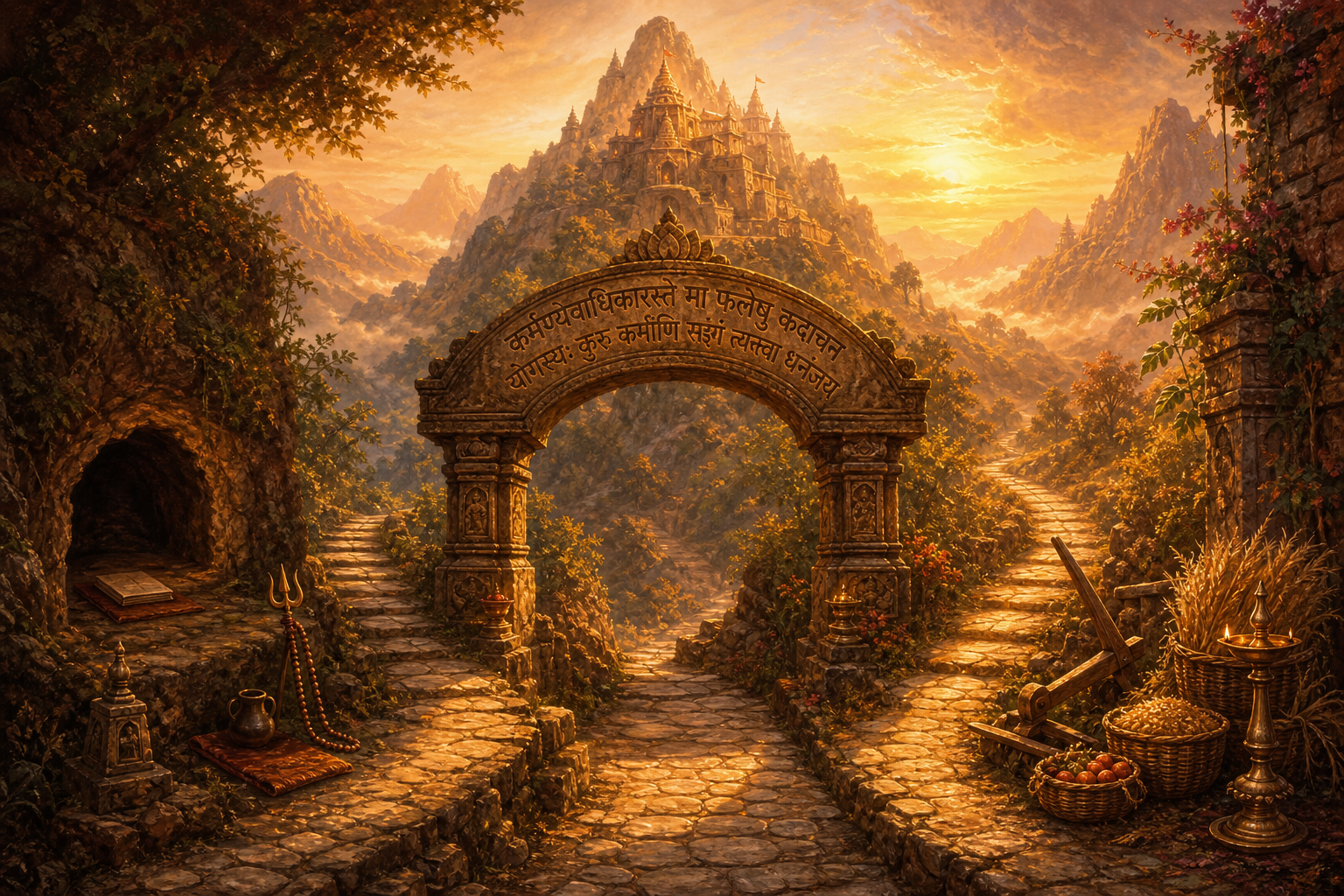
What are the two paths mentioned in Gita Chapter 3, Verse 3?
If the term "Sankhya Yogi" is taken in the narrow sense, it refers to a practitioner who follows the Sankhya philosophy of Sage Kapila. Sankhya Darsha
Read answer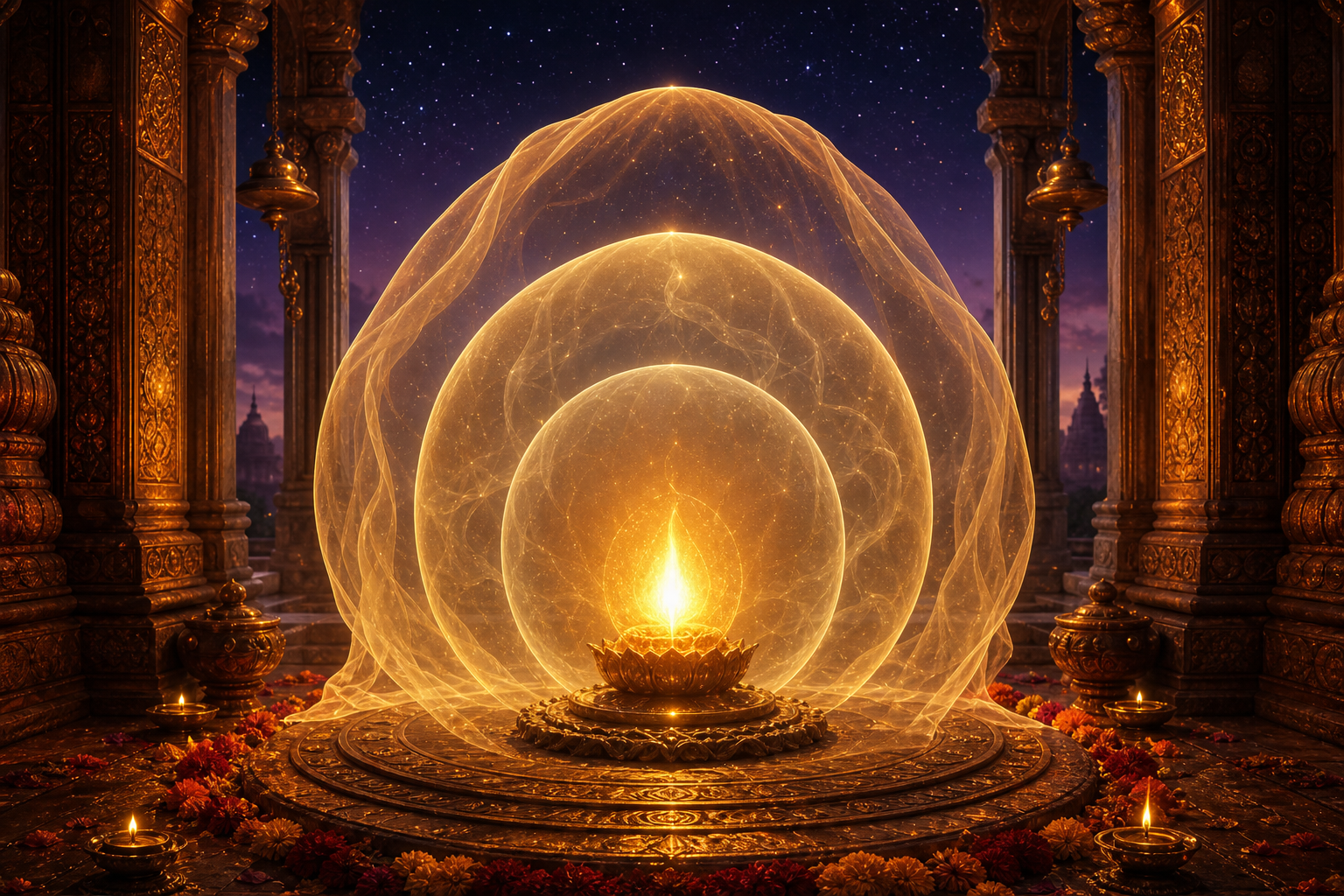
What are the gross, subtle, and causal bodies? How does the soul relate to them?
The gross body (sthula sharira) is that body in which the hands, feet, heart, lungs, brain, and other organs exist in their gross, physical form. In o
Read answer
How to maintain spiritual practice while traveling abroad?
The description of the order of creation in your letter broadly corresponds to the process described in Sankhya, the Upanishads, and the Puranas. The
Read answer
What are the key human qualities — love, compassion, and humility?
Hari Sharanam. Today we shall reflect upon three subjects that appear different on the surface, but are in truth three facets of a single reality — hu
Read answer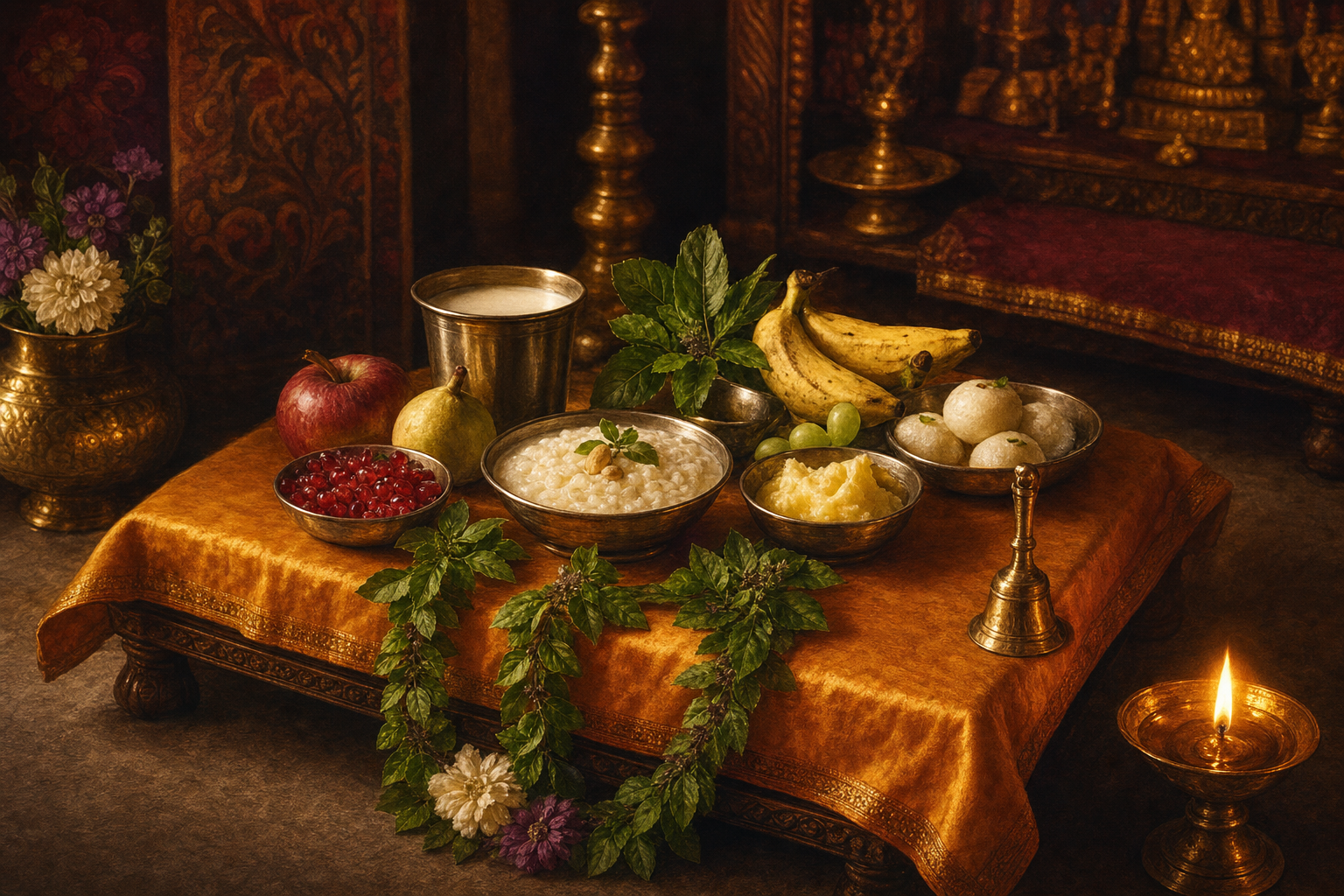
Can Laddu Gopal be offered garlic and onion? What about leather items near deities?
Answer (Brahm Bodhi): First and foremost, it is essential to understand what holds the greatest importance in the worship of God. In the path of devot
Read answer
Is fasting necessary for both body and mind? What does the Gita say?
Answer (Brahm Bodhi): A detailed discussion on the Ekadashi vrata has already been conducted in this group, with scriptural references included. Kindl
Read answer
Does a horoscope (Kundali) guide us or mislead us?
(By Brahm Bodhi) How accurate are predictions made on the basis of a horoscope (kundali)? This is a debatable subject. Experience shows that a horosco
Read answer
What is the purpose of human birth?
To live a sattvic, joyful life while maintaining a proper balance among Dharma, Artha, Kama, and Moksha — these four Purusharthas. Happiness is the pr
Read answer
A personal story of spiritual awakening and transformation
The Bhagavad Gita clearly explains who is responsible for the difficult circumstances of a human being. Some circumstances arise from destiny, and th
Read answer
The mind is lame — it cannot walk without the crutch of God's name
Joshi Ji, regarding your question, you have asked for references from the Gita and similar scriptures. Therefore, I shall first provide you with some
Read answer
How can mental stress be healed through Gita's wisdom?
Dubey Ji, the answer I gave you earlier may have caused you some hurt, but it must have also provoked some reflection. You are surrounded by multiple
Read answer
Is Bhagavad Dharma and Bhagavat Dharma the same or different?
In my answer to your previous question, I clarified how the two are different. Please take the trouble to read it once. In brief, Bhagavat Dharma is
Read answer
What obstacles arise on the spiritual path and how to overcome them?
The Bhagavad Gita is a scripture of liberation in the midst of duty. It is a text of synthesis (samanvaya-shastra). The Ashtavakra Gita is a scriptur
Read answer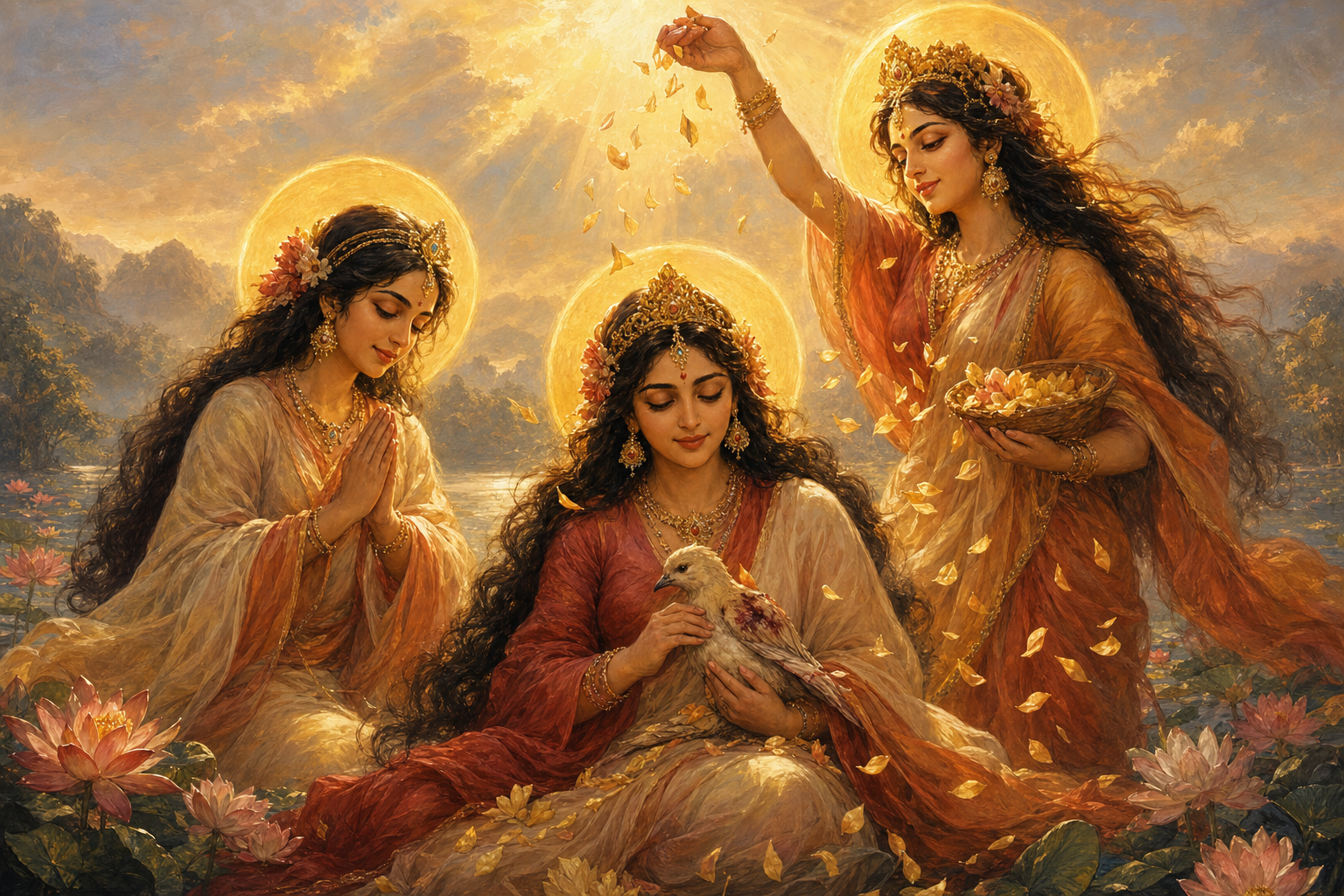
What is the difference between Daya (mercy), Karuna (compassion), and Kripa (grace)?
Daya (mercy) and Karuna (compassion) are emotions. It is not necessary that action accompanies them. For example, you are going somewhere and you see a
Read answer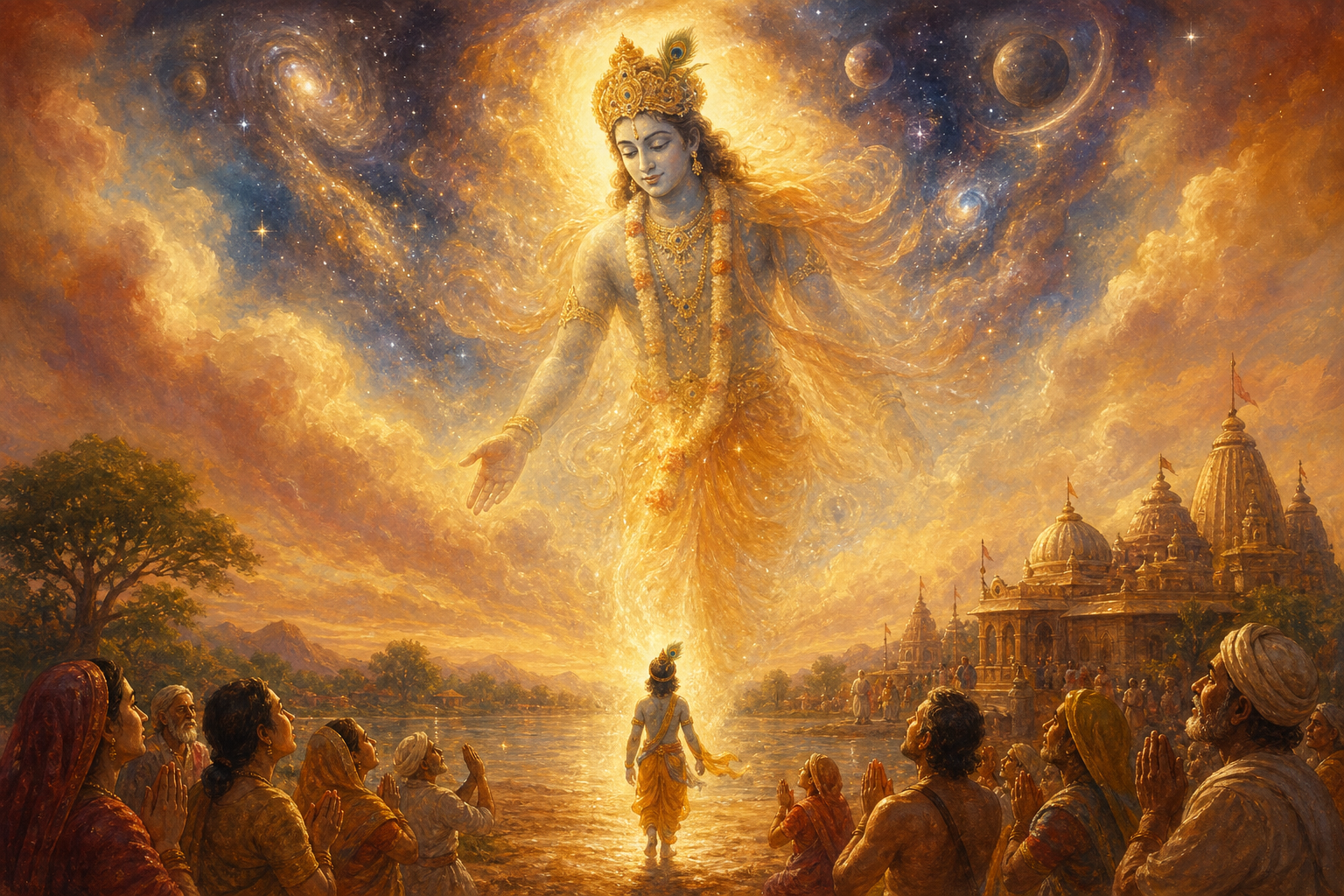
Can God appear in a physical body? Is avatar a real phenomenon?
The word "Bhagavan" is used quite loosely in Hindu Dharma. Sometimes it is used for Ishvara (God), sometimes for Devatas (celestial beings), and sometim
Read answer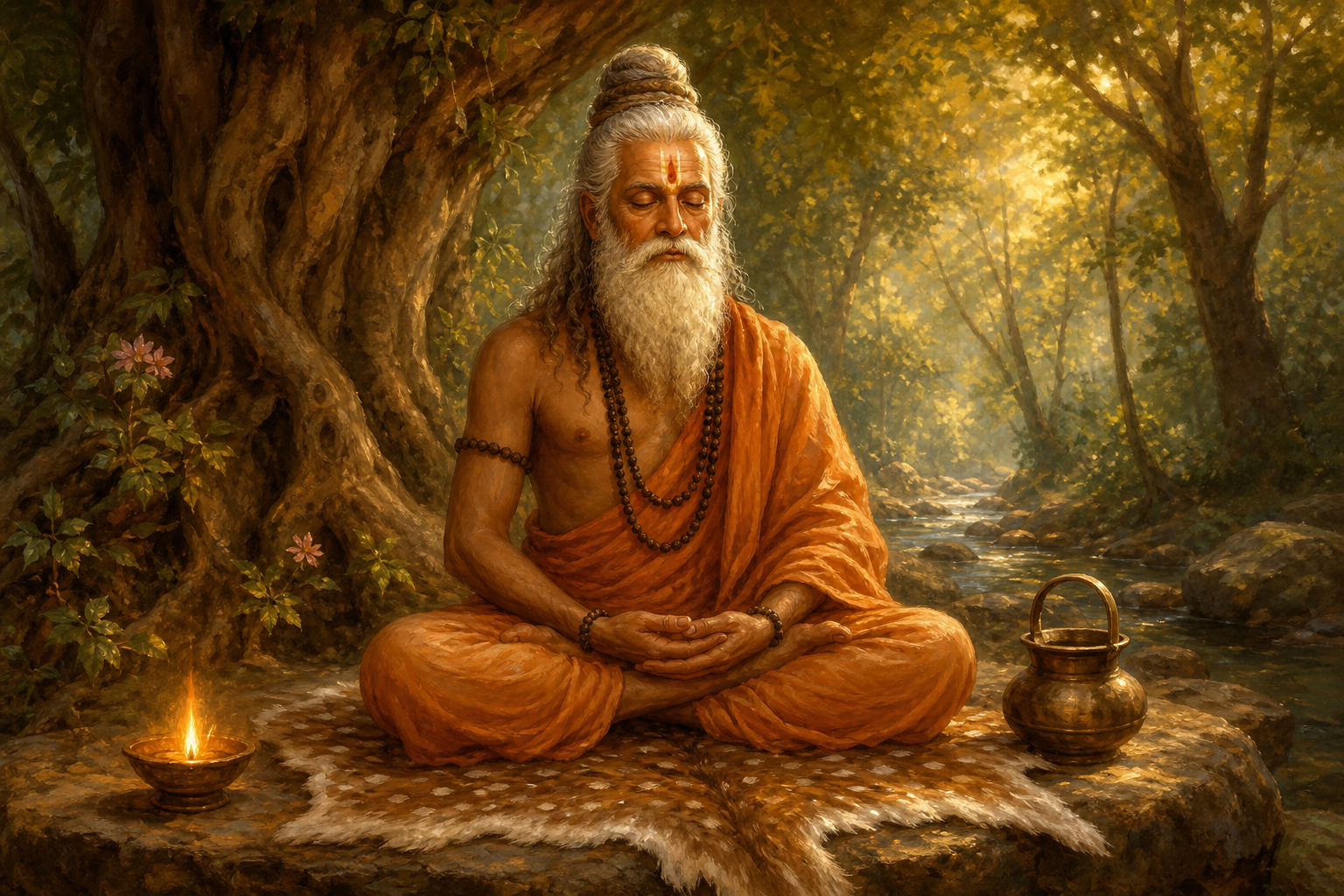
Why is deerskin (Mrigachhal) mentioned for meditation in scriptures?
In the Shastras (scriptures), the mention of Mrigachhala (deerskin) is generally found in the context of the seating of Rishis (sages), not of kings. K
Read answer
Why is Hinduism called “Sanatana Dharma”?
“Sanatana” means “that which always exists” — the eternal. The foundational principles of Hindu Dharma — truth, compassion, kindness, good deeds, devotion — have always existed and always will. Hence the name Sanatana Dharma, the Eternal Way.
Read answer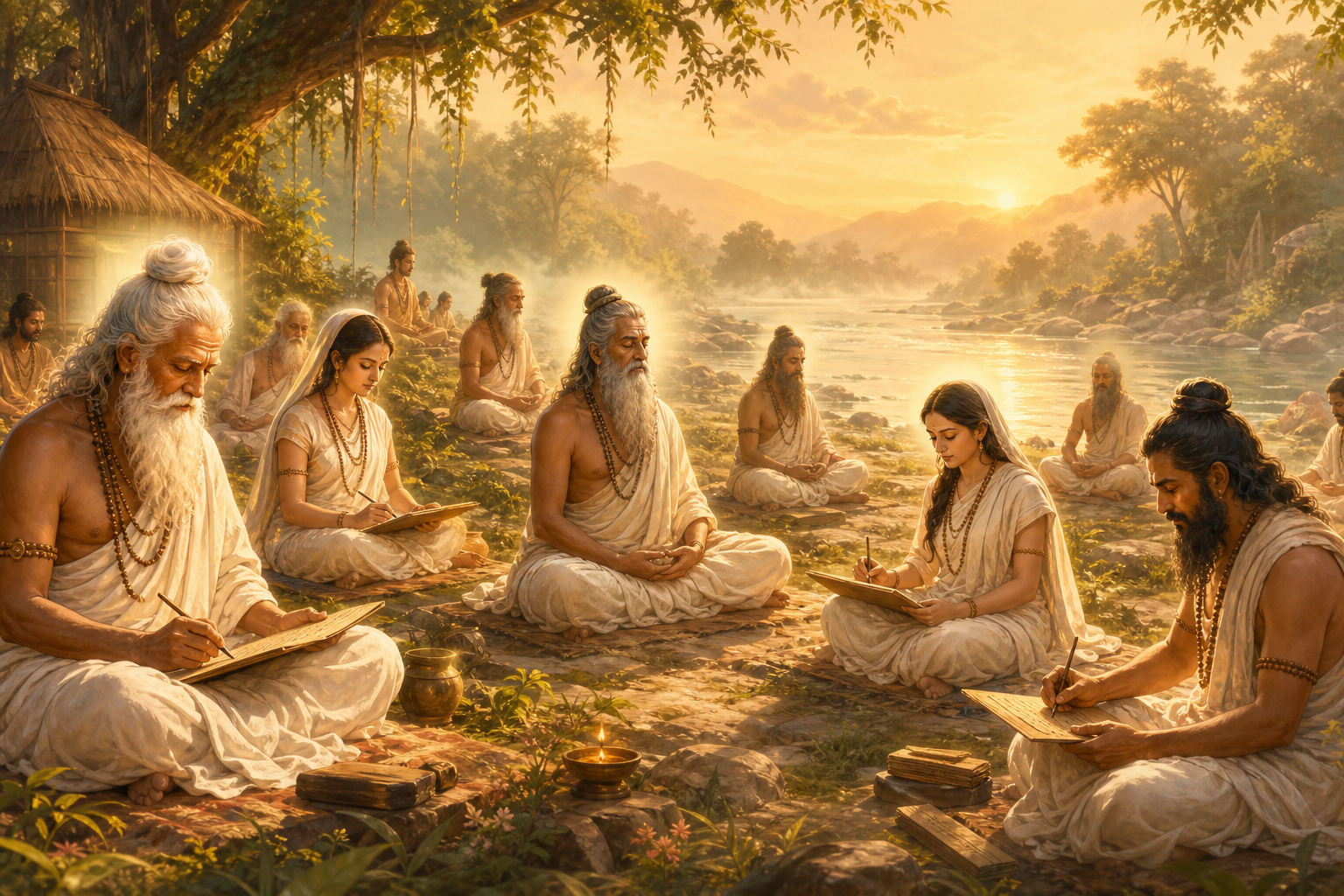
Who founded Hinduism? Who are its founders?
Hindu Dharma has no single founder. It is the cumulative result of the knowledge, austerity, and lived experience of countless rishis and rishikas — just as science has no single founder, but is the work of many scientists across centuries.
Read answer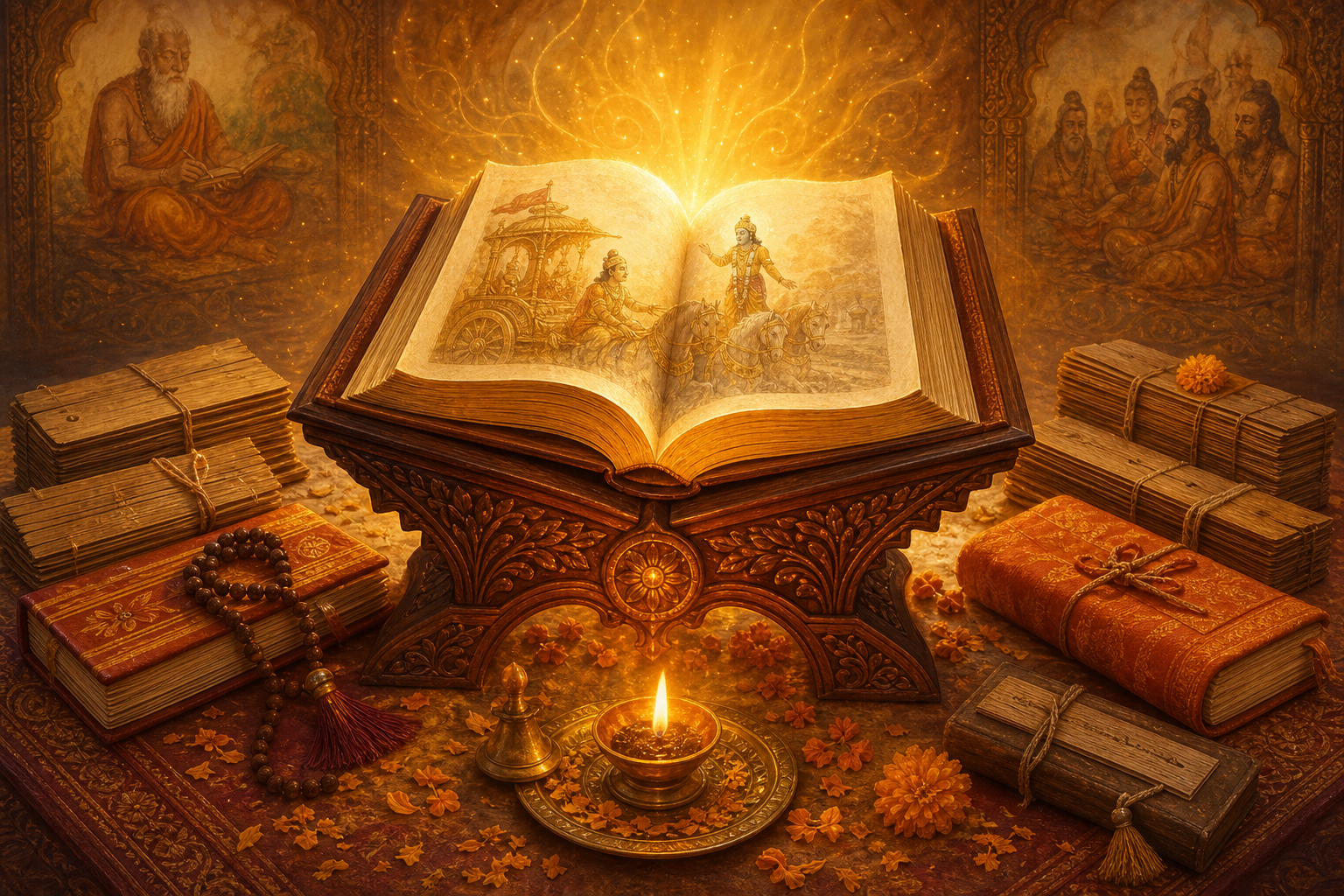
What is the one primary sacred book of Hinduism?
Hindu Dharma has no single, exclusive sacred book — because, like science, it has many branches and many paths. Yet among all its scriptures, the Bhagavad Gita stands out as the most universally honoured text of inner knowledge.
Read answer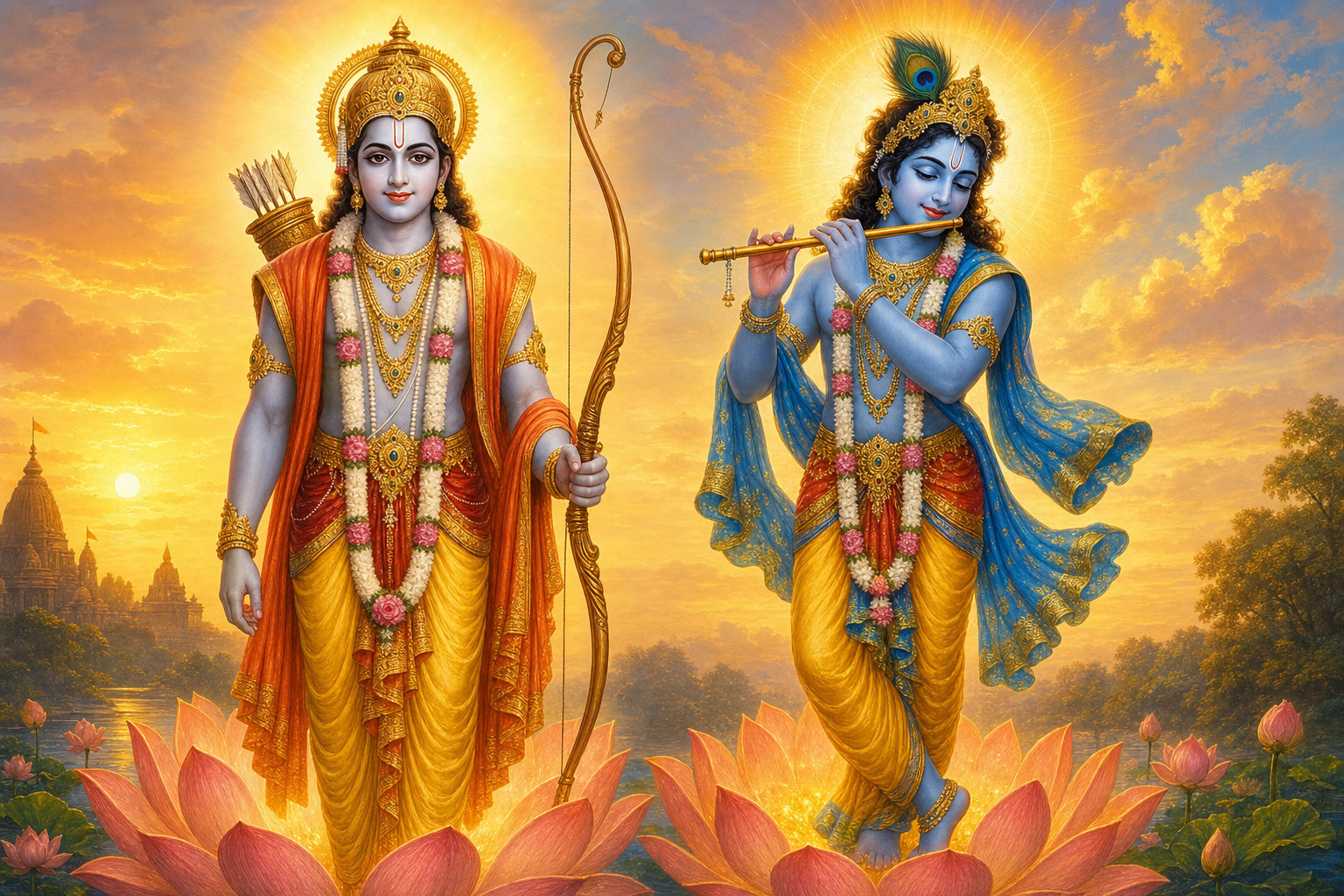
Name the two greatest figures of Hindu Dharma.
Shri Rama gave Hindu Dharma its supreme practical model of conduct through his life. Shri Krishna gave it the supreme model of inner knowledge through the Bhagavad Gita. These two — Rama and Krishna — are the two highest names of Hindu Dharma.
Read answer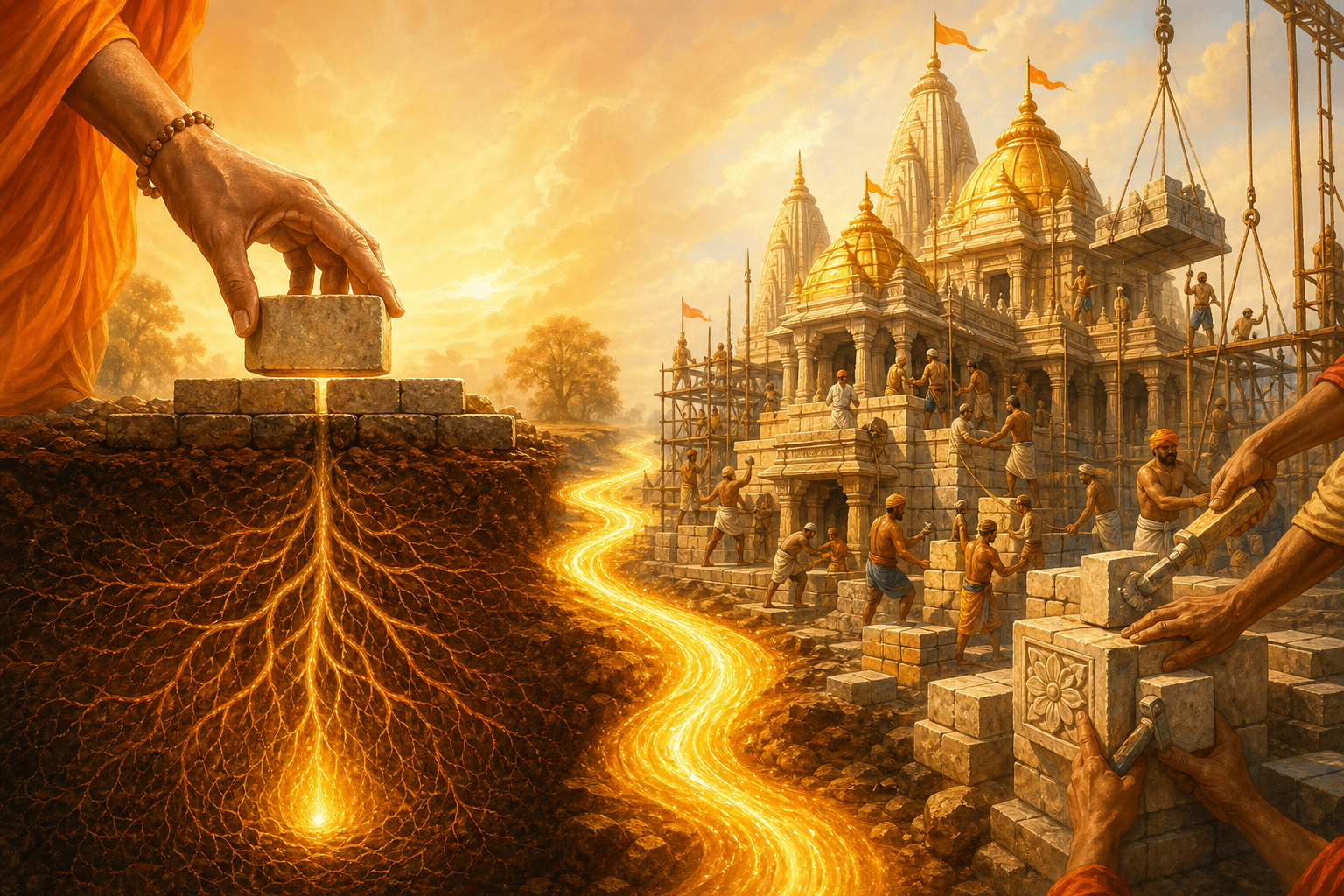
What is the difference between a “founder” and a “builder”?
A founder begins a tradition or lays its foundation. A builder carries it forward, develops it, and gives it its mature form. Hindu Dharma has no single founder — but it has had many great builders.
Read answer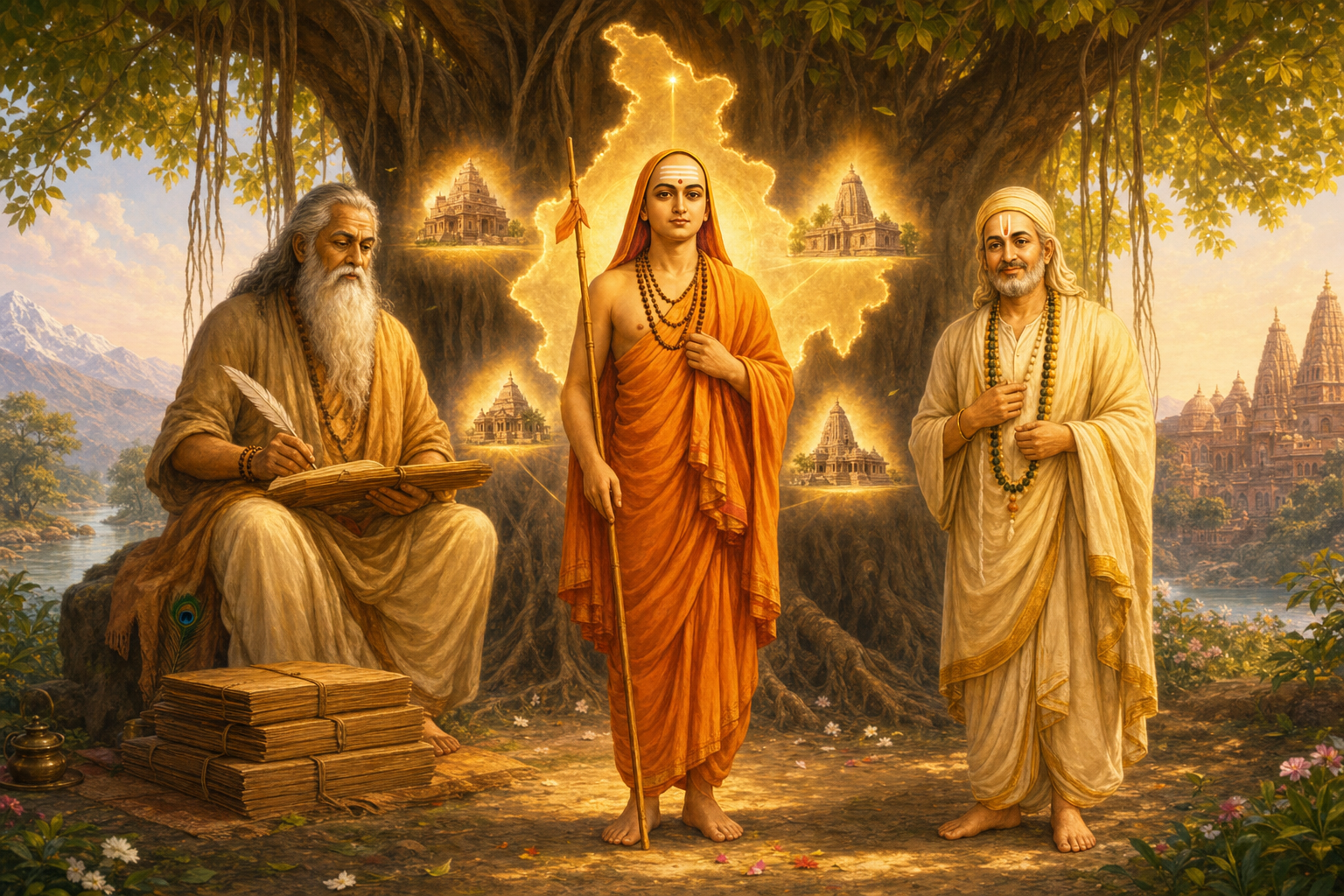
Who are some of the great builders of Hindu Dharma?
Maharshi Vedavyasa in the ancient age, Adi Shankaracharya in the early medieval period, Ramanandacharya in the late medieval period — along with Ramanuja, Madhva, Nimbarka, Vallabha and many others — each built the structure of Hindu Dharma further.
Read answer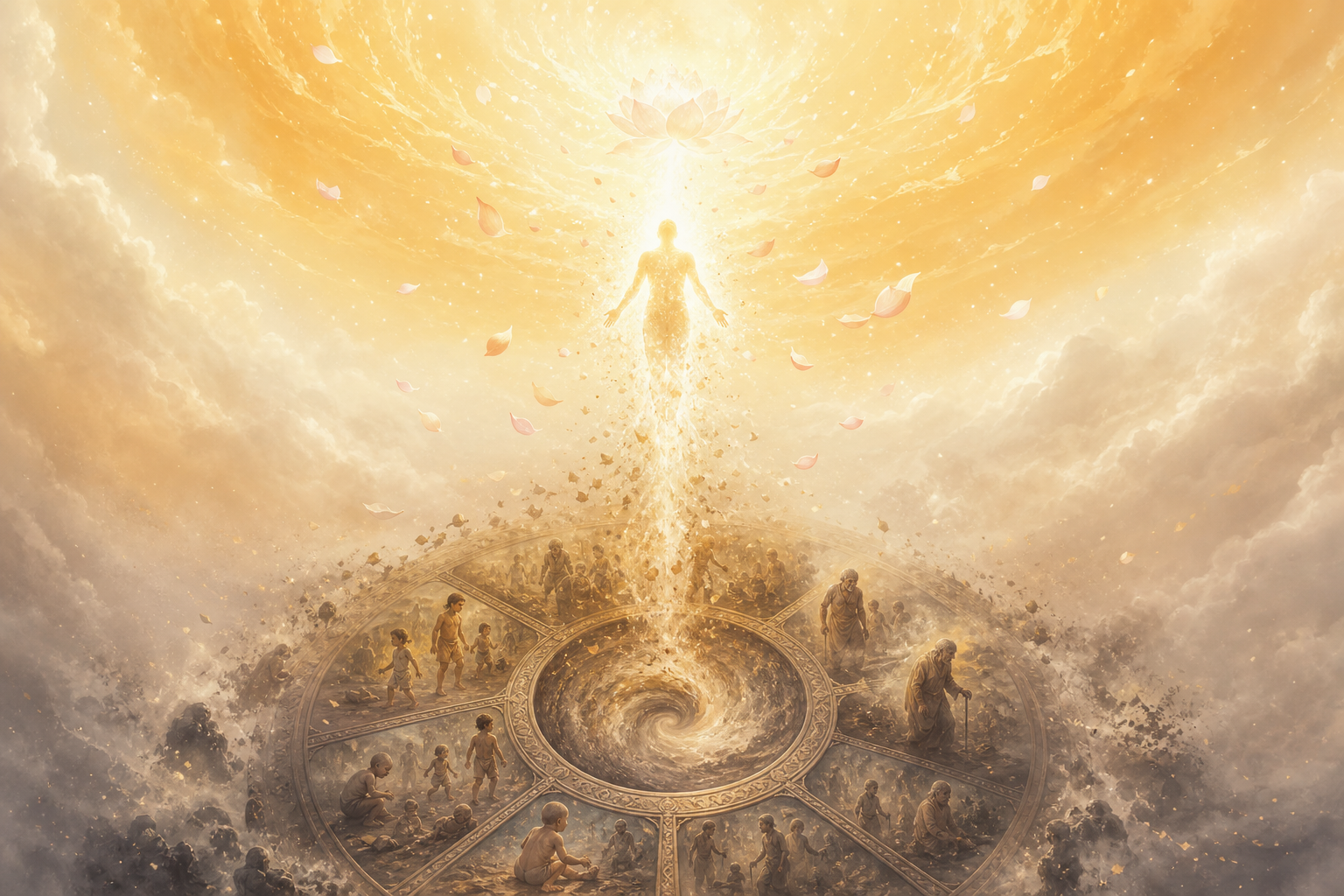
According to Hinduism, what is the ultimate goal of human life?
The ultimate goal is Moksha — also called final liberation (mukti) and nirvana. It means freedom from rebirth, and through that, freedom from all suffering forever. Even svarga (heaven) is not the final goal.
Read answer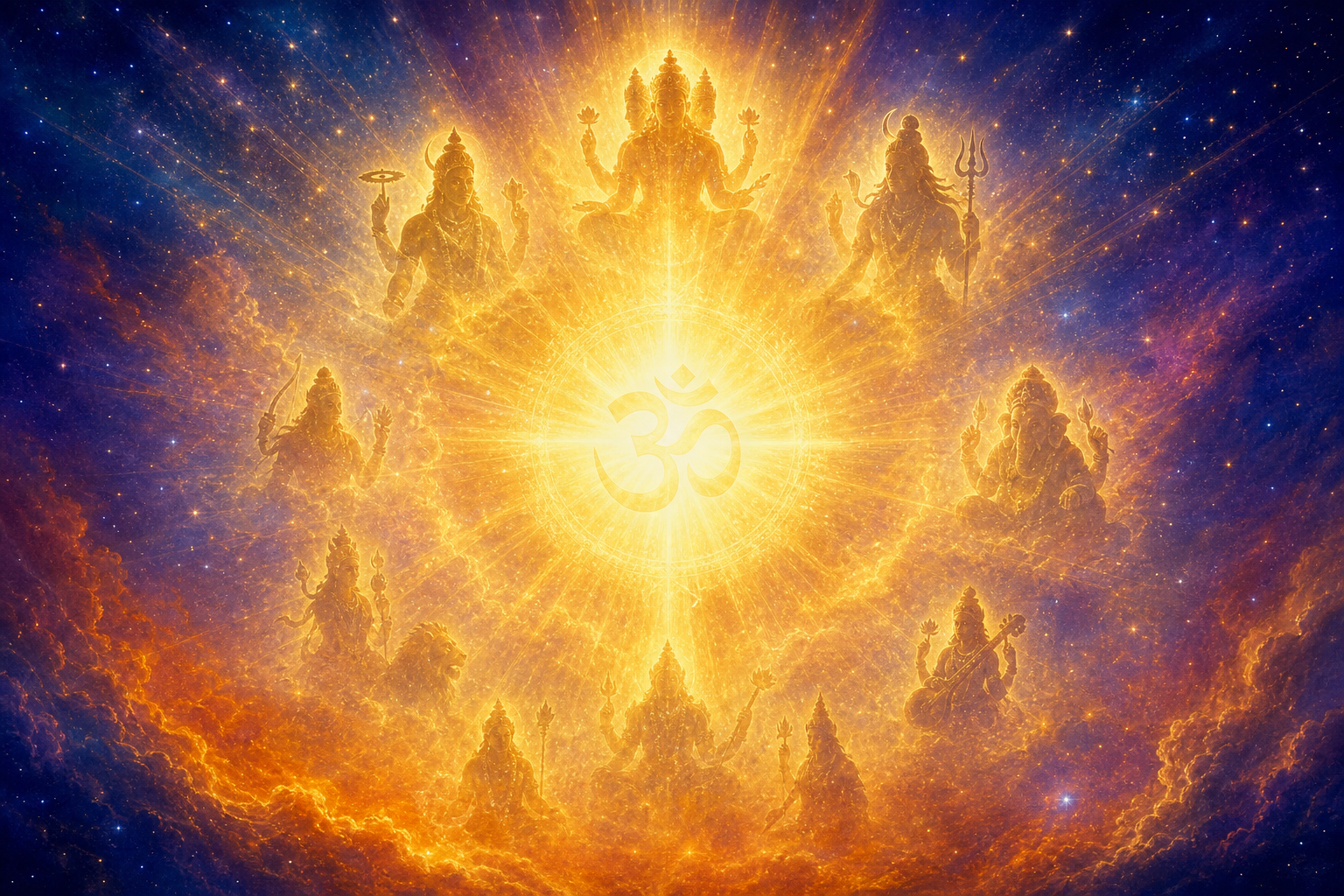
In Hinduism, is God one or many?
In Hindu Dharma, God is One. He is called Brahman or Para-Brahman — the Omnipotent Supreme. Two omnipotent beings cannot logically exist. That one Para-Brahman reveals Himself in many forms.
Read answer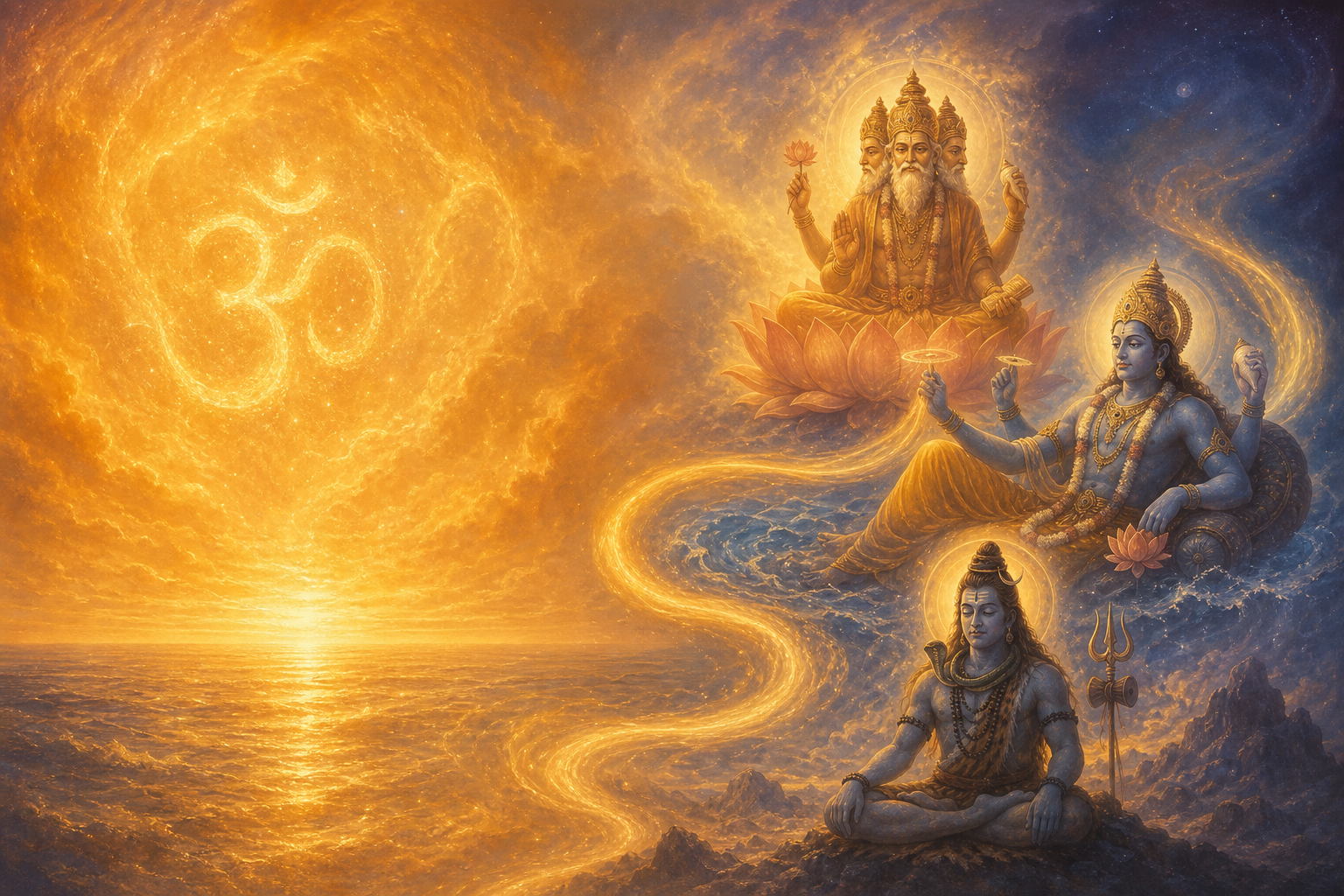
Is God formless (without a body) or with form (with a body)?
God is fundamentally formless (Nirakara) — called Brahman. For creation, sustenance, and dissolution He also takes saakar (with-form) aspects as Brahma, Vishnu and Shiva, and at times even takes human birth as Rama and Krishna.
Read answer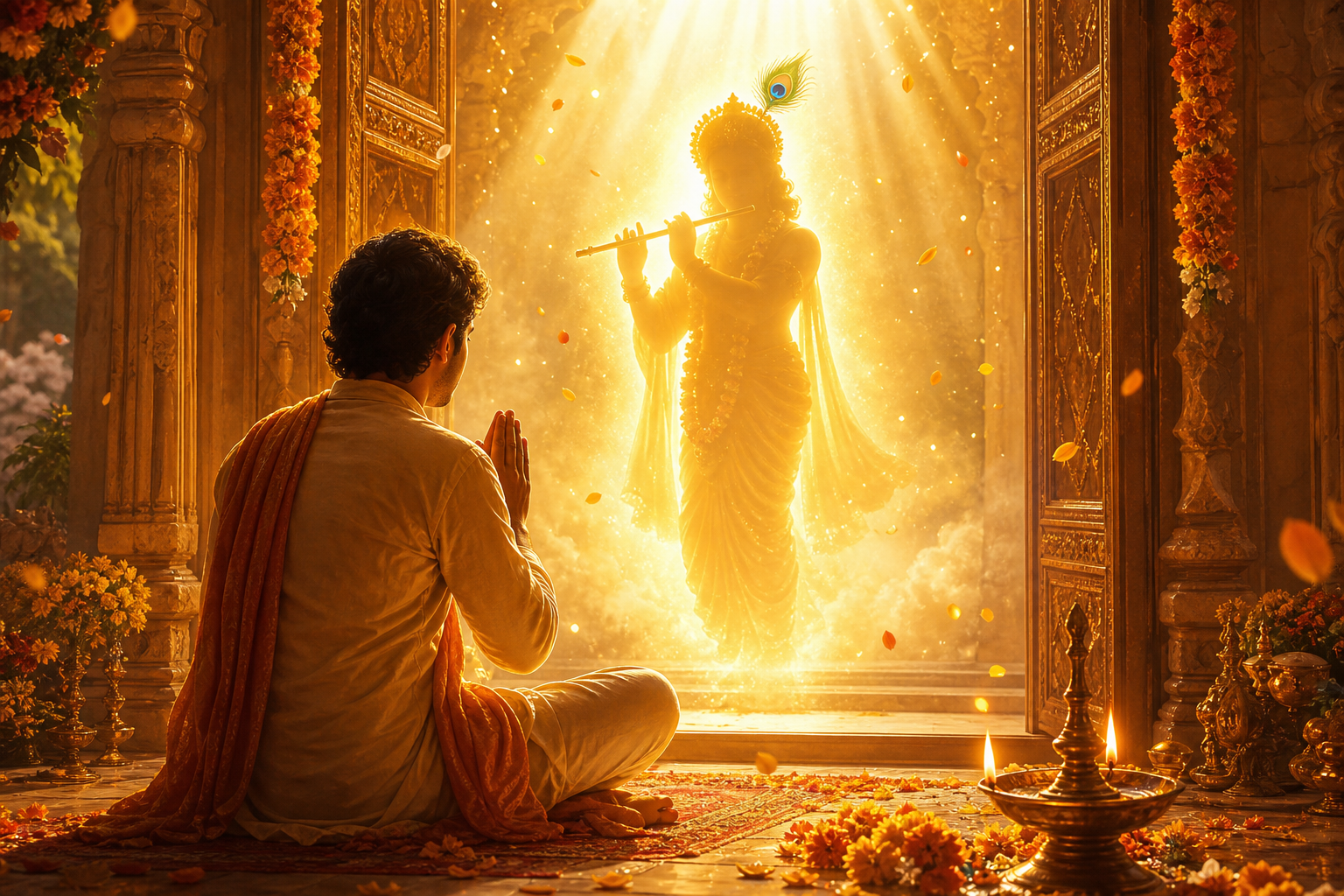
So can we actually see and hear God?
Yes. We can see and hear God in His saakar (with-form) aspect — we can even speak with Him. The formless God we cannot see with our eyes, but we can experience Him — though that experience, like the formless God Himself, is difficult to put into words.
Read answer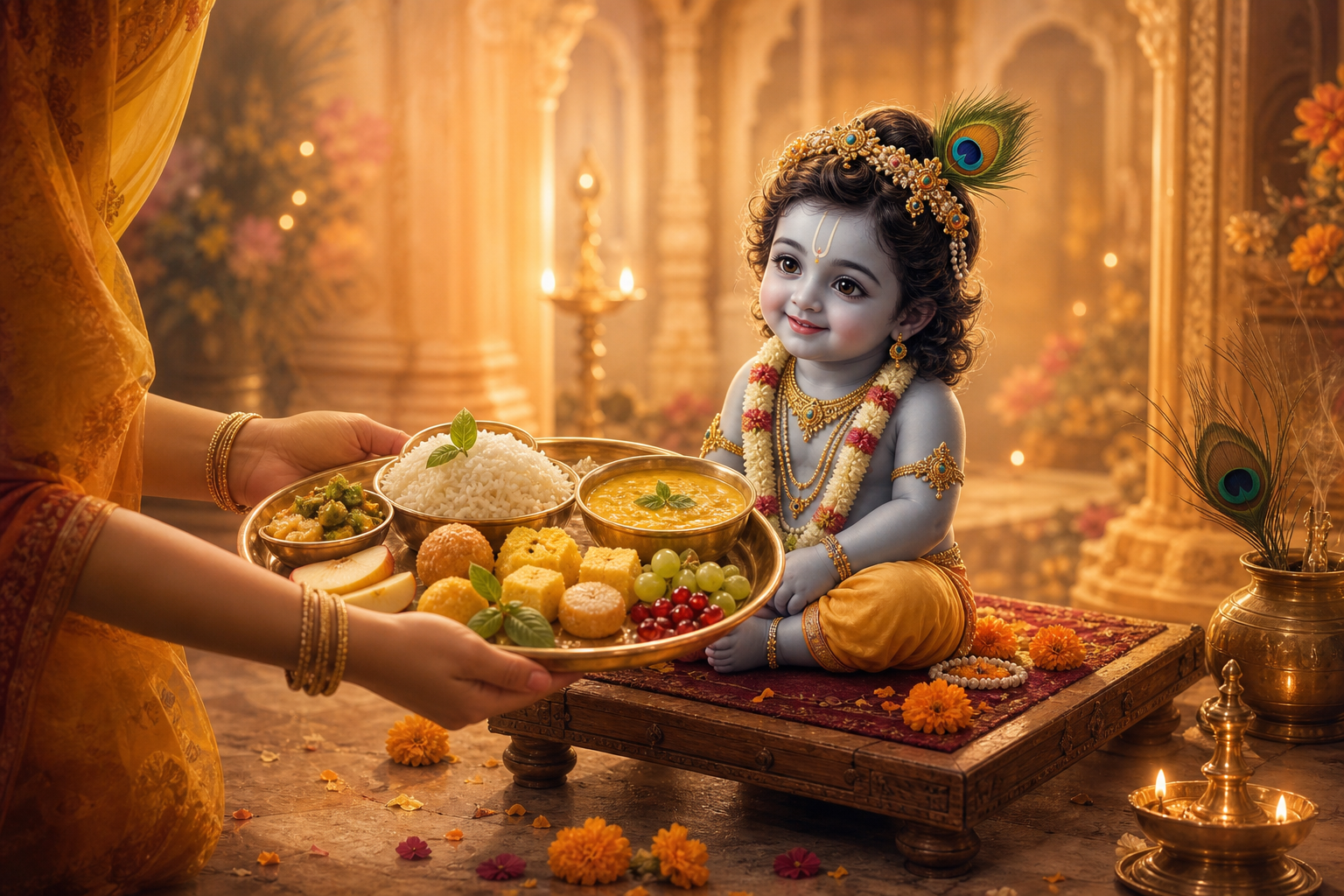
Can Laddu Gopal be offered food cooked with garlic and onion when our regional cooking depends on them?
Bhava — the devotee's inner feeling — is what matters most. But until that ripeness arrives, the bhog offered to Vishnu and His avataras should be fully sattvic, and the family kitchen should move toward sattvic cooking step by step.
Read answer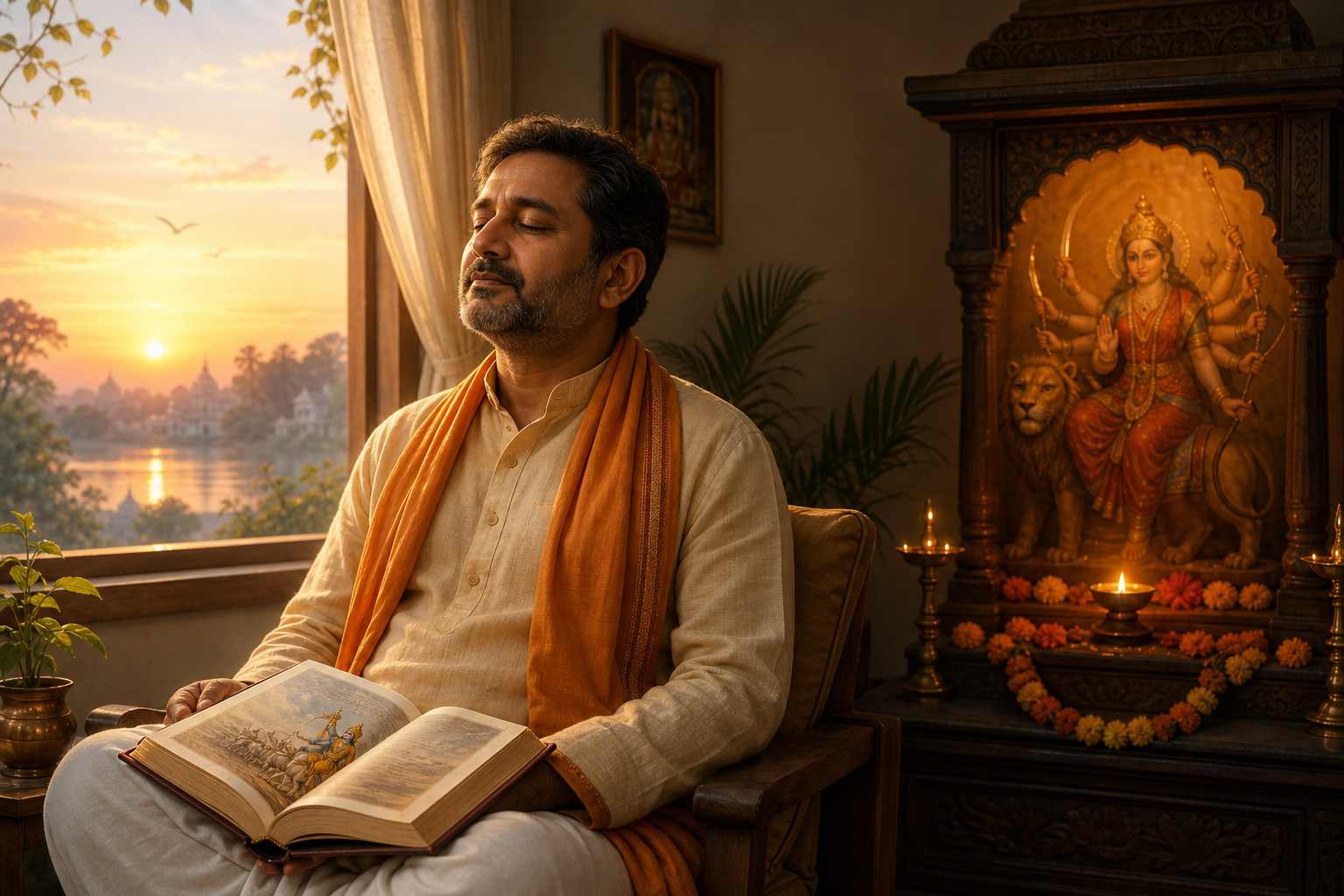
I worship regularly yet my mind stays restless with worries about money, my daughter's marriage, my job and my health. What should I do?
Some hardships come from past karma and must be borne with dignity. The rest call for clear-eyed problem-solving. Deities can help in particular situations, but the big picture of life changes only through your own thought and effort — anchored in surrender to the Lord.
Read answer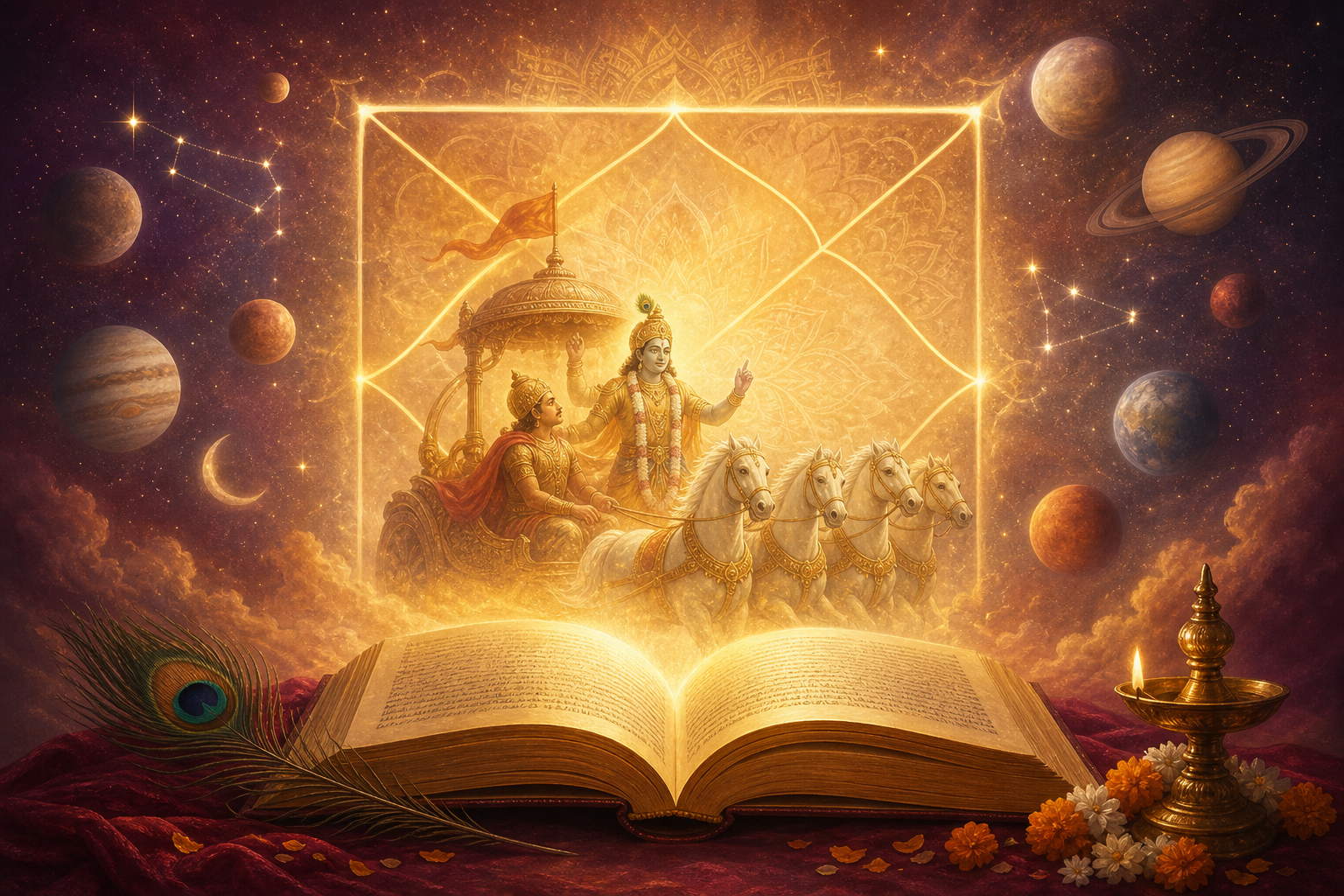
Does the kundali (birth chart) really decide our destiny, or only point to tendencies? Can we still reach goals not written in it?
Astrology hints at tendencies, but it is not an unalterable verdict. The Gita accepts destiny while making it clear that destiny is built by our own past actions — and that knowledge, devotion, service and surrender can soften, override, and finally dissolve its grip.
Read answer
What is the right way to observe the Ekadashi vow, and what does fasting really mean as 'tapas'?
A vrata is a sacred resolve; fasting is one form it can take. Ekadashi is best taken up as a Vaishnava vrata after testing one's readiness. The Gita redefines tapas — austerity of body, speech and mind — and warns against turning vows into self-torture.
Read answer
What does the Gita say about human virtues and vices, and where do love, compassion and humility fit in?
Every human being carries both daivi (divine) and asuri (demonic) tendencies. We are judged by which side we let dominate. Compassion stands at the head of a devotee's qualities, humility at the head of a knower's; without them, both bhakti and jnana stay incomplete.
Read answer