
Conclusion
Therefore, Brahm Bodhi concluded, one should not assume that realization of the true nature of the Self is the only means of attaining God, Liberation, or eternal bliss. The Bhagavad Gita recognizes both the Path of Knowledge and the Path of Devotion as authentic and complete spiritual paths.
Those who are drawn to the realization of the Nirguna Brahman, he said, may pursue the Path of Knowledge or the Path of Meditation; while those whose hearts are naturally inclined towards love, worship, and surrender may follow the Path of Devotion and attain Bhagavan Narayana, the Saguna Brahman.
Ultimately, Brahm Bodhi observed, both paths are complementary rather than contradictory. The seeker on the Path of Knowledge ultimately arrives at supreme Devotion, while the seeker on the Path of Devotion ultimately receives the illuminating Knowledge bestowed by Bhagavan Himself. Thus the two paths, though different in discipline, converge at the same Supreme Goal.
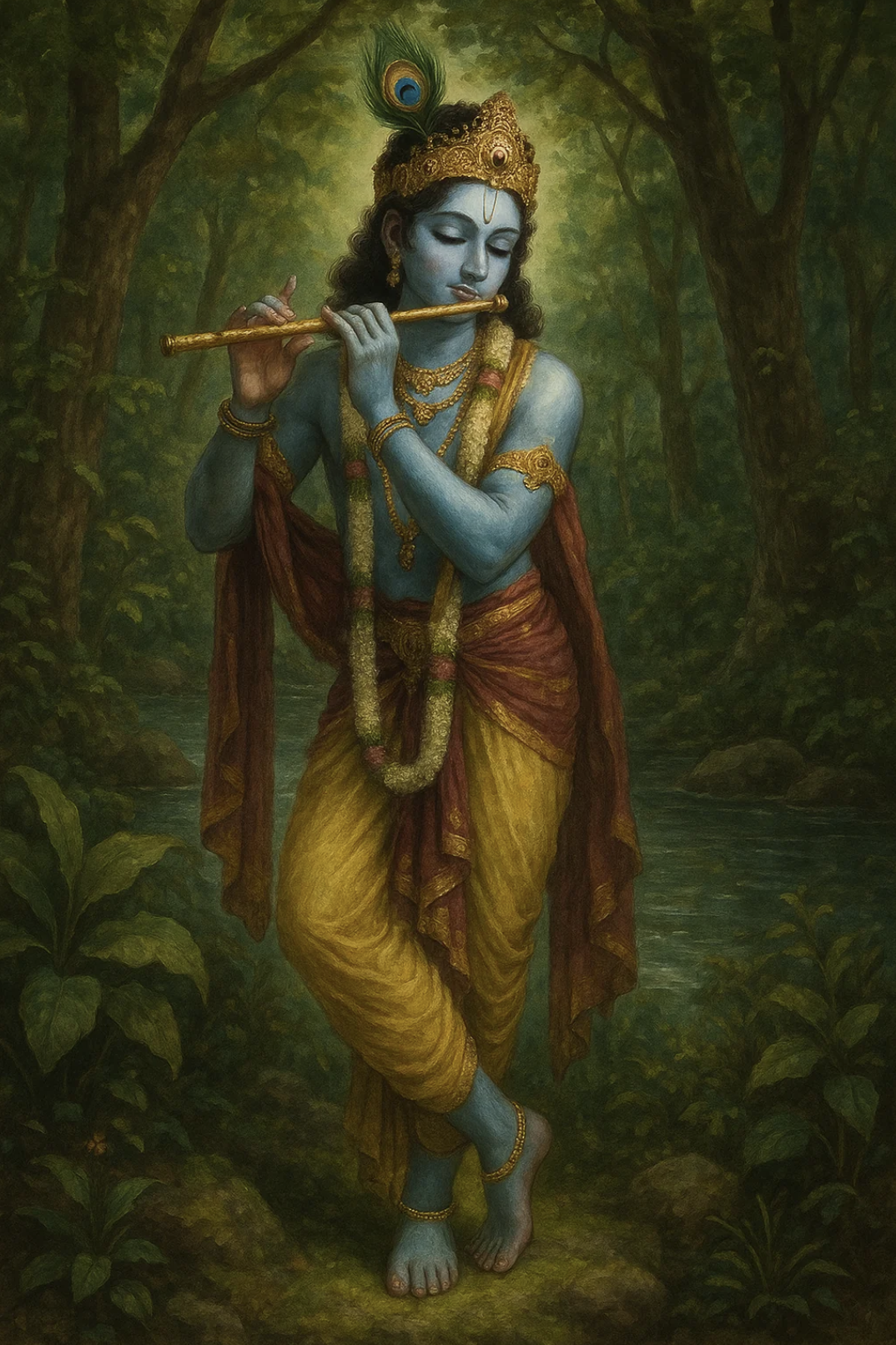
Bhagavan Krishna Himself declares:
jñāna-yajñena cāpy anye yajanto mām upāsate; ekatvena pṛthaktvena bahudhā viśvato-mukham.
“Others worship Me through the sacrifice of Knowledge, perceiving Me as One; others worship Me as distinct from themselves; while still others worship Me in My countless universal manifestations.”
Thus, Brahm Bodhi noted, Bhagavan explicitly accepts both approaches — the path of Oneness and the path of loving distinctness. Each is a valid means of reaching Him.
The choice of the path should therefore be guided by one’s innate disposition, temperament, and spiritual aspiration. What matters is not whether one begins with Knowledge or with Devotion, but whether one proceeds with sincerity, perseverance, and complete dedication to God.
The destination is one. The routes are different.