
Can everlasting peace and bliss be attained without Self-realization? If so, how?
Brahm Bodhi then took up a question that follows naturally: can everlasting peace and bliss be reached at all without the direct realization of the Self — and if so, by what means?
Not only the Bhagavad Gita, he said, but foremost scriptures such as the Bhagavata Purana point to another path to everlasting bliss. Along this path it is not essential to study texts such as Patanjali’s Yoga Sutras or to practise the disciplines they prescribe, nor is the final, direct realization of the true nature of the Self a requirement.
This, Brahm Bodhi explained, is the path of Bhakti (devotion), and not the path of Jnana (knowledge) or Dhyana (meditation).
What the devotee seeks
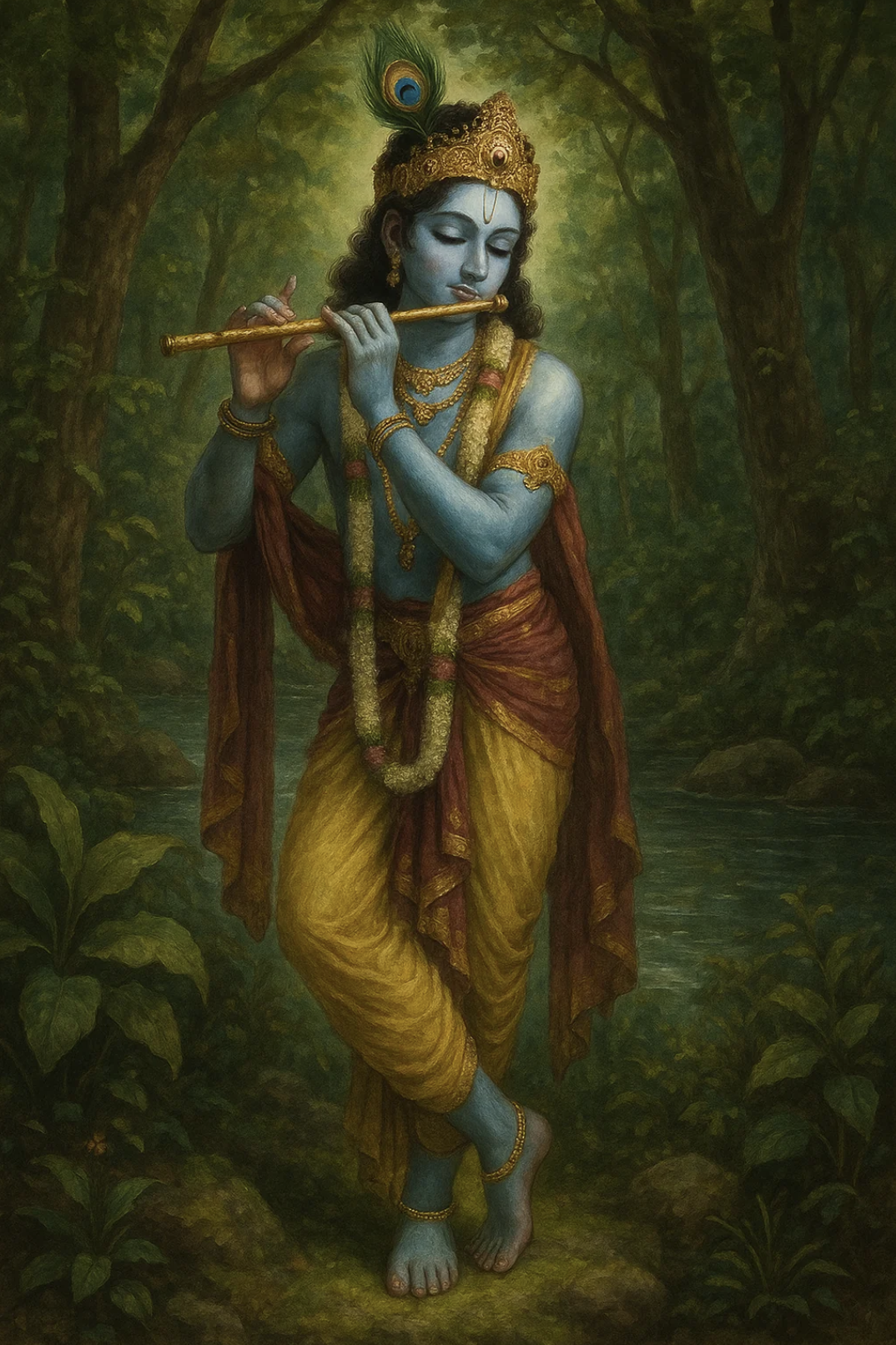
A seeker on the path of devotion, he said, does not set out to realize the nature of the Self, nor does he turn inward to experience the identity of the individual Self with Brahman. His goal, rather, is to attain the Supreme Lord in His Saguna Brahman aspect — Bhagavan Narayana.
The foundation of such a seeker’s practice is not philosophical inquiry but faith, love, worship, adoration, and complete surrender.
Knowledge enough for the journey
This does not mean, Brahm Bodhi clarified, that a devotee requires no knowledge at all. He needs the essential spiritual knowledge: that God is omnipotent, omniscient, omnipresent, infinitely compassionate, and perfectly just — the Creator, Sustainer, and Dissolver of the entire universe, and the loving protector of His devotees. This understanding is sufficient for his spiritual journey.
Beyond this, he said, a detailed philosophical analysis of the relationship between the individual Self and Brahman is not necessary for such a seeker, for his goal is not to merge into the Nirguna Brahman but to attain Bhagavan Narayana, the Saguna Brahman. In other words, he seeks not the attributeless Absolute, but that very Absolute in its personal, loving, and manifest form.
The culmination: Vaikuntha
Accordingly, through love and devotion the seeker advances towards Bhagavan, and the culmination of his devotional practice, Brahm Bodhi said, is the attainment of Vaikuntha — the divine abode where Bhagavan Vishnu resides in His eternal Personal Form.
Having reached that divine realm, the devotee experiences everlasting, unmixed bliss, for there Maya has no access, time has no influence, and the realm is governed entirely by pure Sattva. Sorrow cannot even touch anyone there.
The same Supreme Goal
Therefore, Brahm Bodhi concluded, it is not correct to hold that God-realization, liberation, or everlasting bliss cannot be attained without the direct realization of the Self. A seeker who advances towards the Saguna Brahman through selfless love and devotion reaches the very same supreme goal.
Bhagavan Krishna explains this truth beautifully in the Bhagavad Gita, saying that people approach Him through different spiritual attitudes:
jñāna-yajñena cāpy anye yajanto mām upāsate; ekatvena pṛthaktvena bahudhā viśvato-mukham.
“Some seekers worship Me in the spirit of oneness, while others worship Me as distinct from themselves — and both forms of worship ultimately lead to Me.”