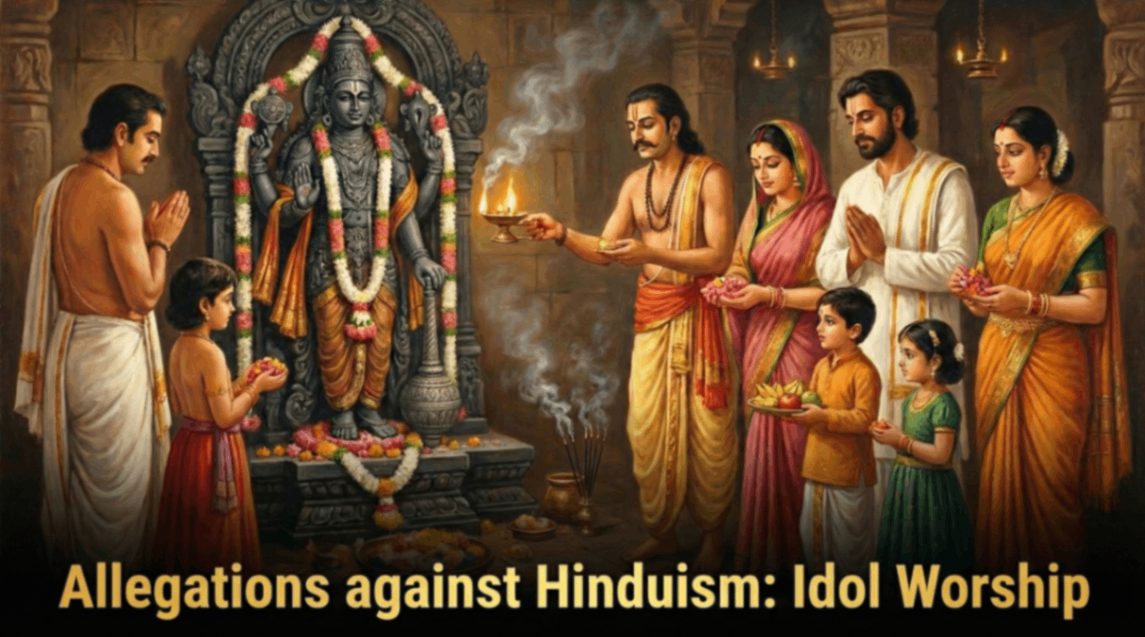
Hinduism is often accused of 'idol worship,' but the reality is more nuanced. Devotees use physical forms to focus the mind on the divine, not to worship the material itself.
Idol worship in Hinduism: Does Hinduism advocate worshipping stones?
A common accusation is that Hinduism teaches people to “worship stones.” But that assumes something most Hindus do not believe: that the stone itself is God. The real question is simpler and fairer:
Is the devotee worshipping matter, or using a material focus to turn the mind toward God?
This distinction matters because almost every religion uses physical supports for devotion.
Sacred space is not “brick worship”
Churches and mosques are built from stone and bricks, yet people admit prayer becomes easier there. You can pray anywhere, but a sacred space helps the mind become still and the heart become attentive. The building is not God; it is a container for reverence. If that is not “brick worship,” then physical form alone cannot be condemned as idolatry.
Images and symbols are tools, not gods
In many churches, a picture of Christ is placed with a candle, Scripture is read, and prayers are offered. No one thinks paper and ink are Christ. The image helps remembrance and focus. Similarly, a photograph of one’s parents is not the parents, yet it awakens love and memory more easily than abstract thought.
Islam also uses sacred focal points
Muslims face the Kaaba in prayer, not because the building (Kaba) is God, but because a shared orientation strengthens devotion. Many pilgrims touch or kiss the Black Stone at Kaba, while maintaining it is not divine in itself. Sacred recitations work similarly: no one worships ink or sound; the form helps the heart turn to God.
These examples show a universal principle: space, gesture, image, and word can carry spiritual meaning without being worshipped as divine.
Because human beings are not disembodied minds floating in pure philosophy. We are creatures of attention. Space, silence, architecture, repeated gestures, and shared orientation help the mind settle and the heart open.
What Hindu mūrti-pūjā is doing
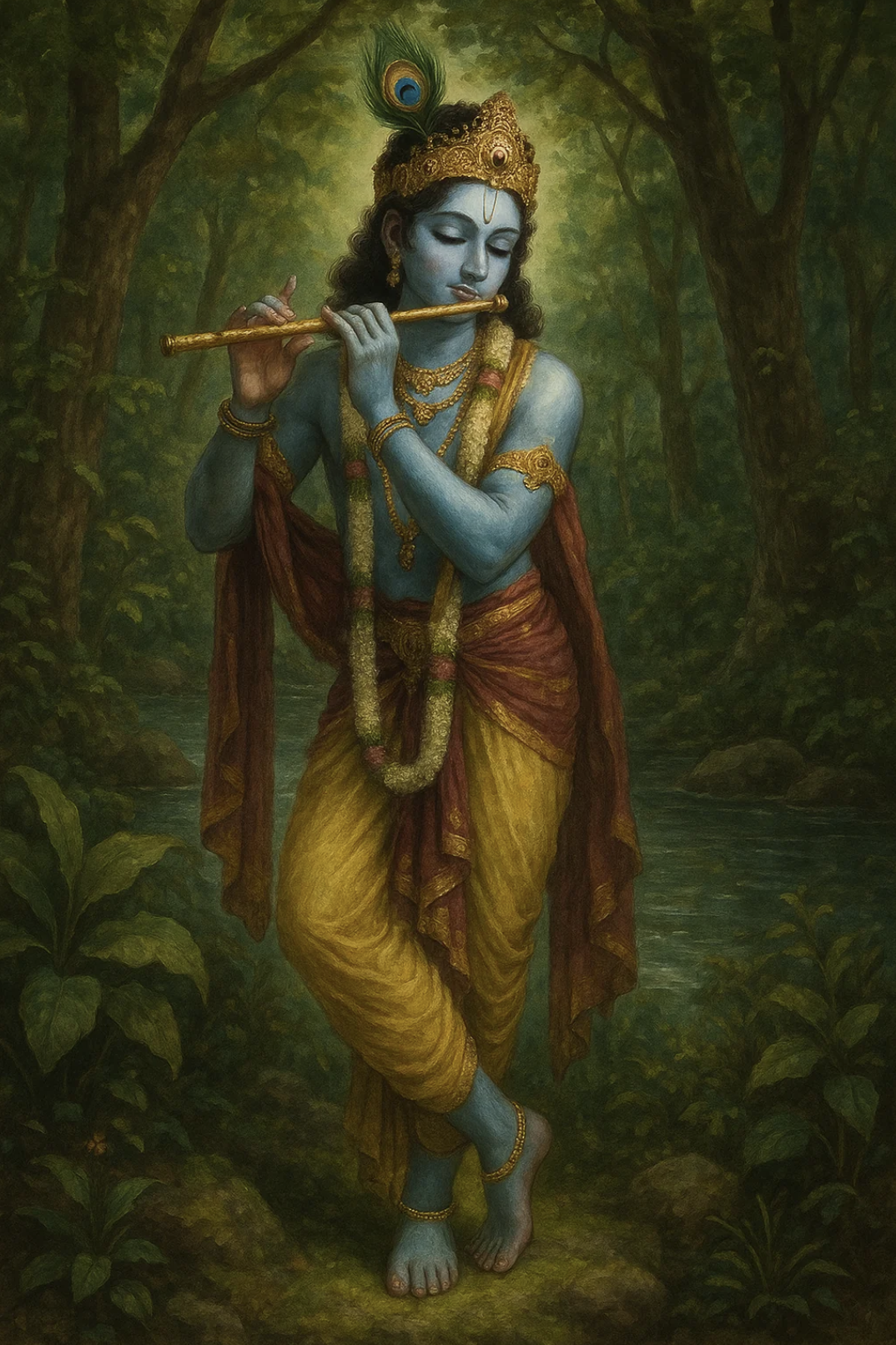
Hinduism applies the same principle, in a more developed form. A mūrti is not “stone as God.” It is a consecrated form that helps the devotee remember and relate to the Divine with steadiness and intensity. A form of Rama recalls Rama’s ideals, sublime character and noble deeds; a form of Krishna, Vishnu, Shiva, or the Divine Mother evokes specific divine qualities and inspires devotion. The form functions as a doorway for attention, not a replacement for God.
“But Hindus offer food and bathe the mūrti”
These are not childish beliefs that God needs lunch or a bath. They are ritual language of love and service, like candles, incense, or kneeling in other traditions. The offering transforms the devotee, training gratitude, surrender, and devotion.
Understanding the Difference
Between Belief Systems
Islam worships only the formless God, whereas Christianity affirms the formless God and also God revealed in a human life through Jesus. For this reason, images of Christ are often present during prayer—not because paper and paint are treated as divine, but because they help believers remember his sublime character and noble deeds, and thus deepen devotion. Hinduism likewise speaks of God as formless and also approachable through distinct forms; stone mūrtis represent these forms and help devotees recall the compassion, virtues, and ideals of Lord Rama or Lord Vishnu with greater intensity—so much so that this intensity can bring tears to the eyes. To deny that God can take on a personal form is to deny the omnipotence and free will of God.
Conclusion
Hinduism does not advocate worshipping stones as stones. It advocates worshipping God, using consecrated forms to focus the mind and awaken devotion. Calling this “stone worship” confuses a devotional aid with the object of worship.