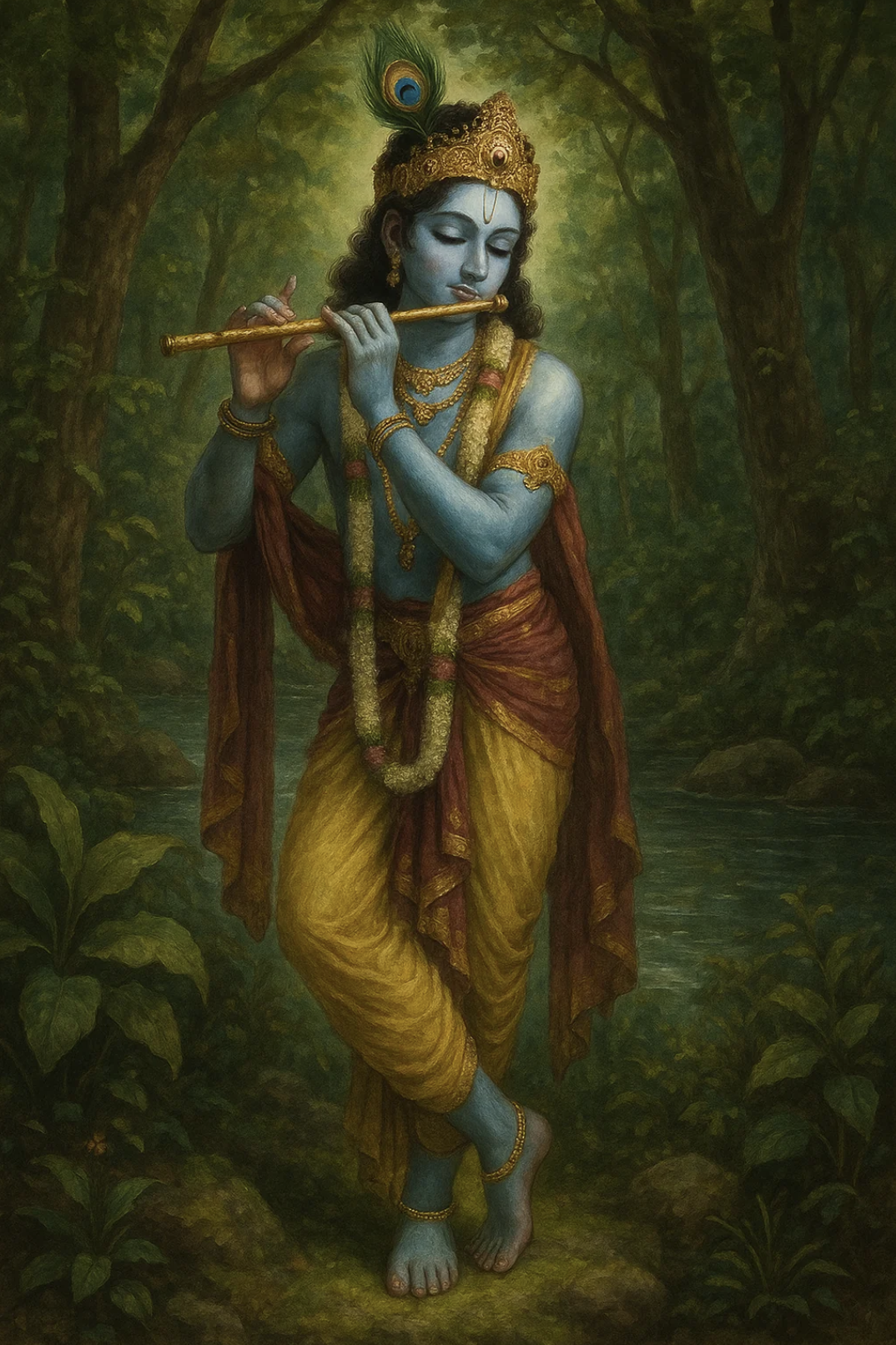

Guruji, what should the true purpose of human life be? In this reflection, BrahmBodhi draws a careful line between a goal and a purpose, shows that the quiet pursuit of happiness underlies almost every goal we chase, and — guided by Bhagavan Krishna's teaching on the three kinds of happiness (sattvic, rajasic, and tamasic) in the Bhagavad Gita — points to the highest answer of all: Divine Bliss in this life and Moksha hereafter as the supreme purpose of human life.
Goal or purpose — are they the same?
Before we can answer this question honestly, we need to separate two ideas that are often confused: a goal and a purpose. A single life may hold many goals, yet beneath all of them runs one deeper purpose. Earning wealth is a goal. Raising a family is a goal. Winning fame is a goal. Landing a good job or building a thriving business is a goal too. Over a lifetime a person may pursue a great many such goals.
Behind every goal, one shared purpose
Look closely at these goals, however, and a single thread appears behind all of them — the pursuit of happiness. The income from a job lets us secure life's necessities and the comforts that make us happy. Raising our children and educating them well fills us with joy, while failing them fills us with sorrow. For some, recognition and fame are a genuine source of delight. Of course, certain goals bring happiness to nearly everyone, while others please only a few. Not everyone longs for fame, so fame does not make everyone happy. Some people dislike being employees and would far rather build something of their own. Yet however different our individual goals may be, the purpose beneath them tends to be the same: we are all seeking happiness.
The real question: what kind of happiness?
This turns the question around. The issue is not whether we want happiness — everyone does — but what kind of happiness we are seeking. In the Bhagavad Gita, Bhagavan Krishna describes happiness as being of three kinds: sattvic, rajasic, and tamasic.
Sattvic happiness
yat tad agre viṣam iva pariṇāme 'mṛtopamam tat sukhaṁ sāttvikaṁ proktam ātma-buddhi-prasāda-jam — Bhagavad Gita 18.37 Translation: The happiness that tastes like poison at first but turns to nectar in the end, born of the serenity of a purified intellect, is called sattvic happiness.
Rajasic happiness
viṣayendriya-saṁyogād yat tad agre 'mṛtopamam pariṇāme viṣam iva tat sukhaṁ rājasaṁ smṛtam — Bhagavad Gita 18.38 Translation: The happiness that springs from the contact of the senses with their objects seems like nectar at first but becomes poison in the end. This is known as rajasic happiness.
Tamasic happiness
yad agre cānubandhe ca sukhaṁ mohanam ātmanaḥ nidrālasya-pramādotthaṁ tat tāmasam udāhṛtam — Bhagavad Gita 18.39 Translation: The happiness that deludes the self both at the beginning and in its results, and that arises from sleep, laziness, and negligence, is called tamasic happiness.
Recognising the three in everyday life
Sometimes people even take pleasure in another's pain — feeling satisfied by humiliating someone, watching them fall, or causing them harm. So simply wanting happiness is not enough; what matters just as much is the kind of happiness we choose to pursue. Tamasic happiness shows up as excessive sleep, idleness, neglect of one's duties, intoxication, and delight in harming others. Rajasic happiness shows up as the craving for wealth, power, status, sensual pleasure, luxury, fine food, praise, and fame. It looks attractive at the start but usually ends in dissatisfaction, anxiety, and bondage. Sattvic happiness shows up as speaking the truth, serving others, giving in charity, studying sacred wisdom, practising self-discipline, meditation, sincerely performing one's duties, and bringing light into another person's life. Such happiness can feel difficult at first, yet it finally grants deep peace and lasting contentment.
Why do people choose so differently?
If every human being is seeking happiness, why do some settle for tamasic happiness while others reach for sattvic happiness? The answer lies in the level of consciousness, knowledge, and discernment a person has developed. A small child prefers sweets to medicine simply because his understanding has not yet matured. In the same way, a spiritually immature person is naturally drawn to immediate sensory pleasure, while a person of ripened discernment chooses a higher and more enduring joy. This is why Bhagavan Krishna urges us to sharpen our discrimination and steadily rise above tamasic and rajasic happiness toward sattvic happiness — and ultimately toward Divine Bliss. This is not a lesson unique to the Gita. Any person of mature intellect and refined judgment, whether a believer or not, arrives at the very same conclusion.
Beyond sattvic happiness: Divine Bliss
And yet even sattvic happiness is not the final destination. Its highest flowering is Divine Bliss — the fullest and most perfect expression of sattvic happiness. To rejoice in the awareness of Bhagavan, to be illumined by spiritual wisdom, to be absorbed in loving devotion, to behold Bhagavan everywhere, and to experience our eternal relationship with Paramatman — all of these are forms of Divine Bliss.
The supreme purpose: Divine Bliss and Moksha
So if someone asks, "What should the true purpose of human life be?", the answer is simple: the attainment of Divine Bliss. In short, every human being should make it the purpose of life to attain Divine Bliss here, in this very lifetime, and Moksha after death. Moksha is complete and eternal freedom from all suffering — an entry into the inexhaustible ocean of Divine Bliss, forever in the presence of Bhagavan. This is the supreme purpose of human life. That is why Bhagavan Krishna declares: tataḥ padaṁ tat parimārgitavyaṁ yasmin gatā na nivartanti bhūyaḥ tam eva cādyaṁ puruṣaṁ prapadye yataḥ pravṛttiḥ prasṛtā purāṇī — Bhagavad Gita 15.4 Translation: Therefore, one should seek that Supreme Abode, having reached which no one ever returns to this world again. I take refuge in that Primeval Supreme Person, from whom this ancient cosmic flow has streamed forth.